ShrimpTempura

  • Subscribe to our RSS feed.
  • Twitter
  • StumbleUpon
  • Reddit
  • Facebook
  • Digg
Showing posts with label restaurant going. Show all posts

Monday, 19 August 2013

Rant: Food Trucks Are So Yesterday

Posted on 00:30 by Unknown
Food trucks have had their time in the spotlight, being the next big trend, but that was yesterday. Don't worry though as they are not going to suddenly vanish and new food trucks will still continue to make their debut. However, a new restaurant innovation is poised to take the country by storm and New York City may be leading the way. Will Boston wait to jump on this trend, or will it try to seize the initiative and capitalize on this new trend right now?

About a week ago, Crain's New York Business posted an interesting article, Tiny restaurants turn into small wonders, written by Adrianne Pasquarelli. She wrote about essentially new restaurants which are basically "stationary" food trucks. These new places are brick & mortar establishments, but they occupy small pieces of real estate, usually less than 200 square feet. In New York City, you'll find these places selling sliders to meatballs, cupcakes to gelato.

Such tiny places have advantages, such as low overhead, though there are limitations as well, such as the fact that they need to concentrate on very limited menus. Though even those limitations can potentially be turned into advantages. A restaurant can concentrate on making just a couple of items very well, and can become well known for those two items. The article details several successful businesses, noting that their profits can be lucrative.

Obviously the mobility of food trucks can be seen as an advantage in some respects to a brick & mortar spot though that mobility can be a problem as well, especially in winter when the snows come. It might also be difficult for customers to find a particular food truck at any particular time unless they find its schedule, and the truck has followed that schedule. A brick & mortar gives permanence so customers will be able to find it more easily. And the owner doesn't need to know how to drive!

Running these tiny restaurants might be good experience, and give some indication to the owner whether they might succeed at a larger place or not. They let you concentrate on excelling in a couple items, rather than spreading out your general skills over a large menu. It would also help the community by occupying empty rental properties, providing taxes to the city and more. Bring several of these tiny restaurants together in the same area, and you end up with a far better version of a mall food court.

Place blocks under those food truck wheels and occupy some real estate, though just a tiny piece.
Read More
Posted in controversy, rant, Restaurant, restaurant going | No comments

Wednesday, 1 May 2013

Don't Wait In Line At Shake Shack!

Posted on 06:30 by Unknown
A Shake Shack recently opened in Chestnut Hill and another location may open in Harvard Square. The local media went crazed, saturating their readers with abundant coverage of the new Shake Shack. People on Facebook, Twitter and other social media sites could not stop talking about this burger joint. Some people waited an hour or more to get a burger and shake. Though some of the talk has died down, it remains hugely popular and you will likely have to wait in line to place your order.

However, I have important advice for you. Don't wait in line at Shake Shack!

Do I have something against Shake Shack? No. In fact, I have not even eaten there yet, though I plan on visiting in the near future. My advice actually should be more general, that you shouldn't wait in line at any fast food restaurant. Why? Because the waiting will only decrease your enjoyment of whatever food you eventually order. If you want the optimal taste of fast food, you shouldn't wait in line for it.

Before explaining this advice, let me note that eating fast food, especially frequently, can be unhealthy for us, and far too many people choose fast food over much healthier selections. Why do they do this when they clearly understand the potential negative health consequences? In the Scientific American Mind (March/April 2013), there is an informative article, Time-Warping Temptations, by journalist David H. Freedman which provides some rationale behind these choices.

The psychological culprit appears to be temporal discounting, defined as "..our tendency to view small rewards available now as more desirable than even much bigger payoffs down the road." Temporal discounting is responsible for such problems as "...overeating, overspending, abusing drugs, and more." It is believed that it might be an evolutionary trait from when man was surrounded by constant threats to his life so that it was beneficial to take the immediate reward as one never knew what the future might bring.

Temporal discounting is responsible for people's desire for instant gratification, for our tendency to seek whatever will fulfill our immediate need, even if it might not be good for ourselves in the future. The hustle and bustle of fast food restaurants can also accentuate our desire for an immediate reward. There are ways though to fight this psychological instinct, ways for us to look more toward the future and stop giving in to our base desire for instant gratification.

One of the most important ways to do this is to find a way to delay the immediate reward, and counteract the temporal discounting. Rather than dining at a fast food restaurant, spend a little time shopping first, even if you just window shop. You might find then that your desire for fast food has abated, and you might be willing to seek a healthier choice. This should work in other circumstances as well, such as trying to stop smoking cigarettes.

Why does this type of delay often succeed? Well, now we get back to my original point of why you shouldn't wait in line at a fast food restaurant. "Research has shown that requiring people to wait just five minutes for a treat cuts the appeal of the treat in half." So, if you wait in line at a restaurant, then you are less likely to enjoy the food you eventually eat. The delay you face in a long line at a fast food restaurant will cause your experience to be diminished. You probably don't realize it is occurring but it exists.

If you want to have the best experience at Shake Shack, or any similar place, then go when you don't have to wait in line, and not when your experience would be lessened. And better yet, don't eat as much at fast food restaurants, choosing more healthy options.
Read More
Posted in magazine, Restaurant, restaurant going, science | No comments

Wednesday, 24 April 2013

The Locapour Militia Rides: Will They Raid Your Restaurant?

Posted on 00:00 by Unknown
Farm to table. Farm to fork. Seed to table. Ocean to table. Locavores. 

These terms are all the rage and restaurants across the country are touting how they rely on local ingredients. These restaurants support local farms, grow their own herbs, fruits, and vegetables, make their own salt, and more. Seasonality is also important to them. I am supportive of these restaurants, and the chefs and owners deserve kudos for their passion and dedication to the locavore cause. Unfortunately, there is a disconnect at many of these restaurants which disturbs me and others.

Where is the passion for vineyard to table? Where is the support for locapours?

At the recent Drink Local Wine conference in Maryland, while riding on a bus to visit a few wineries, several of us discussed the issue of how many restaurants embrace the locavore cause yet fail to address the locapour cause. Though these restaurants will showcase locally sourced ingredients for their food, they rarely, if ever, showcase local wines. Frankly, this seems like a form of hypocrisy, advocating for the benefits of local sourcing yet failing to follow through with that advocacy for local wines. I mentioned that we needed a Locapour Milita, a passionate group of local wine lovers to confront restaurants about such hypocrisy.

It seems so simple. Vineyards are farms and wine is an agricultural product. In regard to local sourcing, there is no reason it should be treated differently than any other agricultural product. If you are passionate about local sourcing, then you should also be passionate about local wines. Then why does it happen so rarely?

Our bus discussion was continued to a degree during one of the panel discussions at the conference. The panel, entitled Drinking Local, was described as: Does locavore mean locapour? Do Marylanders appreciate their home-grown wine, and if not, how to get the message out. The panelists included Chef Jerry Pellegrino of the Waterfront Kitchen, Jade Ostner, the Director of Events of the Maryland Wineries Association and Al Spoler, co-host of Cellar Notes/Radio Kitchen on WYPR Radio. Unfortunately, the discussion ran only 45 minutes, barely scratching the surface of this topic.

Spoler's comments were directed primarily at the situation within Maryland, though similar concerns exist in many other places around the country. Sopler stated that a wine culture does not currently exist in Maryland. There is an entire generation of people who have a negative image of Maryland wines and he believes that it will take generations to improve that perception. Though many people have met farmers, have patronized local farms and understand the traditions of farming, far fewer people have visited vineyards or wineries. Most people have very limited knowledge of the Maryland wine industry. Misperception and ignorance have hurt Maryland wineries.

This is a similar situation in many other states, where the wine industries are relatively new. Though wine might have a lengthy history in such states, the modern wine industry in such regions is often much newer and still in its relative infancy. As such, many local citizens are ignorant about the status of the wineries in their home state, and their opinions are often negative, based on very limited information and experience. Before people will embrace local wine, they need to understand that locally produced wine can be quality wine, that it can be delicious and worthy of their attention.

Maryland wineries should receive a positive boost from the passing of a new law. As of June 1, wineries will be permitted to sell their products at farmers' markets. This should elevate the visibility of Maryland wines, and give more people the opportunity to taste the wines and learn of their quality. In 2010, Massachusetts passed a similar law and a report was issued in 2012 concerning the effect of this law on local wineries in 2011. Eighteen wineries participated in this program and they saw, in total, a 66% increase in overall sales. In addition, 82% of the wineries reported increased visitors at their winery and 94% reported increased recognition for their wine. More states should consider passing such a law.

Ostner mentioned how the Maryland Wineries Association has supported numerous local wines events, including the annual Maryland Wine Week in June. However, it was interesting that she indicated most people seem to attend these events more for the event itself rather than the local wine. This supports Spoler's comments, indicating that many people still do not have a positive perception of local wines. Hopefully, in time, people will learn more and start attending these events more for the wine.

Some of us were especially interested to hear Chef Pellegrino's comments on this issue. The evening before, we dined at Chef Pellegrino's Waterfront Kitchen, enjoying a four course dinner paired with Maryland wines. At the bottom of our menu was a section mentioning the sources of many of the ingredients used in our dinner. The restaurant is a "seed-to-plate" place, meaning they "purchase ingredients as locally and seasonally as possible."

However, when reviewing the restaurant's website, you will find a two page wine list and none of those wines are from Maryland. You will find wines from all over the world, and many excellent choices, but where is the love for local wines? If the restaurant is so passionate about sourcing local ingredients, then why isn't there a similar passion for showcasing local wines? We looked forward to hearing Chef Pellegrino's thoughts on this issue during the panel discussion.

During the panel, Chef Pellegrino indicated that their small wine program is essentially arranged by producer, about 28 in all, and that they carry approximately 200 wines on their list. Though they are not mentioned on the website, he indicated they carry about 10 Maryland wines. It seems that he too suffers from misconceptions about the Maryland wine industry. He admitted that he hadn't been able to keep up with the Maryland wine industry and that he was lagging behind in knowledge. It was obvious he didn't understand all of the quality wines that were being produced in his own state.

I have encountered such ignorance before in other restaurants and wine shops. The owners often do not study and research their local wines, to discover which wines were worthy of inclusion in their establishments. Far too often they assume the wines are not good enough, but that perception is based on extremely limited knowledge. Yet these same individuals will invest great time and effort in researching local foods and ingredients. Why don't they invest that same passion in researching local wines too? If they are so committed to sourcing as local as possible, then there is absolutely no excuse why they shouldn't extend their efforts to local wine too.

Chef Pellegrino also noted that he generally purchases wines from local wineries at a higher price than the wholesale prices he pays for most other wines. Thus, the local wines are placed on his list at a higher price than other comparable wines. Is that really necessary? High wine mark-ups at restaurants are a pet peeve of mine, and I have said before that restaurants should have low mark-ups on more unique wines in an effort to persuade consumers to take a chance on them. To get more consumers to purchase Maryland wines, a restaurant should not significantly mark up those wines but rather should make them appear to be more of a bargain. With only ten Maryland wines on his list, Chef Pellegrino wouldn't have a significant hit to his bottom line if he lowered the mark up on those wines. In fact, he might make more money through more purchases of those wines.

I was more dismayed when Chef Pellegrino mentioned that he thought you should keep the Maryland name off wines on the list, placing them by the type of the grape instead. He asserted that "ignorance is bliss," that customers would be more likely to order Maryland wines if they did not know their actual origin. That seems contrary to the philosophy of his restaurant, a celebration of local sourcing, where he seems otherwise proud to mention the farms he patronizes. He wouldn't hide the name of a local farm which was the source of his meat or produce, so he shouldn't hide the fact that a wine is locally procured. If the wines are good enough to be on your list, then be honest about their source.

I don't expect a locavore restaurant to only carry local wines but I feel they should carry a representative selection of the quality local wines that are available. Their locavore philosophy should extend to being locapour as well. Adding local wines to their restaurant list would show a true passion for being local in all regards. The local wine industry could use the support as well, creating more advocates who can educate consumers about the advantages of local wine.

Join the Locapour Militia, and encourage your local restaurants to carry local wines.
Read More
Posted in controversy, local wine, rant, Restaurant, restaurant going, wine marketing | No comments

Monday, 22 April 2013

Rant: Dining In The Dark

Posted on 00:00 by Unknown
Restaurants with special dining in the dark events are currently popular. In Boston, you can check out Dining in the Dark, where you are blindfolded for dinner, forcing you to rely more heavily on your senses other than sight. These type of restaurants extend back to Germany in 1999, where blind and visually impaired servers were used in pitch dark restaurants. Similar restaurants have sprouted up across the world.

However, I am not ranting about these type of restaurants. Instead, I am talking about restaurants which intentionally keep their lighting far too dim, but not because they are offering a "dining in the dark" experience. In recent weeks, I have dined at two restaurants, The Gallows and Boston Chops, where I had issue with the lighting. I dined there on weekday evenings and still do not understand why they chose to make it so dark.

It was so dim that I could not read the menus without using some form of extra light to illuminate the menu details. Should I really need to use the flashlight app on my iPhone to see a restaurant menu? No, I shouldn't. Not ever. How does a restaurant expect you to make your menu selections if you can't see those choices? Are they trying to hide the prices on their menu?

In addition, the dimness prevents you from adequately viewing the food you order. You won't get a proper view of the presentation, the colors of the food, the visual textures of the dish. All you will see is a mass of shapes and shadows, which can cover many errors. If a mistake is made on your dish, you might not be able to determine it immediately, if at all.

For example, at The Gallows, I ordered one of their special poutines, asking for it without asparagus. When the dish came to my table, there was asparagus in it, though it took some time to discover that as it was too dark for me to easily see it in my dish. I will note that the restaurant very satisfactorily handled the mistake and that is not an issue. I just wish I had the ability to completely see what was on my plate.

Is the darkness a sign of the time of the evening? Does a restaurant think it should be darker the later in the night? At Boston Chops, the lighting started off fine when I arrived around 7pn, but it seemed that by 8pm, the lighting had progressively dimmed until it was impossible to read the menu and difficult to see my food. At the Gallows, I arrived around 7:30-8pm, and it was already too dark to see the menu. Why? Why? Why?

Restaurants, people want to be able to clearly see their menu and food. It might seem cool to make it dimmer at a bar, where people care far less what their drink may look like, but doing so at a restaurant helps no one. Spend a bit more on your electric bill and shine some light in your dining room. You might get more satisfied customers.
Read More
Posted in controversy, rant, Restaurant, restaurant going | No comments

Friday, 22 March 2013

Importance Of Wine Sales By The Glass

Posted on 00:00 by Unknown
I have dined at plenty of restaurants which sell ten to twenty wines by the glass yet may have one hundred or more wines available by the bottle. Most restaurants have far more wines available by the bottle than the glass yet does that actually make sense? Would a larger selection of wines by the glass enhance a restaurant's business?

In the latest issue of Foodservice East (Wintertide 2013, p.14), there is an article discussing a recent study by Restaurant Sciences. This study, involving research of about 10 million guest checks, is supposed to be the first study of wine by the glass consumption in U.S. restaurants. One of the most interesting conclusions was that, "Last year, wine by the glass sales made up nearly 72% of all wine sales on-premise." Most people buy wine by the glass rather than by the bottle, so why do wine lists often provide so few options for wines by the glass, choosing to provide a far greater diversity in wines by the bottle?

There are some logistical reasons why restaurants often limit their wine selection by the glass. Once a bottle is opened, the restaurant needs to have a way to keep the bottle fresh until it is empty. Wine preservation systems can be expensive but can provide value to the restaurant. Wines by the glass though usually provide a nice profit to restaurants, especially when you consider that it is common to make the price of a glass equal to at least the wholesale cost of the bottle, if not more.

Even if a restaurant cannot sell an entire bottle of wine by the glass, they are likely to at least break even on the cost of the wine. As the average pour is 6.18 ounces, there will be four glasses in a bottle, meaning that if all four glasses are sold, the restaurant would receive at least four times the wholesale cost of the bottle. That is a very nice profit margin. That high markup is also why many wine writers suggest purchasing wine by the bottle rather than a glass. It doesn't seem many people are listening to that advice as so many people still buy wine by the glass.

So why aren't restaurants offering more wines by the glass if that is what sells the most?

The Restaurant Sciences study derived a number of other interesting conclusions. They broke down the market share of the top ten white and red wine types, as well as providing average pricing in 6 different types of establishments, from family dining to hotel bars. They learned that price matters much less than the type of varietal or blend. The best values at most restaurants appear to be Pinot Grigio and Zinfandel.

The top ten whites include: Chardonnay 44.5%, Pinot Grigio 24.8%, Sauvignon Blanc 13.6%, Riesling 7.7%, Pinot Gris 2.3%, White Blends 1.3%, Gewurtztraminer 0.6%, Chenin Blanc 0.3%, and All Other Whites 4.9%. The top ten reds include: Cabernet Sauvignon 29.4%, Merlot 18.1%, Pinot Noir 15.8%, Zinfandel 10.9%, Malbec 9.2%, Red Blends 7.4%, Shiraz 3.2%, Sangiovese 2.3%, and All Other Reds 3.7%.

Chardonnay is clearly the most popular wine by the glass, and just four white grapes constitute over 90% of the total number of whites. Seems other white grapes need a greater promotion to acquire a larger market share. For red wines, five grapes dominate over 83% of the total, showing that patrons enjoy a bit more diversity in their reds. Yet even other red grapes could use more promotion as well. Most people seem to go with safe and common choices, rather than seek to expand their horizons.

I am certainly not the norm as I usually tend to order a bottle of wine (or more than one). If I purchase a glass of wine, I usually go for something more unique or exotic. I seek something different rather than the same old wines, like a grape I have never tasted before, or a wine from a lesser known region.

When you dine out, do you order wine by the bottle or glass? If you order wine by the glass, what type of wines do you usually order?
Read More
Posted in Restaurant, restaurant going, wine sales | No comments

Monday, 16 July 2012

Rant: Cuisine Stereotypes

Posted on 01:00 by Unknown
I don't like Indian cuisine because I hate curry.
I don't like sushi because I hate raw fish.
I don't like Mexican food because it is too spicy.

We probably all know people who have made statements like that, and maybe some of you even have made such statements yourself. Yet are those statements truly accurate, or do they evidence a lack of knowledge about those cuisines? Would these people actually enjoy other aspects of that cuisine if they were willing to take a chance on it?

These individuals hold stereotypes about certain cuisines, evidencing their ignorance of the true diversity of such cuisines. Such individuals may refuse to patronize certain restaurants because of these stereotypes, despite the fact there actually might be plenty of dishes there that they would enjoy. Cuisines are not so narrow in scope and you miss out by trying to easily place them in a tiny descriptive box. As I previously quoted Paolo di Marchi, "people love to simplify what cannot be simplified.

People like referring to Italian or Mexican cuisine, as if referring to a single, monolithic cuisine. Yet those people fail to realize that most, if not all, national cuisines actually consist of numerous regional cuisines, and those can vary quite widely from each other. There is not a unified Italian, Indian or Mexican cuisine, but rather a plethora of regional cuisines. Not all Indian cuisines and dishes use curry and not all dishes from the various Mexican cuisines are spicy. Not all sushi uses raw fish, and you will find some with cooked fish and others with no fish at all.

You must open up your mind and broaden your culinary horizons. It is an easy solution, to simply not stereotype any cuisine. Even if you dislike curry, check out an Indian restaurant and let them explain all of the dishes that don't use curry. Even if you dislike spicy Mexican food, check out a Mexican restaurant and find out all the non-spicy dishes they carry. You will probably be surprised by all the choices you have, despite your dislike of one element, and you could even find some new favorite dishes.

Though you might think your stereotype only affects you, that is not always the case. You might be part of a group of family or friends trying to decide on which restaurant to go. You might nix the idea of attending a certain restaurant because of your stereotype, thus denying everyone else the chance to dine there. Is that really fair? No, I don't think so. In addition, such stereotypes can hurt those restaurants, and the restaurant industry already has plenty of obstacles. Your stereotypes can reinforce the stereotypes of others, preventing even more people from dining at certain places.

Learn about those cuisines you think you hate, and maybe you will realize they are far more diverse than you realize. Take a chance and visit those restaurants, just to see all the dishes you actually might enjoy.
Read More
Posted in controversy, rant, restaurant going | No comments

Wednesday, 20 June 2012

John Gauntner: Sake Trends & Restaurant Service

Posted on 01:00 by Unknown
"O what an ugly sight the man who thinks he’s wise and never drinks sake!"
--ÅŒtomo no Tabito

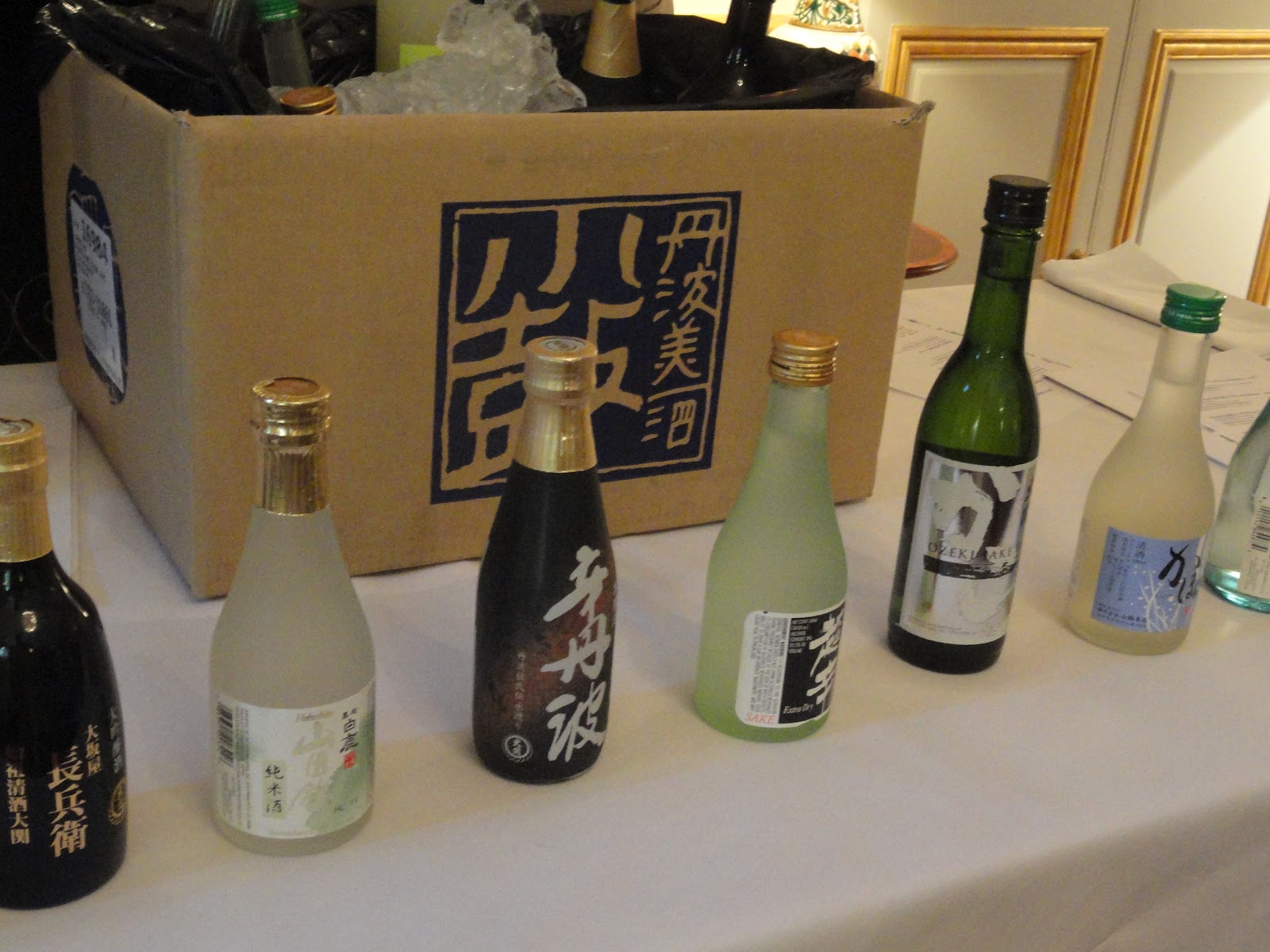
The sheer bliss of having over 45 different Sakes available for tasting. That made for quite a superb Monday, especially when I also got see and speak with John Gauntner, the famed Sake expert and "Sake Dendoushi" ("Sake Evangelist"), once again. John is an excellent Sake sensei and he was in Boston to impart some of his immense knowledge of this wondrous drink to a couple groups of Sake lovers.

On Monday, I was fortunate to attend two Sake events, including an afternoon Sake seminar & tasting at the residence of Takeshi Hikihara, the Consul General of Japan, located in Chestnut Hill. That event was a partnership with Chairman Haruo Matsuzaki of the Sake Export Association and President Peter Grilli of the Japan Society of Boston.In the evening, the Japan Society of Bostonhosted a Sake tasting and dinner at Cafe Sushiin Cambridge. John Gautner was at both events, making a brief presentation at each and then chatting with all of the attendees, answering all of their Sake questions.

John's presentations can be broken into two main topics: the current trends in the Sake industry and serving Sake at restaurants. His words were very encouraging, largely positive, and optimistic for the future. He also offered very practical advice to restaurants on how they can better offer and serve Sake to their customers. He did not differentiate as to only Japanese restaurants, and his comments would apply to any type of restaurant, of any cuisine, which wanted to provide Sake to their patrons. As I have said often, Sake is extremely food friendly and compatible with a wide range of cuisines.

Up front, John stated that there is "no bad sake on the market" and that "even the worst is pretty good." That doesn't mean that all Sake is premium or that it is all excellent. It indicates that the quality of Sake has never been higher than it is now, better than it was even 10 years ago. The quality should continue to improve with time so it is a great time to enter the realm of Sake.

Sake consumption in Japan peaked around 1973 and has been on a steady decline since then, where it now constitutes less than 10% of Japanese alcohol consumption. The number of Sake breweries has been on a steady decline as well, from a high of over 20,000, down now to around 1400 or so. But, 2011 saw a slight increase in consumption and there are signs that it could continue, which obviously would be very good for all. In addition, Sake exports to the U.S. have broken records in both 2010 and 2011. There are a number of reasons why the increases may continue.

First, the general overall interest in Sake has increased and that has led to more consumption. Second, as I mentioned recently, the Japanese government is declaring Sake to be a "national alcoholic beverage." Though the government lacks much of a budget or plan for how to promote Sake, their simple announcement has already garnered plenty of publicity.  We can only hope that the government will devise some compelling strategy to promote Sake. If nothing else though, hopefully the increased publicity will continue. Third, though Sake consumption has traditionally been the primary domain of older generations, the demographics have begun to shift, with more people from the younger generations embracing Sake. That should invigorate the industry, giving them a larger market.


What have been some of the latest trends and changes in the Sake industry? John broke this topic into three categories: products, industry and technology. But, he also stressed, as I have heard him say numerous times before, that there are many exceptions in the Sake world. Generalizations can be made, as long as one understands that exceptions are likely to exist.

Let us start with the products category. First, about 10-20 years ago, Sake aromas, which primarily derive from the yeast, started becoming much more prominent, and eventually a number went too extreme, way over the top. Fortunately, many producers have begun to reign in these extremes, returning to a more reasonable balance. Second, though the number of Sparkling, Low Alcohol and Fruit-Flavored/Infused Sakes on the market have increased, they still constitute the tiniest percentage of production so they are not truly a significant trend. Third, more attention and publicity has been given to certain Sake styles, including Namazake, Kimoto, and Yamahai. This is good news to me, especially since the Kimoto/Yamahai is one of my favorite styles. Thus, I hope to see more Sakes produced in this manner, even though it is a more laborious and risky process. Lastly, there appears to be a surge in new pasteurization methods, which is leading to better quality Sake. In addition, there is much more storage of Sake in the bottle rather than cask during the usual 6-12 month aging period after production. This generally leads to smoother Sake.

As for the industry, there have been several key changes. First, a new generation of Sake brewers is entering the industry. The old guard, often 60+ years old, are handing over the reigns to the younger generation, often men 30-40 years old. This is infusing new ideas and life into the Sake industry, which is needed as the world is changing. Second, in that regard, with the advent of the Internet, social media, and such, marketing and sales have changed, and what worked in the past may no longer be applicable. Breweries must adapt to these changes, and a younger generation might best be able to handle these changes. Third, more experimentation in the Sake industry is now occurring, again likely due to the younger generation who are more willing to try new things, to expand their horizons and take risks. Where many previous brewery owners were never involved in the actual brewing, handing the reigns to their Toji, the newer generations of owners are doing it themselves, creating a deeper connection with their products.

In regards to technological changes, mechanization is far more prevalent in breweries, and the machines are more complex and advanced. The best part is that these machines generally perform the laborious tasks of brewing, yet still permit the skilled brewers to intervene where necessary. Less laborers are necessary but the human element remains to ensure the artisan nature of the Sake, as well as to control the quality. Despite the increased mechanization, brewing still remains more about "experience and intuition" and John even stated that to the brewers, "every year it is back to first grade." It has also been very helpful to brewers that there now is an abundance of assistance available to them. Textbooks, chemical analysis and research results are more readily available to the brewers and there is now more information exchange. Computers have made such communication much easier, and this has lead to a greater quality Sake across the industry. Resources for Sake brewing just continue to grow.

How should restaurants best serve Sake? How should they create a Sake list? Though these comments were directed primarily to restaurants, some of the information is relevant to all Sake lovers. But I hope that many restaurants, of all cuisines, heed these suggestions, to better promote Sake.

Restaurants need to understand that their primary goal in serving Sake should be to promote it, to get more customers drinking it. The more people that drink it, the greater your profits. With that goal always in mind, then a restaurant can implement a plan to best serve their Sake. In general, it is probably most beneficial to keep it simple, to ensure Sake is approachable. Consider that though wine can be intimidating to many customers, Sake is even more intimidating. If you place too many barriers to the comprehension of your Sake list, then your customers will opt for a different, and easier, beverage. If you choose to make your Sake more complex, you must be willing to handle the ramifications, and also ensure that your staff is adequately prepared to handle that level of complexity. But simple might be your best option.

What is the proper glassware for Sake? It is simple as there are no rules and you are free to create your own. It can be advantageous to use a wine glass for serving aromatic Ginjo Sake, though some other Sakes won't present as well in such a glass. You can use the small, traditional ochoko glasses, which can be aesthetically very pleasing, but then the complex aromas of Ginjo Sake may not present well. It is best to make it simple, though some complexity can be fun, if you are willing to deal with the added difficulty. Experiment with your Sake, and determine which works best for your restaurant.

What is the proper serving temperature for Sake? Most premium Sake is best served slightly chilled, as you would serve a white wine. Warming Ginjo, and especially Daiginjo, Sake though can destroy some of their complexity so it is not advised. Some Sake, such as Kimoto and Yamahai can be gently warmed, though not too hot. A restaurant should experiment with tasting their Sake selection at various temperatures to determine what will work best. You could make this more complex for your patrons, offering the same Sake at different temperatures, but that also can be a barrier to the average consumer. Making it simple might be preferable.

How do you compile a Sake list? It is recommended that your Sake list be created to impress your customers, to offer them a diversity of Sake. As there is so much more Sake available now, restaurants have a wide selection from which to choose. It is important to decide what you wish to accomplish with your Sake list. For example, do you wish it to contain only unique Sakes or do you want to have one of the largest lists in the city? Treat it as importantly as you would in compiling a wine list.

You can order your Sake list in numerous ways, such as by price, grade, style, region and more. One of the simplest and effective ways to do so is by grade, such as Junmai, Ginjo and Daiginjo. That also usually corresponds to price so that higher grades will cost more. You should also separate the more unusual types, such as Sparkling Sake and Koshu, aged Sake, into a separate category as they really don't fit well into a grade category.

It is also recommended that you carry a range of price points, from inexpensive to high-end Sake. You want some less expensive Sakes so that customers will be more willing to take a chance on ordering it. I have mentioned that to restaurants before, that marking up their Sake by 3-4 times the retail price is ridiculous. It is a significant barrier to customers who know little about Sake as well as more experienced Sake lovers. It can also be important to carry one or two very popular Sakes, to appeal to those who will seek out such bottles. Besides carrying full-sized Sake bottles, 720ml, you might also want some smaller bottles (300ml-500ml), as well as serving Sake by the glass. As Sake is more durable than wine, serving it by the glass makes sense. Following up on that, it can also be very helpful to serve tasting flights of 3-5 Sakes, giving customers an easy way to try several different Sakes.

Education is also very important. First, you need an educated staff, servers who know and understand about Sake. Just as you wish your servers to know about wine, they should also know about Sake if you serve it. They don't need to be experts, but they do need to understand the basics and be able to explain it to customers. It can also be quite helpful if your Sake list provides some educational information for your customers, even something as simple as descriptions of the various grades and types of Sake. That helps to remove another barrier for consumers, and gives them more reason why they might choose to order Sake rather than another beverage.

The future of Sake looks bright, but we still need to continue to promote it, to get more people to taste it. Sake has much to offer, with a huge spread of flavor profiles, and more people would enjoy it, if only they took a chance and tried some delicious, premium Sake. So share a bottle of Sake with some friends, and spread the passion for this exquisite Japanese drink.
Read More
Posted in dining service, history, japanese, Restaurant, restaurant going, Sake | No comments

Monday, 18 June 2012

Rant: Handling a Food Catastrophe

Posted on 01:00 by Unknown
“The truly dedicated chef or the true lover of food is a person who has learned to go beyond mere catastrophe and to salvage at least one golden moment from every meal.”
--Jean Anthelme Brillat-Savarin


While perusing a book on culinary disasters, the catastrophes that have plagued numerous chefs, I was struck by this quote. Over the years, I have experienced a number of "bad" meals, and have written about some of them. Others are merely unpleasant memories. Yet in retrospect, there have been very few, if any, which were total disasters. There is usually something of value that can be garnered from such bad meals, and that lessens the negative impact of the experience.

In addition, such matters can be valuable learning experiences, an understanding of how not to do certain things, such as why certain food combinations don't work or how not to prepare a specific food. As a writer, I can discuss such matters, sharing what I have learned, hoping that others will learn from those mistakes. The feedback I provide can be invaluable to some, and might even correct certain problems. It also offers a forum for others to explain their rationale behind such matters, possible offering something that I have missed.

Chefs who handle catastrophes have the opportunity to rise above that adversity, to show their resilience, versatility and ingenuity. It tests their ability to adapt, to think on their feet. A negative situation can be transformed into a positive, though it might not always be easy to do so. It is easy to be a chef when everything works out well, but how one handles problems that arise separates the average cooks from the inspired. I want to dine at a restaurant where the chef is fully capable of handling whatever problems arise in his kitchen.

This is applicable as well to restaurants, wine stores, wineries, and other establishments which receive a negative review. How do they handle such matters? What if the review is largely positive but has some negative criticisms? Some react angrily to negative reviews, lashing out at the reviewer, though that often ends up being a very improper response and causing more problems than it resolves. Some advise to ignore all negative reviews, though that can also be improper, a failure to address legitimate concerns.

The nature of the review will help determine the proper response. Some negative reviews are merely the irrational rants of cranks, best ignored, while others may raise valid issues which an establishment probably should address. Addressing such issues can lead to more respect and potentially resolve any negative problems.

It is easy to wallow in negativity and far more of an effort to salvage something worthy. That applies not only to the realm of food, but to life in general. We need to cherish every bit of excellence in the world rather than dwelling on all that fails to meet our expectations. We should see negative matters as hurdles to overcome, opportunities to excel.

Have you been confronted with a negative food experience but somehow found a silver lining?
Read More
Posted in chef, controversy, Eating Habits, Food, rant, restaurant going | No comments
Older Posts Home
Subscribe to: Posts (Atom)

Popular Posts

  • Taste Camp: The Wine Industry of Quebec (Part 1)
    Exploring emerging wine regions is always a fascinating endeavor even if their wines are not readily available outside of that region. It is...
  • Rant: Beware The Self-Proclaimed Expert
    I am very tired of self-proclaimed wine experts, gurus, ninjas and whatever whose actual knowledge is lacking. This is obviously not a prob...
  • Rant: Where Is The Roast Chicken Love?
    1990 was a pivotal year in the battle of beef versus chicken . It was the first year that Americans ate more chicken than beef, and that has...
  • Tuscan Market: One Stop Shopping & Cafe
    Many of us would love to be able to easily purchase fresh baked bread, fresh local produce, artisan cheese, meats, seafood, fresh pasta, win...
  • Rant: U.S. Sake vs Japan Sake--Context Is Everything
    Is sake produced in the U.S. as good as sake produced in Japan? Does the question require more specificity? Or is it even a fair question? A...
  • Boston Wine Expo: Pinotage Rosé to Cape Verde
    Here is a sampling of some of the other wines that I found interesting at the Boston Wine Expo , and I will be posting about even more wines...
  • Rant: Outraged By Sake Prices At Restaurants
    We often hear complaints about the outrageous prices  of wine sold at many restaurants. Some places charge three, four or even fives times t...
  • Rant: Post-Labor Day Wine Advice
    With today as Labor Day , it is seen by many people as a signal of the end of summer, despite the fact that the official end is not until Se...
  • Rant: Rushing To Judge A New Restaurant
    As soon as a hot, new restaurant opens, there is a rush for food bloggers and online reviewers to dine there and immediately report back. Ti...
  • International Boston Seafood Show: Fish Fun & Photos
    “ Fish is held out to be one of the greatest luxuries of the table and not only necessary, but even indispensable at all dinners where there...

Categories

  • 2011 (8)
  • 2012 (9)
  • 2013 (2)
  • alabama (1)
  • alaska (1)
  • alcohol (1)
  • allergy (1)
  • alsace (3)
  • Andover (3)
  • animal (1)
  • anniversary (1)
  • Argentina Wines (10)
  • Arlington (11)
  • armenia (1)
  • art (4)
  • Australia Wines (2)
  • austria wines (5)
  • author (12)
  • award (2)
  • Bacon (1)
  • Bakery (15)
  • bar (1)
  • bbq (3)
  • beauty (1)
  • Bedford (2)
  • beer (19)
  • biodynamic wine (1)
  • biography (1)
  • blogging (35)
  • Book reviews (30)
  • book store (3)
  • Boston (165)
  • bourbon (11)
  • braintree (2)
  • brazil wines (1)
  • brazilian (1)
  • breakfast (2)
  • brewery (6)
  • brighton (1)
  • Brookline (9)
  • brunch (15)
  • Burlington (3)
  • business (1)
  • butcher (4)
  • California Wines (20)
  • Cambridge (29)
  • canada (8)
  • Canada Wines (7)
  • candy (3)
  • cape cod (6)
  • cape verde wines (1)
  • casino (7)
  • caviar (1)
  • celebrity (2)
  • champagne (11)
  • Charity (33)
  • cheese (23)
  • chef (27)
  • chianti classico (10)
  • children (2)
  • Chile (2)
  • Chile Wines (2)
  • china (6)
  • chinatown (3)
  • chinese cuisine (8)
  • chocolate (1)
  • christmas (3)
  • cider (8)
  • cocktails (47)
  • colorado (2)
  • concord (10)
  • conference (9)
  • Connecticut (12)
  • consumers (2)
  • contest (8)
  • controversy (97)
  • cookbooks (5)
  • cooking (15)
  • cuba (1)
  • cyprus wines (1)
  • dance (1)
  • Danvers (2)
  • dessert wine (1)
  • desserts (21)
  • diet (2)
  • dining service (1)
  • discount (1)
  • distillery (14)
  • dlw13 (1)
  • donuts (1)
  • dorchester (16)
  • easter (6)
  • Eating Habits (2)
  • ebook (6)
  • ethics (3)
  • ethiopia (1)
  • farming (10)
  • father's day (1)
  • fiction (11)
  • finger lakes (2)
  • florida (1)
  • Food (4)
  • Food Event (8)
  • Food Market (12)
  • food news (2)
  • food processing (2)
  • food safety (4)
  • food truck (1)
  • France (3)
  • France Wines (19)
  • fruit (7)
  • Games (2)
  • gardening (1)
  • georgia wines (1)
  • gin (1)
  • glasses (1)
  • grapes (4)
  • Greece Wines (1)
  • guest post (1)
  • health (21)
  • history (34)
  • holiday (46)
  • hotel (2)
  • Hungary Wines (3)
  • hybrid (2)
  • ibss12 (14)
  • ibss13 (13)
  • Ice Cream (5)
  • ice wine (2)
  • iceland (1)
  • interview (5)
  • ipswich (4)
  • ireland (2)
  • italian cuisine (43)
  • Italy (19)
  • Italy Wines (38)
  • jamaica plain (1)
  • japanese (70)
  • kentucky (12)
  • korea (1)
  • law (13)
  • legend (9)
  • lincoln (6)
  • liqueur (1)
  • local wine (2)
  • los angeles (1)
  • louisiana (2)
  • louisville (7)
  • lynnfield (1)
  • madeira (1)
  • magazine (16)
  • Maine (2)
  • Malbec (1)
  • Malden (1)
  • mallorca (1)
  • mardi gras (2)
  • Massachusetts (4)
  • Massachusetts Wines (6)
  • mead (5)
  • meat (23)
  • Medford (6)
  • melrose (3)
  • mexican cuisine (16)
  • mexico wine (3)
  • mezcal (1)
  • milk (2)
  • milton (1)
  • mississippi (1)
  • montreal (2)
  • mothers day (1)
  • music (4)
  • natick (1)
  • needham (3)
  • new england (2)
  • New Hampshire (17)
  • new year's eve (10)
  • New York (3)
  • New York City (3)
  • New York wines (1)
  • New Zealand Wines (1)
  • newburyport (1)
  • newport (1)
  • news (1)
  • newspaper (7)
  • newton (9)
  • North Andover (16)
  • north end (12)
  • nova scotia (5)
  • Oregon (2)
  • Oregon Wines (6)
  • organic food (1)
  • organic wine (2)
  • paso robles (3)
  • peruvian cuisine (1)
  • phillipines (2)
  • pinotage (2)
  • pisco (1)
  • Pizza (2)
  • pork (3)
  • port (13)
  • portland (1)
  • portsmouth (6)
  • Portugal (6)
  • Portugal Wines (19)
  • poultry (1)
  • providence (1)
  • provincetown (5)
  • quebec (5)
  • rant (97)
  • Reading (1)
  • Recipe (11)
  • Restaurant (198)
  • restaurant going (8)
  • restaurant reviews (65)
  • Rhode island (4)
  • rose (7)
  • rum (11)
  • Sake (61)
  • Sake Reviews (15)
  • salem (2)
  • salmon (4)
  • sandwich (5)
  • science (10)
  • scotland (4)
  • seafood (72)
  • Seattle (1)
  • sherry (10)
  • shochu (1)
  • shopping (3)
  • social media (1)
  • soda (2)
  • Somerville (13)
  • South Africa Wines (7)
  • spain (8)
  • Spain Wines (18)
  • sparkling wines (6)
  • spirits (42)
  • sports (4)
  • st. patrick's day (4)
  • steakhouse (12)
  • sudbury (1)
  • sushi (5)
  • sustainability (61)
  • sweden (1)
  • tastecamp (5)
  • tea (6)
  • television (4)
  • tequila (2)
  • texas (1)
  • thai (2)
  • thanksgiving (9)
  • theater (2)
  • top ten (14)
  • toronto (1)
  • travel (8)
  • twitter (1)
  • united states (1)
  • Uruguay Wines (1)
  • valentine's day (5)
  • vegetables (3)
  • vermont (4)
  • virginia (1)
  • virginia wines (1)
  • vodka (8)
  • Wakefield (1)
  • walpole (2)
  • watertown (1)
  • wayland (1)
  • wbc (3)
  • west concord (1)
  • westwood (1)
  • whiskey (19)
  • Winchester (14)
  • Wine (3)
  • Wine Education (19)
  • wine event (14)
  • wine importers (1)
  • wine marketing (11)
  • Wine news (3)
  • wine pairings (15)
  • wine personality (1)
  • Wine Prices (5)
  • Wine Reviews (68)
  • wine sales (13)
  • Wine Stores (23)
  • Wine tasting (11)
  • wine writing (1)
  • winemaker (4)
  • winemaking (6)
  • wineries (5)
  • winery (21)
  • Woburn (3)
  • women (3)

Blog Archive

  • ▼  2013 (171)
    • ▼  September (5)
      • Why Are You Fat?
      • Thursday Sips & Nibbles
      • Heirloom Flavor: From a Dragon's Tongue to a Nebra...
      • Papa's Pilar Rum: What Would Hemingway Do?
      • Rant: Post-Labor Day Wine Advice
    • ►  August (19)
    • ►  July (18)
    • ►  June (19)
    • ►  May (19)
    • ►  April (20)
    • ►  March (32)
    • ►  February (20)
    • ►  January (19)
  • ►  2012 (283)
    • ►  December (21)
    • ►  November (23)
    • ►  October (30)
    • ►  September (17)
    • ►  August (26)
    • ►  July (23)
    • ►  June (19)
    • ►  May (21)
    • ►  April (20)
    • ►  March (34)
    • ►  February (26)
    • ►  January (23)
  • ►  2011 (46)
    • ►  December (27)
    • ►  November (19)
Powered by Blogger.

About Me

Unknown
View my complete profile