ShrimpTempura

  • Subscribe to our RSS feed.
  • Twitter
  • StumbleUpon
  • Reddit
  • Facebook
  • Digg
Showing posts with label Wine Reviews. Show all posts

Tuesday, 13 August 2013

Changes At Posto: An Updated Review

Posted on 00:00 by Unknown
Change has come to Posto and the intended objective is to make the restaurant even better than before. I have long been a fan of Posto so I was intrigued to see what the changes would bring. Last week, I was invited to a media dinner to check out some of those changes, and speak to them about what else might be coming for Posto. I am pleased to say that the quality of the food remains as high as ever.

Joseph Cassinelli, Chef & Owner of the Alpine Restaurant Group, recently named two inaugural positions including: Alec Riveros as Director of Operations and Chef Robert Jean as the Culinary Director of the group. Casssinelli and Riveros previously worked together in 2002 at Excelsior, where Cassinelli was Sous Chef and Riveros was the General Manager. Riveros was our host during the media dinner, answering our questions about the new changes. Additionally, at Posto, Chef Wyatt Maguire was named as Executive Chef and Vanessa Leesam named as Sous Chef (and they are pictured above). 

The menu has been revised in both substance and layout. It now is a single page menu, broken down into Antipasti (11 choices from $2.50-$14), Ensalate (4 choices from $10-$13), Paste (6 choices from $17-$19), Carne E Pesce (5 choices from $18-$26), and Pizze (12 choices from $11-$19). They have kept some of the long time favorites, like the Arancini and Nonna's Meatballs. The menu also changes around every 3-4 days, though only about 2-3 items change each time. Some of the changes are seasonal, such as taking the Bolognese and Carbonara off the summer menu though they will return when the hot weather is over. The menu continues to present plenty of diversity, an assortment of dishes that should appeal to all preferences.

They no longer offer Brunch though you could visit their other restaurant, The Painted Burro, for Brunch. (And if you go, get the meatloaf!) As for future changes to the Posto menu, they are considering the possibility of adding Charcuterie or even a Cheese program.

The beverage program has also seen some changes. The cocktail list now includes a selection of Aperitivo, Cocktails made with house infused spirits, house made limoncello and simple syrups, in addition to selections of local and international draft and bottled beer. Cocktails are generally priced $9-$12 and they carry about 15 beers and a pear cider, priced from $6-$9.

The wine list, which is about 90% Italian, offers 32 wines by the glass, priced $8-$22, with most $12 or under. They have some good diversity, including some more artisan wines, and they are seeking to expand their choices. Wines by the bottle are generally priced about $36-$100, however the markup on many of those wines is 3 times the usual retail, which means the markup from their cost is even higher. I would like to see a lesser markup, which I think would lead to increased wine sales. They are also seeking ways to keep their wines available by the glass at a better temperature.

We started the evening with an Aperol Spritz ($10/glass, $34/pitcher), made from Aperol, Prosecco, and Soda water. A pleasant and refreshing summer cocktail with a balance of sweet and bitter.

A couple Antipasti were initially brought to our table including Olivas ($5), warm olives with orange, rosemary, and chile de arbol.

We also received Pane ($2.50), hot loaves of rosemary sea salt bread, which use the same dough as they use for their pizza. This is a Posto classic that has been kept and as a bread lover, this gets my hearty recommendation. There is a spicy chili oil into which you can dip the bread, or just enjoy it on its own. The bread is also perfect for dipping into some of the other dishes you'll have.

For our first course, there were two dishes which were split between everyone. There was Barbabietola ($13), a salad of baby beet, sicilian pistachio, orange vinaigrette, and feta. I am not a fan of beets but the feta was creamy and tasty, and those who liked beets very much enjoyed this salad.

I enjoyed the Fritto ($11), a fried green tomato with fennel salad and buttermilk dressing. A pleasant start to the meal, with a fresh, juicy tomato and a light, crisp coating.

To accompany this course, we drank some 2012 Poderi Cellario Favorita. Made from the Favorita grape, a white grape grown primarily in the Piedmont, this wine was crisp and clean, with delicious pear and citrus flavors, as well as hints of floral and herbal elements. A delicious and more unique wine, it was food friendly too, and a welcome addition to their wine list.

Our second course was the Mozzarella ($14), Bufala mozzarella with prosciutto, yellow peaches, and a rosemary honey. Both the Bufala and honey are from Vermont, and they infused the honey in house with rosemary. A superb melange of flavors, this is an excellent summer dish with creamy cheese, juicy grilled peaches, salty ham and hints of sweetness from the honey. Give me some hot bread, this dish and a nice wine, and I would be very happy.

Our next course, again split among the diners, was a Pasta course. Pasta has always been a strong point at Posto and it remains so. The Gnocchi ($18) is made with braised lamb, pecorino toscano, white wine, and vidalia onion. The tender, pillowy gnocchi were accompanied by tasty, earthy flavors from the lamb. The white wine sauce was light and flavorful, accenting the gnocchi and lamb.

The Agnolotti, containing beef shin, were accompanied by thumbelina carrot and fried shallots. Again, the pasta was cooked perfectly, and the meaty filling added plenty of flavor to the dish. It was a lighter dish, perfect for summer, and the fried shallots were a nice addition.
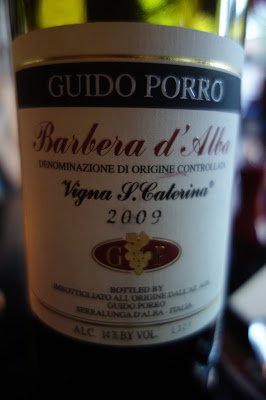
The next wine of the evening was the easy drinking, 2009 Guido Porro "Vigna Santa Catarina" Barbera d'Alba. Light and fruity, with a touch of spice and earthiness, it is a fine food wine as well as something you could enjoy on its own. This wine is going to appeal to most wine lovers, seeking a simple wine to savor and enjoy.

Fish head time! The Trota ($22) is a piece of Rainbow Trout, sustainably farmed in Idaho, with kale, marcona almonds, onions and marrow. When you order the dish from the menu, you get the whole trout, so they added the fish heads to our dishes as a nod to that. The trout was tender and tasty, and the crunch of the salty almond enhanced the fish.

During our dinner, there was a discussion of Risotto, and I mentioned how it had always seemed rare on the Posto menu. The only Risotto they have right now is a Heirloom Tomato Risotto, which is part of the Swordfish dish. It is made with yellow tomatoes, using tomato water and not cream, as well as parmesan rind. An excellent Risotto, it was creamy with rice at just right texture, and the taste of tomato was prominent and fresh. I could have easily devoured a big bowl of this Risotto, and hope that Posto decides to add more Risotto to their menu.  


Our final savory course was a selection of four pizzas, including Caponata ($17), Marinara ($11), Mais ($17) and Salsiccia ($17). I tried 3 of the different pizzas, all but the Caponata, which is made with eggplant, goat cheese, tomato conserva, grapes, and pine nuts. This is Neapolitan pizza, with a soft, chewy crust, though people unfamiliar with this style may think the dough is undercooked, though it is not. I like this style of pizza, and the crust has always been one of my favorite parts of this type of pizza.

The Marinara, with sliced garlic, oregano, and parmesan, is a basic pizza, sure to appeal to the picky pizza lovers. The Mais comes with sweet corn, fontina, applewood bacon, grape tomato, and basil puree, offering a nice balance of sweet and salty flavors. The Salsiccia is made with fennel sausage, whipped ricotta, and a pistachio nut pesto. There was plenty of tender sausage, complemented by the creamy ricotta and nutty pesto. Pizza is always a fine option at Posto.

Dessert was up next. Though much of their dessert is made in house, they do purchase their Gelato from Christina's in Cambridge and their Cannoli from Modern Pastry. We had their Panna Cotta, a lemon basil flavor with strawberry and shortbread. Though Panna Cotta usually doesn't impress me much, this was different, the creaminess making for a more compelling dish.

My favorite dessert at Posto has long been their Tiramisu, which I think is one of the best in the area. Besides a wonderful blend of balanced flavors, it has a great texture, which doesn't fall apart or start oozing. In the past, I have taken it home and it still remains as a solid piece, rather than sliding into a gooey lump. If you have any room after dinner, you must order the Tiramisu.

With our dessert, we sipped some 2012 Vietti Cascinetta Moscato d'Asti, a crisp, lightly sweet, and fruity wine with a bit of frizzante. Nice flavors of peach and citrus, it is well balanced with a pleasant finish. This is not one of those overly sweet Moscatos that some people enjoy. This is a more serious wine, which should please many wine lovers.

As a final treat, we savored glasses of the Damilano Barolo Chinato, said to be similar to an offspring of Vermouth and Amaro. Posto has 4 Chinato on their wine list, and this is supposed to be the sweetest of the four. Chinato starts with a base of Barolo and then adds an herb infused alcohol, which contains quinine bark and some 21 other spices and herbs (such as rhubarb, gentian, orange peels, cloves, and cardamom seeds). As the quinine bark is known as "china" in Italian, that is the derivation of the name chinato. Legend states that Barolo Chinato was invented in the 1800s by a pharmacist seeking to create a medicinal potion. It is an interesting wine, with a savory blend of spices and some bitterness, though not to the level of a Fernet Branca. The sweetness, which is still relatively low, balances out the bitterness. There is plenty of complexity in the Chinato, and you get some of the usual Barolo flavors too.

Our main server for the evening was Jaime (pictured above), who was personable and attentive. She knew the food menu and wine list well and made sure we all had an enjoyable evening. Our main host, Alec Riveros, also did his best to ensure we had a fine evening. He was upfront in his answers to our questions, and also seemed interested in any suggestions we had to offer as well.

Posto remains as one of my favorite restaurants, and the changes have not diminished the quality in the least. The changes have largely been positive and I think the restaurant will continue to improve, rather than remain stagnant. My only concern is with the high markup on their wines, which is a problem with many restaurants, and far from unique to Posto. If you haven't been to Posto, or haven't been there in some time, then you should make the effort to dine there and experience some delicious Italian food, from small plates to pizza, from pasta to seafood.
Read More
Posted in italian cuisine, Italy Wines, Restaurant, restaurant reviews, Somerville, Wine Reviews | No comments

Friday, 2 August 2013

Bodegas Beronia: 40 Years, With Oak

Posted on 00:00 by Unknown
"To make a great Rioja, one must master the use of oak."
---Christopher Canale-Parola

For over eight years, I've been part of a group of friends who meet weekly and share wine. These are the same guys who I once worked together with on the Real World Winers blog, which I contributed to before the start of The Passionate Foodie blog. There was a love of Spanish wines from the beginning, and when we toast the evening every week, there is a hearty unison of "Rioja!"

One of the first Rioja wines that peaked my interest in Spanish wines was the Marqués de Riscal, and my first higher-end Spanish Rioja, the Bodegas Fernando Remirez de Ganuza Reserva, was stunning and made me seek out more higher-end Spanish wines. In 2007, on my second trip to Spain, I visited the Rioja region, stopping at several wineries and enjoying many excellent wines. It was a wonderful place, with such beauty and history, great people and tasty wines.

Last week, Rioja came to Brookline, bringing with it a great sense of history, a couple passionate people, and plenty of delicious wines, accompanied by compelling Spanish cuisine.

Chef Deborah Hansen, the owner of Taberna de Haro, a Spanish restaurant in Brookline, hosted a Rioja event with winemaker Matias Calleja of Bodegas Beronia and Christopher Canale-Parola, the Export Manager for Bodegas Gonzalez Byass and a former winemaker. I previously met Christopher at a recent Sherry tasting, and he was equally as knowledgeable and passionate this time.
The wines of Beronia are imported by The San Francisco Wine Exchange and distributed in Massachusetts by Bay State Wine & Spirits. You definitely should seek out the Beronia wines at your local wine shop.

Pictured here are Christopher Canale-Parola and Matias Calleja.

Back in the 3rd century BC, the region of Rioja was inhabited by a Celtic tribe known as the berones, and they referred to the region as Beronia. The winery chose this ancient term for their name. The winery itself, founded in La Rioja Alta, was established in 1973 by a gastronomic society which wished to produce their own wine. Thus, 2013 is their 40th anniversary and our tasting was partially a celebration of that achievement. At first, the winery only made Reserva and Gran Reserva wines, and found success in their efforts.

With their success, they desired to expand their business and found that Bodegas Gonzalez Byass also sought expansion. With a shared purpose, the twy came together in 1982 and it was then that Matias Calleja was hired. With parents who were growers, Matias has been involved in wine his entire life and has spent 31 years working at Beronia. Though he didn't speak much English, it was clear that this is more than a job to him, that it is a true passion and he couldn't see himself doing anything else.

Bodegas Beronia owns about 20 hectares of vineyards and controls another 850 hecatres, with 200 growers tending the grapes. Approximately 90% of their grapes are Tempranillo and they produce about 430,000 cases annually. They own around 29,500 American, French and mixed oak barrels, having conducted numerous experiments with oak use. They seek mastery of oak for their Rioja and are not afraid to experiment, to test various combinations. Their mixed oak barrels are made from American staves and French oak heads.

Matias has a simple wine making philosophy: "Always think of the consumer." He believes you must evolve with the consumer, though you shouldn't lose the typicity of Rioja. Currently, consumers want natural and healthy wines, and that is important to Beronia. They practice sustainable viticulture, desirous of being as healthy as possible, and are always working toward better sustainability. They also try to reduce wine making manipulation, preferring physical rather than chemical manipulations. Certainly very admirable traits.

Chef Deborah Hansen, who expertly paired our lunch with the wines, stated that "Rioja is like a beautiful woman" and is "soft and sexy." A beautiful woman, whether in simple jeans, a paint stained smock or an elegant dress, still retains her beauty and Rioja is the same. You can put it with anything you want, any type of food, and it still retains that beauty. Deborah is also a fierce Rioja traditionalist and believes that the oak should always remain in the background, and shouldn't dominate the wine.

As we assembled at Taberna de Haro, standing around chatting with each other, we sipped some 2012 Beronia Viura, made from 100% Viura. Crisp, clean and fruity, this was a tasty way to begin the evening. I enjoyed the fresh citrus and peach notes of the wine. A nice choice for summer, and a wine that would pair well with salads, seafood, and light chicken dishes.

Prior to having lunch, there was a tasting of a number of Beronia wines, and these were intriguing comparison tastings, a way to show the influence of oak on Rioja. I began with a comparison of three bottles of 2011 Tempranillo Reserva, which have not yet completed their aging. One wine was matured in French oak, another in American oak and the third in Mixed oak. There were marked differences, especially in the dominance of fruit versus spice, with the mixed oak providing a more balanced taste. This tasting was an excellent way to see how the extracted flavors from different oak treatments influence the same wine.

I then moved onto two other wines, a 2008 Tempranillo Reserva and the 2011 Tempranillo Elaboracion Especial. The Reserva was matured in mixed oak, and provided a nice, balanced taste with tasty red and black fruit flavors, and a spicy backbone. The smooth tannins complemented the lengthy finish, and this was a Rioja you would say is soft and sexy.

On the other hand, the Elaboracion Especial is a more unique wine, and definitely not a traditional Rioja product. It undergoes malolactic fermentation in the barrel and then is aged for about seven months on the lees in the barrel. American oak is used and the barrel toasting is crucial to the taste. The barrels are toasted at lower temperatures over a long time, about 180 degrees Celsius for 26 minutes. This makes the toast penetrate deeper into the barrel, providing more mocha flavors to the wine. This wine was developed based on a lengthy survey of consumer tastes. It is a melding of red fruit and licorice flavors, with mocha, and offers an alluring aroma coupled with a smooth, well balanced and compelling taste. This wine certainly appealed to me and I can see why it is so consumer friendly.

Finally, we ended the tasting with three aged Gran Reservas, from 1982, 1994 and 2006. The 1982 and 1994 wines were matured in American oak while the 2006 was matured in French oak. This was more of a comparison of aging rather than oak treatments, despite the difference in the 2006. Both the 1982 and 1994 were elegant wines, still with plenty of life within them, and presenting complex and compelling tastes. The 1994 was probably my favorite, presenting a bit more fruit flavors, as well as a touch more complexity. It is a wine, from an excellent vintage, that would impress any wine lover. The 2006 Gran Reserva was a much bolder wine, not as elegant, with more upfront spice and fruit. It would be interesting to taste that wine in ten years to see how it develops.


Our lunch began with Albondigas de bacalao, salt cod saffron balls, and Tostas de jamon, tomato toast w Spanish ham  The albondigas had a nice salty taste with a crunch to the outside, and creaminess inside. Quite addictive. And the toast and ham were also habit forming. The silky texture of the ham with the thicker texture of the bread, with some nice acidity from the tomato.

With this course, two wines were paired, including one of my favorites of the tasting. The 2010 Old Vines is 100% Tempranillo, from 40 year old vines, is matured for ten months in mixed oak. It was elegant and balanced, smooth and delicious, with a nice melange of fruit and spice. It was deceptively easy to drink, though possessed of intriguing complexity which would make you want to slowly savor a glass. It mesmerized me from the first taste and garners my highest recommendation.

The 2009 Crianza is a blend of Tempranillo, Graciano and Mazuelo which has spent 12 months in mixed oak. This is the wine they produce in the biggest volume, and is is extremely popular in Spain. It is young and fruity (cherry, raspberry and licorice), with mild spice notes. An easy quaffer and a perfect wine for burgers, pizza or tapas.

The next course was Cogollos con confit de pato, gem lettuce hearts with house made duck confit, and Pate de conejo, house made truffled rabbit pâté. Fresh lettuce, savory duck, and an earthy pate combined for a compelling dish that paired very well with the Rioja. This dish would have gone very well with the Sherry we tasted recently too.

The next two wines included two that we already tasted, the 2008 Reserva and the 2006 Gran Reserva. The 2008 Reserva is a blend of 90% Tempranillo 3% Graciano, and 7% Mazuelo, and the Tempranillo wines are 40-60 years old. It spent 18-22 months in mixed oak and two years in the bottle. The 2006 Gran Reserva is a blend of 90% Tempranillo 5% Graciano, and 5% Mazuelo, and the Tempranillo wines are 80-120 years old.. It spent 24 months in French oak and four years in the bottle.
Next up was Chuleta de cordero (lamb chop with fresh oregano allioli), Piquillos asados (roasted piquillo peppers) and Patatas fritas (French fries). This is a classic pairing, and the savory and tender lamb impressed me. The addition of the peppers and fries added some interesting textures and tastes. The Rioja rocked with this dish and it is easy to understand why it is such a classic.

The final wine of the evening was special, a 1973 Gran Reserva, which was the first wine produced by Beronia. It is classic Rioja, produced in a more old fashioned method, and is a blend of Tempranillo, Garnacha, Mazuelo, and Viura. Viura is a white grape and was once permitted in the making of red Rioja, but that is no longer the case. This was a sublime, complex and intriguing wine, just a pure stunner. The aroma seduced my nose while the taste tantalized my palate. It had strong acidity, lots of red fruit flavors, mild spice and hints of leather and chocolate. It is hard to do justice to this wine, which offers much to a wine lover.

We neded our meal with two tasty cheeses, Payoyo (sheep and goat's milk cheese from Andalucia)
and Guriezo (cow's milk cheese from Asturias), accompanied by Nueces con aceite y miel (walnuts with salt, Spanish olive oil, and honey). Deborah stated that sweeter Rioja pairs well with creamy cheeses. Amazing cheeses, it is always a pleasure to get to taste a new Spanish cheese, one creamy and the other more firm. French cheese may get far more press but Spanish cheeses are worthy of attention, presenting plenty of diversity, great taste and artisan farmers.

Taste and enjoy the wines of Beronia and I bet you'll start toasting a hearty "Rioja!"
Read More
Posted in Brookline, Restaurant, restaurant reviews, spain, Spain Wines, Wine Reviews, winery | No comments

Tuesday, 30 July 2013

The "Vineyard" of Boston & Elyse Winery

Posted on 00:30 by Unknown
Who says Boston cannot produce great wine? It just takes a bit longer from "vineyard" to the bottle.

The Elyse Winery, located in Napa, California, has celebrated 25 harvests however one could say that the original seeds of the Elyse vineyards were planted in Boston. Elyse Winery is owned by Ray and Nancy Coursen, and they grew up on opposite coasts, Ray on the East Coast in New Jersey and Nancy on the West Coast in the San Francisco Bay area. Despite this great distance, it seemed the gods of the vine saw fit to bring them together.

Ray eventually attended the Stockbridge Agricultural College at the University of Massachusetts, and while attending school also worked at Bauer Wine & Spirits on Newbury Street in Boston. It was at Bauer that Ray became enamored with French wine, and the first seed of Elyse was planted. Nancy acquired a degree in Occupational Therapy from the University of Pennsylvania, and took a job working with special needs children in Boston.

In 1982, Ray worked at the former Callahan's Steakhouse in Newton and that is where he met Nancy, who was a customer. Sparks flew and another seed was planted for Elyse. In fact, in the next year they traveled together to Napa Valley with the goal of starting a winery. A passion for wine brought them together and they spent the next years trying to transform their ideas into a reality.

First, Ray worked for some other wineries, gaining valuable knowledge and experience. Ray and Nancy also became innkeepers for a bed and breakfast. Their daughter, Elyse Sarah, was born in 1986 and the next year saw the birth of their own wine label, named after their daughter, and the production of a few hundred cases of Zinfandel. Their son, Jake, was born in 1990 and they eventually created a label for him as well, Jacob Franklin. Finally, in 1997, they purchased their own winery and vineyard, which you can now visit and taste their wines.

The Elyse Winery produces only about 10,000 cases annually though the wines are available nationally and internationally. They state that their "focus remains on creating vineyard driven wines that pair well with food." They produce around 13 different wines under the Elyse label, including Zinfandel, Cabernet Sauvignon, Chardonnay and some using Rhone grapes. I was intrigued by these Rhone style wines and received samples of three of them. And after tasting them, I am pleased that I had the opportunity to taste these gems.

The 2011 Elyse L’Ingenue ($28) is a blend of 2% Roussanne, 32% Marsanne, 11% Viognier and 5% Grenache Blanc from the Naggiar Vineyard in the Sierra Foothills. The wine is aged for about 16 months, sur lie, in used French oak, has an alcohol content of 14.6%, and only 416 cases were produced. I think Rhone whites don't get enough attention despite the fact they can be stunning wines. This Elyse was no exception. The aromas pleasantly caressed by nose, subtle fruits and flowers, while its full-bodied mouthfeel caressed my palate. Crisp and fresh, the fruit predominated, lush peach, pear and citrus, while there were mild floral elements. Complex and delicious, it possessed a satisfying and lengthy finish. With a dinner of scallops, this was a delightful wine and earns a hearty recommendation.

The 2009 C’est Si Bon ($28) is a blend of 39% Grenache, 33% Mourvèdre, 12% Syrah, 8% Cinsault, 5% Counoise, and 3% Viognier from the Naggiar Vineyard in the Sierra Foothills. The wine is aged for about 22 months in French oak puncheons (10% new), has an alcohol content of 14.4%, and only 1,594 cases were produced. With a medium-red color, the aroma of the wine presented a nice balance of black fruit and dark spice notes. Its intriguing melange of tastes, with a great depth of flavor, included ripe plum, black cherry, dark spice and an earthy backbone. Smooth and complex, it also possessed a lengthy and pleasing finish. Another stunner, I paired this wine with grilled steak and it was a fine pairing. I think this wine would also have paired well with a hearty ragu, or grilled lamb. Highly recommended.

The 2008 Le Corbeau ($37) is a blend of 90% Grenache and 10% Syrah from the Hudson Vineyard in Los Carneros. The wine is aged for about 22 months in 20% new French oak, has an alcohol content of 14.4%, and only 300 cases were produced. "Corbeau" means "raven" and though the Raven is well known for speaking the word "Nevermore," you won't be saying that after you taste this wine. You will be asking for more, for another glass of this dark and compelling wine. The wine is darkly colored, almost purple and opaque, with dark spices and black fruits on the aroma. On the palate, it is a dark and brooding wine, with ripe plum, blackberry, vanilla and dark spices, especially on the finish. There is a strong earthy streak and plenty of complexity to intrigue you. Well balanced, the finish is lengthy and alluring. This is a bigger and bolder wine than the C'est Si Bon, and pairing it with a grilled steak is an excellent idea. My highest recommendation.

Seek out the wines of Elyse Winery, especially their Rhone-style wines, and see what the "seeds" of Boston have brought forth.
Read More
Posted in Boston, California Wines, Wine Reviews | No comments

Tuesday, 16 July 2013

Gonzalez Byass & Taberna de Haro: Sherry Food Pairings

Posted on 00:00 by Unknown
"Although it is indeed a rare pearl, the king of food pairings really exists, and it's fino sherry."
--Taste Buds and Molecules: The Art and Science of Food With Wine by Francois Chartier

Too many people in the U.S. still believe that Sherry is primarily a dessert wine, and that is partially due to the fact that primarily sweet Sherry is imported into the U.S. However, dry Sherries are wonderful wines, and extremely food friendly. More people need to taste dry Sherry. Like Sake, many dry Sherries possess a prominent umami taste, contributing to its versatility with food. Sherries can also pair well with some foods which other wines have difficulty working with, such as asparagus.

I am a huge fan of Sherry and you can read more than two dozen of my articles at All About Sherry, from a History of the Sherry region to the Mystery of Palomino. Several of those articles discuss pairing Sherry with food, such as Sherry Food Pairings: More Bellota Please, Thanksgiving Wines? Consider Sherry or Saké, and Fino Sherry: The King of Food Pairings. Fortunately, in the Boston area, there are some restaurants which are promoting Sherry, helping to show their customers its versatility with food. This is great news for wine lovers willing to expand their horizons, to take a chance on something new to them.

Chef Deborah Hansen, the owner of Taberna de Haro, a Spanish restaurant in Brookline, is a huge Sherry fan and it is reflected in her restaurant. Taberna de Haro was also my Favorite Spanish Restaurant of 2012. One year ago, Deborah expanded her restaurant, essentially doubling it in size, and adding a very cool bar (pictured above). The restaurant carries over 40 different Sherries, and Deborah is planning on adding even more in the near future. This is a perfect place to experience the joys of Sherry, accompanied by compelling Spanish cuisine.    

Last week, Deborah (pictured above) hosted a special media Sherry event, presenting nine different Sherries from Bodegas Gonzalez Byass paired with various tapas selected by Deborah. The Sherries of Gonzalez Byass are imported by The San Francisco Wine Exchange and distributed in Massachusetts by Bay State Wine & Spirits. The tasting was led by Christopher Canale-Parola (pictured above), the Export Manager for Gonzalez Byass and a former winemaker. Christopher is young, knowledgeable and passionate and his love for Sherry is infectious. He is an excellent spokesperson to help introduce Sherry to a new generation of wine lovers.

Three years ago, I traveled to Spain, visiting Bodegas Gonzalez Byass, and you can read my article, Apostles & Thirsty Mice, for background on the winery and their wines. It was a fascinating visit, with plenty of delicious sherries. And thirsty mice who love sweet Sherry.

Our evening began with a glass of Tio Pepe Fino, which is made to be a richer style of Fino, and not as pungent or tart as other Finos. It is a more approachable of a Sherry, so is a great introductory Sherry for newcomers. It is dry, crisp and clean with hints of nuts and bread and possesses a fairly lengthy and pleasing finish.

Deborah feels that Fino pairs well with fried fish, and one of the dishes paired with this Sherry was Bienmesabe, small pieces of delicious, marinated fried haddock. The pairing worked very well and I could easily see having Fino this summer with fried clams. This Fino also works well with salty foods, and that was evidenced with the Gildas (skewered olive, boqueron & guindilla pepper) and Aceitunas (Spanish olives). Think Fino for oysters too!

We then moved onto two Amontillados, the Vina AB and Del Duque VORS. The Vina AB was dry and light, with delicious nutty notes. The Del Duque VORS is named after the Duke who, in 1835, sold the first barrels to the winery. I have raved about aged Sherries before, and a VORS Sherry must possess an average age of at least 30 years. This Amontillado didn't disappoint with a smooth, complex melange of flavors, from dark nuts to leather and caramel notes. It is compelling and alluring, a superb Sherry which is sure to seduce your palate.

Deborah stated that Amontillado is very food friendly and she likes pairing it with fish. So, we enjoyed it with Sepia a la plancha, griddled cuttlefish with garlic, Spanish olive oil and sherry vinegar. I have enjoyed Amontillado with seafood before and I agree that is it a very good combination. We also had a dish of Jamon serrano con esparragos asados, Spanish ham wrapped around roasted asparagus with a house made oregano mayonnaise. As I dislike bitter green veggies, I didn't eat the asparagus though everyone who did partake, raved about the pairing. Asparagus is a very difficult food pairing for most wines, but Amontillado seemed to work great.

Next up was an Oloroso and Palo Cortado, darker, more oxidized Sherries. The Oloroso Alfonso was rich and spicy, with flavors of caramel, nuts and a mild brininess. The Palo Cortado Apostles VORS is an exceptional Sherry, made from 87% Palomino and 13% Pedro Ximinez (PX). As Palo Cortado can sometimes be bitter, some wineries add a little PX for sweetness. With the Apostles, they age the wine for 12 years before adding the PX for the next 18 years. This is a hedonistic wine, smooth, complex and tantalizing. This is a Sherry to slowly savor with great friends.

Deborah mentioned that she likes bitter tastes with darker sherries, and loves pairing Oloroso Sherry with pate and poultry. With these two Sherries, Deborah prepared a Pate de pato con endibias, a duck pate with endive and a fig vinaigrette. The pate was amazing, and its rich, earthiness went very well with the two Sherries. The bitter endive was also intended to be complemented by the Sherry.

We continued with two more Oloroso Sherries, though both with a bit of sweetness. The Oloroso Solera 1847 is a blend of 75% Palomino and 25% PX, a concentrated, velvety wine with flavors of figs, raisins, and nuts. Its mild sweetness might remind you of some aged Ports. The Oloroso Matusalem VORS is a similar blend but it has an average age of at least 30 years. It is more complex, with deeper flavors of dried fruit, spice and leather. There is some sweetness but it is restrained, and the finish is lengthy and pleasing. Two more winners.

Deborah informed us that mushrooms is a classic Oloroso pairing and she also wanted to pair these Oloroso Sherries with the "pure animal of blood sausage."  Thus, we had Champinones rellenos de jamon (mushrooms stuffed with Spanish ham) and Morcilla a la plancha (griddled black sausage with roasted red peppers). The mushrooms were amazing, earthy and salty, and the blood sausage was tasty too, meaty and earthy. A superb course, I could have easily devoured a few more plates. Both Oloroso Sherries worked well with these dishes, and Deborah was spot on once again.

We ended the evening with two PX Sherries. The Vina Nectar PX is aged for about seven years, and had delicious flavors of caramel, figs, nuts and spice. The Noe PX VORS is aged for at least an average of 30 years, and its complex, sweet flavors tend more to raisins, coffee, spice, and cooked plums.

PX and blue cheese is a classic pairing, though Cabrales is usually used. Deborah though chose a Mitiblu cheese, a rich and creamy Spanish blue cheese, with dried apricots, walnuts, olive oil and honey. She did not add any bread, feeling it muddles the dish. It was pure creamy goodness with that tasty tang of blue which I love so much. Deborah also added that the best way to enjoy PX is often poured over ice cream. She even mentioned that bacon and PX work well together.

The evening provided more evidence of what I have said before, that Sherry is an excellent food wine and more people need to take a chance on placing it on their tables. Sample and taste some dry Sherries, from Fino to Palo Cortado, Manzanilla to Amontillado, and see what you have been missing.
Read More
Posted in Brookline, Restaurant, restaurant reviews, sherry, Spain Wines, wine pairings, Wine Reviews | No comments

Tuesday, 2 July 2013

Enjoying Portuguese Wines at Meritage

Posted on 00:00 by Unknown
As I have said repeatedly, Portugal has some of the best wine values in the world. I recommend their wines all the time, and those who take a chance on those wines usually love them. At a recent luncheon held at Meritage, Chef Daniel Bruce's wine-centric restaurant at the Boston Harbor Hotel, I found even more value Portuguese wines, including a killer dessert wine at an unbelievable price. If Portugal is not on your wine radar, then you are depriving yourself of some delicious, value wines.

The luncheon was put on by Full Circle Wine Solutions and Master Sommelier Keith Goldston discussed the wines we tasted, as well as Portuguese wines in general, during the course of the afternoon. Keith mentioned that the greatest strengths of Portuguese wines are their diversity, acidity, earthiness and the fact that they pair very well with food. I would essentially agree with him on these points, though I would add that they often are excellent values too.

For Keith, the biggest problem for Portugal is the lack of organized distribution. They do not have a plan for U.S. distribution, and often rely on friends or happenstance to find an importer. Instead, they need to made a concerted effort to target the best potential markets, to make more of their wines available where they best would be appreciated.

Keith also provided us some of his generalizations about the different grapes and wine regions of Portugal. He feels that the wines of Castelao are similar to Merlot and Zweigelt style, easy drinking, middle of the road wines. The wines of Lisboa are more easy drinking while the those of Alentejo are more modern, with strong oak use. The wines of the Dao are more similar to the wines of northern Rhone or Burgundy while the Douro wines are more similar to those of Priorat. As an interesting aside, he also mentioned how people in Portugal often omit the last syllable of many words. For example, they pronounce "Vinho Verde" as "Vinho Verd."

The luncheon began with a brief reception, a glass of the 2012 Adega Cooperativa de Ponte de Lima Colheita Loureiro Seleccionada, Vinho Verde ($8). This wine was made from the Loureiro grape and presents with a crisp, clean citrus taste and a bit of frizzante. Lemon is most predominant on the palate and it makes for an excellent summer wine, especially at this price. It is refreshing, an easy drinker not a complex thinker.

Keith stated that the Portuguese generally don't respect their white wines, and don't drink them much either. He also indicated that in the Vinho Verde region, about 40% of their production is for red Vinho Verde, which is a rarity locally. The red version is inky dark, tannic and is very tart and sour on the palate, like a sour Japanese plum. Rosé Vinho Verde is also produced and I have seen a couple locally over the years. I want to find a red Vinho Verde though.

Our first course was a Pan Roasted Line Caught Cod Loin with black olive tapenade and zucchini olive oil puree. A fine piece of flaky white fish, I actually enjoyed the puree too, though I am not usually a zucchini lover. The puree complemented the fish, adding some more subtle flavors.

With this course, we tasted three more Portuguese whites, and my clear favorite was the 2011 Quinta da Romeira Arinto, Lisboa ($11). Made from 100% Arinto and matured for a month on the lees, this is another superb value. It has a more subtle citrus aroma with a complex melange of flavors, lemon, apple, orange peel, minerality, and subtle herbs on the finish. It was crisp and dry, clean and fresh, with plenty of character. An excellent food wine, I recommend stocking up on this wine for the summer, and keeping some aside for the rest of the year too.

The second course was Char Seared Yellow Fin Tuna with wild mushrooms, fresh garbanzos, melted leeks and a red wine butter. Silky tuna with a compelling and light butter sauce, it was a good choice for our first round of red wines.

Of this flight, I had two favorites. The 2008 Quinta de Lemos 'Dona Georgina', Dão ($45) currently does not have an importer into the U.S. It is a blend of 80% Touriga Nacional and 20% Tinta Roriz and spends about 18 months aging in French oak. It has a dark red color with an alluring nose that beckons to you for a taste. On the palate, it is a full bodied wine, with moderate tannins, and a meaty taste, with ripe plum and blackberry flavors, accented by subtle spice notes. Complex and with a lengthy, pleasing finish, it is a high quality Portuguese wine.

The 2010 Luis Pato Vinhas Velhas, Barraida ($25) is made from the Baga grape, which often can be overly tannic. Not the case with this wine, which was aged in used oak for about 12 months. With a medium red color and a deep fruity aroma, the wine offers an intriguing and complex palate of red and black fruits, herbs and mild spice. It is a wine that best goes with meaty dishes, though the tannins are well integrated. Would be excellent this summer with grilled meats.

Our final savory course, my favorite of the lunch, was a Tomato Braised Kurobata Pork Belly with white beans, spinach and sundried tomatoes. Melt in your mouth tender, the flavorful and meaty pork belly was fantastic, and another excellent accompaniment to the red wines to come.

Two of the three wines in this flight impressed me. My favorite red wine of the luncheon was the 2009 Mouchao 'Dom Rafael' Tinto, Alentejo ($14), a blend of 40% Alicante Bouschet, 40% Trincadeira and 20% Aragonez. The grapes are trod by foot and the wines is aged in large oak barrels for about 24 months, with an additional 6 months in the bottle. Dark red, this wine had an exotic and exciting palate of black fruits, earthiness, and spice. Moderate tannins, a lengthy finish and plenty of character. An excellent value and highly recommended. You are probably going to see this wine on my end of the year Favorites list.

The 2010 Sogevinus 'Veedha', Douro ($12), made from a blend of Touriga Nacional, Touriga Franca, and Tinta Roriz, is another very good value. Fruit forward, it still possess some depth with underlying spice and chocolate notes. A good choice for pizza, burgers, or BBQ.

For dessert, we enjoyed a Mini White Peach & Ginger Pie, with nice, tender peach pieces topped by a crumbly topping with mild ginger notes.

We enjoyed a killer dessert wine with this course, the 2005 Bacalhoa Moscatel de Setubal, Peninsula de Setubal ($12/750ml). Made from 100% Moscatel de Setubal, this is a fortified wine with a 17.5% alcohol content that was aged for three years in small, used oak barrels. A rich, golden amber in color, the nose was compelling, and on the palate I found notes of apricot, dried fruit, honey, and herbs. A well balanced wine, the acidity ensured the sweetness was under control and its full-bodied flavors lingered long on the finish. Plenty of complexity and depth at this low price point make this an amazing value. Highly recommended.

Get on the Portuguese wine wagon now!
Read More
Posted in Boston, Portugal Wines, Restaurant, restaurant reviews, Wine Reviews | No comments
Older Posts Home
Subscribe to: Posts (Atom)

Popular Posts

  • Taste Camp: The Wine Industry of Quebec (Part 1)
    Exploring emerging wine regions is always a fascinating endeavor even if their wines are not readily available outside of that region. It is...
  • Tuscan Market: One Stop Shopping & Cafe
    Many of us would love to be able to easily purchase fresh baked bread, fresh local produce, artisan cheese, meats, seafood, fresh pasta, win...
  • Rant: Beware The Self-Proclaimed Expert
    I am very tired of self-proclaimed wine experts, gurus, ninjas and whatever whose actual knowledge is lacking. This is obviously not a prob...
  • Rant: U.S. Sake vs Japan Sake--Context Is Everything
    Is sake produced in the U.S. as good as sake produced in Japan? Does the question require more specificity? Or is it even a fair question? A...
  • Rant: Where Is The Roast Chicken Love?
    1990 was a pivotal year in the battle of beef versus chicken . It was the first year that Americans ate more chicken than beef, and that has...
  • Boston Wine Expo: Pinotage Rosé to Cape Verde
    Here is a sampling of some of the other wines that I found interesting at the Boston Wine Expo , and I will be posting about even more wines...
  • Rant: Rushing To Judge A New Restaurant
    As soon as a hot, new restaurant opens, there is a rush for food bloggers and online reviewers to dine there and immediately report back. Ti...
  • International Boston Seafood Show: Fish Fun & Photos
    “ Fish is held out to be one of the greatest luxuries of the table and not only necessary, but even indispensable at all dinners where there...
  • Rant: Outraged By Sake Prices At Restaurants
    We often hear complaints about the outrageous prices  of wine sold at many restaurants. Some places charge three, four or even fives times t...
  • Rant: Post-Labor Day Wine Advice
    With today as Labor Day , it is seen by many people as a signal of the end of summer, despite the fact that the official end is not until Se...

Categories

  • 2011 (8)
  • 2012 (9)
  • 2013 (2)
  • alabama (1)
  • alaska (1)
  • alcohol (1)
  • allergy (1)
  • alsace (3)
  • Andover (3)
  • animal (1)
  • anniversary (1)
  • Argentina Wines (10)
  • Arlington (11)
  • armenia (1)
  • art (4)
  • Australia Wines (2)
  • austria wines (5)
  • author (12)
  • award (2)
  • Bacon (1)
  • Bakery (15)
  • bar (1)
  • bbq (3)
  • beauty (1)
  • Bedford (2)
  • beer (19)
  • biodynamic wine (1)
  • biography (1)
  • blogging (35)
  • Book reviews (30)
  • book store (3)
  • Boston (165)
  • bourbon (11)
  • braintree (2)
  • brazil wines (1)
  • brazilian (1)
  • breakfast (2)
  • brewery (6)
  • brighton (1)
  • Brookline (9)
  • brunch (15)
  • Burlington (3)
  • business (1)
  • butcher (4)
  • California Wines (20)
  • Cambridge (29)
  • canada (8)
  • Canada Wines (7)
  • candy (3)
  • cape cod (6)
  • cape verde wines (1)
  • casino (7)
  • caviar (1)
  • celebrity (2)
  • champagne (11)
  • Charity (33)
  • cheese (23)
  • chef (27)
  • chianti classico (10)
  • children (2)
  • Chile (2)
  • Chile Wines (2)
  • china (6)
  • chinatown (3)
  • chinese cuisine (8)
  • chocolate (1)
  • christmas (3)
  • cider (8)
  • cocktails (47)
  • colorado (2)
  • concord (10)
  • conference (9)
  • Connecticut (12)
  • consumers (2)
  • contest (8)
  • controversy (97)
  • cookbooks (5)
  • cooking (15)
  • cuba (1)
  • cyprus wines (1)
  • dance (1)
  • Danvers (2)
  • dessert wine (1)
  • desserts (21)
  • diet (2)
  • dining service (1)
  • discount (1)
  • distillery (14)
  • dlw13 (1)
  • donuts (1)
  • dorchester (16)
  • easter (6)
  • Eating Habits (2)
  • ebook (6)
  • ethics (3)
  • ethiopia (1)
  • farming (10)
  • father's day (1)
  • fiction (11)
  • finger lakes (2)
  • florida (1)
  • Food (4)
  • Food Event (8)
  • Food Market (12)
  • food news (2)
  • food processing (2)
  • food safety (4)
  • food truck (1)
  • France (3)
  • France Wines (19)
  • fruit (7)
  • Games (2)
  • gardening (1)
  • georgia wines (1)
  • gin (1)
  • glasses (1)
  • grapes (4)
  • Greece Wines (1)
  • guest post (1)
  • health (21)
  • history (34)
  • holiday (46)
  • hotel (2)
  • Hungary Wines (3)
  • hybrid (2)
  • ibss12 (14)
  • ibss13 (13)
  • Ice Cream (5)
  • ice wine (2)
  • iceland (1)
  • interview (5)
  • ipswich (4)
  • ireland (2)
  • italian cuisine (43)
  • Italy (19)
  • Italy Wines (38)
  • jamaica plain (1)
  • japanese (70)
  • kentucky (12)
  • korea (1)
  • law (13)
  • legend (9)
  • lincoln (6)
  • liqueur (1)
  • local wine (2)
  • los angeles (1)
  • louisiana (2)
  • louisville (7)
  • lynnfield (1)
  • madeira (1)
  • magazine (16)
  • Maine (2)
  • Malbec (1)
  • Malden (1)
  • mallorca (1)
  • mardi gras (2)
  • Massachusetts (4)
  • Massachusetts Wines (6)
  • mead (5)
  • meat (23)
  • Medford (6)
  • melrose (3)
  • mexican cuisine (16)
  • mexico wine (3)
  • mezcal (1)
  • milk (2)
  • milton (1)
  • mississippi (1)
  • montreal (2)
  • mothers day (1)
  • music (4)
  • natick (1)
  • needham (3)
  • new england (2)
  • New Hampshire (17)
  • new year's eve (10)
  • New York (3)
  • New York City (3)
  • New York wines (1)
  • New Zealand Wines (1)
  • newburyport (1)
  • newport (1)
  • news (1)
  • newspaper (7)
  • newton (9)
  • North Andover (16)
  • north end (12)
  • nova scotia (5)
  • Oregon (2)
  • Oregon Wines (6)
  • organic food (1)
  • organic wine (2)
  • paso robles (3)
  • peruvian cuisine (1)
  • phillipines (2)
  • pinotage (2)
  • pisco (1)
  • Pizza (2)
  • pork (3)
  • port (13)
  • portland (1)
  • portsmouth (6)
  • Portugal (6)
  • Portugal Wines (19)
  • poultry (1)
  • providence (1)
  • provincetown (5)
  • quebec (5)
  • rant (97)
  • Reading (1)
  • Recipe (11)
  • Restaurant (198)
  • restaurant going (8)
  • restaurant reviews (65)
  • Rhode island (4)
  • rose (7)
  • rum (11)
  • Sake (61)
  • Sake Reviews (15)
  • salem (2)
  • salmon (4)
  • sandwich (5)
  • science (10)
  • scotland (4)
  • seafood (72)
  • Seattle (1)
  • sherry (10)
  • shochu (1)
  • shopping (3)
  • social media (1)
  • soda (2)
  • Somerville (13)
  • South Africa Wines (7)
  • spain (8)
  • Spain Wines (18)
  • sparkling wines (6)
  • spirits (42)
  • sports (4)
  • st. patrick's day (4)
  • steakhouse (12)
  • sudbury (1)
  • sushi (5)
  • sustainability (61)
  • sweden (1)
  • tastecamp (5)
  • tea (6)
  • television (4)
  • tequila (2)
  • texas (1)
  • thai (2)
  • thanksgiving (9)
  • theater (2)
  • top ten (14)
  • toronto (1)
  • travel (8)
  • twitter (1)
  • united states (1)
  • Uruguay Wines (1)
  • valentine's day (5)
  • vegetables (3)
  • vermont (4)
  • virginia (1)
  • virginia wines (1)
  • vodka (8)
  • Wakefield (1)
  • walpole (2)
  • watertown (1)
  • wayland (1)
  • wbc (3)
  • west concord (1)
  • westwood (1)
  • whiskey (19)
  • Winchester (14)
  • Wine (3)
  • Wine Education (19)
  • wine event (14)
  • wine importers (1)
  • wine marketing (11)
  • Wine news (3)
  • wine pairings (15)
  • wine personality (1)
  • Wine Prices (5)
  • Wine Reviews (68)
  • wine sales (13)
  • Wine Stores (23)
  • Wine tasting (11)
  • wine writing (1)
  • winemaker (4)
  • winemaking (6)
  • wineries (5)
  • winery (21)
  • Woburn (3)
  • women (3)

Blog Archive

  • ▼  2013 (171)
    • ▼  September (5)
      • Why Are You Fat?
      • Thursday Sips & Nibbles
      • Heirloom Flavor: From a Dragon's Tongue to a Nebra...
      • Papa's Pilar Rum: What Would Hemingway Do?
      • Rant: Post-Labor Day Wine Advice
    • ►  August (19)
    • ►  July (18)
    • ►  June (19)
    • ►  May (19)
    • ►  April (20)
    • ►  March (32)
    • ►  February (20)
    • ►  January (19)
  • ►  2012 (283)
    • ►  December (21)
    • ►  November (23)
    • ►  October (30)
    • ►  September (17)
    • ►  August (26)
    • ►  July (23)
    • ►  June (19)
    • ►  May (21)
    • ►  April (20)
    • ►  March (34)
    • ►  February (26)
    • ►  January (23)
  • ►  2011 (46)
    • ►  December (27)
    • ►  November (19)
Powered by Blogger.

About Me

Unknown
View my complete profile