ShrimpTempura

  • Subscribe to our RSS feed.
  • Twitter
  • StumbleUpon
  • Reddit
  • Facebook
  • Digg
Showing posts with label sparkling wines. Show all posts

Wednesday, 27 February 2013

Boston Wine Expo: From Portuguese Pleasures to Jerky

Posted on 00:00 by Unknown
A couple hundred wineries, from over 15 different countries, presenting over 1000 wines. Yes, the Boston Wine Expo was recently in town, a huge event allowing consumers and the trade to experience both wines on the market and wines which hope to be distributed within Massachusetts. I attended once again, primarily during the trade hours, when it is a bit quieter and I can better taste a variety of wines and speak with the winemakers, distributors and other representatives.

It seemed to me that there were less wines at the Expo this year, or at least it seemed that way as there was more open space. There was certainly a large selection of wines, more than anyone can taste in a single weekend, but the aisles did not seem as crowded, which was a good thing. As usual, there was a good selection of non-wine vendors, with plenty of free food samples, which helped cleanse the palate between tastings.

Though the Expo program guide contains a map of the exhibit hall, so you can better locate the wines you seek, it would have been beneficial if that map was available prior to the Expo. With such a map, attendees could better pre-plan their exploration of the Expo. In addition, I would have liked a bit more diversity in the wine selections, to see more countries represented, or more lesser known regions from countries that did attend. For example, let us see more Sake and Sherry, more Israeli and Lebanese wines. Local wines also seemed underrepresented this year, though they had made a good presence at last year's Expo.

Much of my tasting this year concentrated on Portugal and Italy, with a number of stops at a selected few other areas. Overall, the wines that I tasted were good and some were even excellent. My tastings also provided me more evidence of the great value that is found in Portuguese wines, as well as that Italy has plenty of compelling wines. I spent some of my time tasting with Jason of Ancient Fire Beverage, and we agreed on a number of the wines we tasted. I also recommended some of the wines to others attending the Expo and there was much consensus from them as well.

Let me start by sharing some of my Portuguese finds.

I'll start with one of my top finds of the Expo, an incredible value wine that exemplifies what I love about Portuguese wine. The 2009 Quinta do Penedo Dao Red (about $12-$15) is a blend of Touriga Nacional and Alfrocheiro, and sees some aging in used French and American oak. From an alluring aroma to a complex and compelling taste, this wine drinks like something at twice the price or more. Delicious black fruit flavors, plenty of spice and a nice exotic taste. A well balanced wine, with good acidity and a lengthy finish will satisfy to the last drop. This wine receives my highest recommendation, especially at this price.

The 2011 DFJ Alvarinho Chardonnay is an interesting and tasty blend of Alvarinho and Chardonnary. It is crisp and clean, with nice flavors of citrus and green apple with mineral notes. The 2010 Casa das Gaeiras Blanco, a blend of Arinto, Chardonnay and Fernão Pires, is very aromatic and has a crisp taste with delicious flavors of citrus and pineapple with floral accents. An excellent summer wine, or an accompaniment to seafood. The 2011 Casa das Gaeiras, a blend of Touriga Nacional, Aragonez and Syrah, is a big wine, with bold spices and blackfruit. However, it is balanced with well integrated tannins and a lengthy, satisfying finish. This wine beckons for beef, or a hearty ragu.

The 2011 Beato Nuno, a blend of Touriga Nacional, Aragonez and Castelão, is a lighter, simpler wine but with an appealing nose and a soft, fruity taste. A nice pizza or burger wine. The 2010 Quinta do Cachao, made from 100% Touriga Nacional, is also a light and pleasant red wine. An easy drinking wine for a casual meal, or to drink on its own.

All of the following wines are from the Adega de Borba winery, a cooperative of 300 wine growers, which is also one of the ten largest wine producers in Portugal.

The 2011 Montes Claros Colheita White, a blend of Antão Vaz, Arinto, Roupeiro and Alvarinho, is a tasty and aromatic white, with excellent acidity and citrus, apple, and tropical fruit flavors with a mineral backbone. Good whether alone or paired with food. The 2010 Montes Claros Reserva, a blend of  Aragonez, Trincadeira, Touriga Nacional, Cabernet Sauvignon and Syrah, is bold, with prominent tannins but deep flavors of dark fruits and spices, as well as hints of chocolate and herbs. Nice complexity and a pleasing finish. The 2007 Montes Claros Garrafeira, a blend of Trincadeira, Aragonez and Tinta Caiada, had a fascinating aroma, a melange of intriguing spices and fruit, and the taste fulfilled the promise of the nose. An elegant wine, with complex flavors, restrained tannins and a lengthy finish. An impressive wine that is well worth seeking out.

The basic 2011 Adega de Borba Tinto, a blend of Trincadeira, Aragonez and Alicante Bouschet, was an easy drinking red with a spicy, exotic taste and a light fruitiness. Pizza, burgers, meatloaf or on its own. The 2008 Adega de Borba Reserva is more complex and deep, as well as more tannic. It would be better with food than on its own. The 2002 Adega Borba Garrafeira, a blend of Aragonez, Trincadeira, Alicante Bouschet, reminded me of the previous Garrafeira. From a compelling nose to an intriguing and complex taste, this is another winner of a wine. Well balanced, delicious and eminently satisfying. This wine might be a bit more aromatic than the other Garrafeira. It too is impressive and deserves to be sought out.

I have previously raved about the wines of Esporão and I stopped by their table to taste through some of the newest vintages. The 2011 Monte Velho White, a blend of Antão Vaz, Roupeiro and Perrum, is a crisp and tasty white with delicious citrus flavors and a fresh feel. The 2011 Esporão Verdelho is another delicious white, with nice acidity, good fruit flavors and a clean taste. The 2011 Esporão Reserva White, a blend of Roupeiro, Arinto and Antao Vaz, sees a little oak but it is still fresh and approachable, a more full bodied wine that is an excellent food wine. The 2011 Esporão Defesa Rosé, a blend of Syrah and Aragones, is fresh and bright, with delicious red fruit flavors.

The 2011 Monte Velho Red, a blend of Aragonês, Trincadeira, and Castelão, is full bodied, bold and spicy with nice black fruit flavors. A simple red yet still compelling with its slightly exotic taste. The 2010 Assobio, a blend of Touriga Nacional, Tinta Roriz, and Tinta Franca, is a bit smoother and lighter, and not as bold. But its taste is compelling with a pleasant blend of dark fruits and spice. The 2009 Esporão Reserva Red, a blend of Trincadeira, Aragonês, Cabernet Sauvvignon, and Alicante Bouschet, is also full bodied, and more complex, with a well balanced blend of flavors and a lengthy, satisfying finish. Over all, the wines of Esporão are very worthy of your attention.

La Face Cachée de la Pomme, based in Quebec, produces Neige Apple Ice Wine, an ice cider, and I have been a fan for over six years. It is sweet but balanced with a good acidity, and has a rich, apple flavor that makes an excellent dessert wine. I find it especially good paired with an apple or fruit dessert, such as an apple pie or fruit tart.

I was pleasantly surprised to find that they have a new product, Neige Bubble, a sparkling apple wine that sells for around $15.99 for a 750ml bottle. It is produced in the traditional method, from McIntosh apples, and 10% of Neige Apple Ice Wine is added to the bottle. It also has a low alcohol content of 7.5%. The Neige Bubble has a prominent and pleasing apple flavor and it is only lightly sweet. The bubbles make it refreshing and I believe that many people are going to enjoy this wine. I was impressed and will be sure to have a bottle or two at my next holiday party.

I have tasted and enjoyed a couple previous wines from Mallorca but was intrigued to check out another Mallorca producer at the Expo, Son Prim Petit Celler. Their winery was built on 2003 and they produce about 90,000 bottles annually, choosing to create wines in a more modern style. The 2010 Son Prim Cup is a blend of Mantonegro, Cabernet Sauvignon and Merlot. I think the addition of the Mantonegro elevated this  wine, giving it a bit of a more unique taste. The wine was complex, with a nice blend of plum, black cherry, blackberry and spice notes. The tannins were moderate and it was a bold wine that wasn't overpowering.

I really need to drink more Franciacorta. It is a sparkling Italian wine made in Lombardy, often an inexpensive alternative to Champagne, and the handful of Franciacorta I have tasted have all been delicious. At the Expo, I experienced the wines of Guido Berlucchi, who was the first to produce this sparkling wine in 1961. I began my tasting with the Berlucchi  Metodo Classico Rose Cuvee '61, a blend of 50% Pinot Noir and 50% Chardonnay. A simple, easy drinking and dry wine with bright red fruit flavors. Refreshing and pleasant.  It was tasty but it was the Franciacorta that thoroughly impressed me.

The Berlucchi Franciacorta '61 Brut is a blend of 90% Chardonnay and 10% Pinot Noir, sits for about 24 months on the lees and sees no malolactic fermentation. This is such an elegant wine, smooth, complex and alluring. Delicious and clean flavors of green apple, melon and citrus with a rich mouthfeel. This was a "wow" wine and I wished at the moment that I could sit and drink the entire bottle. The Berlucchi Franciacorta '61 Rose, a blend of 55% Pinot Noir and 45% Chardonnay was equally as impressive, another elegant and complex sparkling wine but this time with delicious red fruit flavors. I would be hard pressed to say which of these two wines I liked better. These wines seem to cost around $30-$35 and I think that makes them both excellent values. Both are highly recommended, and are going to motivate me to seek our more Franciacorta.

A couple more Italian wine highlights include the following:

2011 Curtes Pecorino Falerio: Made of 100% Pecorino, this was an interesting white wine with pleasant citrus flavors and some nutty notes. Crisp, clean and tasty, I could easily enjoy this on its own or with food.

2009 San Joseph Rosso Piceno Superiore: A blend of 50% Montepulciano and 50% Sangiovese, this has a powerful earthy aroma, which might be offputting to some. I liked its rustic nature, with its cherry and plum flavors, vanilla and herbal notes.

I have to give some love to one of the food exhibitors too, Slant Shack Jerky. They use only grass fed beef, from farmers in Vermont and New York, and it comes in a variety of flavors. You can even custom order your own flavors, choosing a marinade, rub and/or glaze. They had four flavors available to taste at the Expo, including: Dried & True, Jerk McGurk's Wild Rubdown, and two Hot & Smoky flavors. I was impressed with the flavors of the jerky, as well as its texture which wasn't too tough or chewy. The Wild Rubdown, which has ginger, garlic, brown sugar, cayenne and paprika was my favorite of the four. It is available online or at Whole Foods and some other specialty shops.

What were some of your favorites from the Boston Wine Expo?
Read More
Posted in Boston, Canada Wines, Italy Wines, mallorca, meat, Portugal Wines, sparkling wines, wine event, Wine Reviews | No comments

Wednesday, 30 January 2013

Westport Rivers: Local Wines Worthy Of Respect

Posted on 00:00 by Unknown
Can vitis vinifera, the common wine grape, grow well in Massachusetts? Can it produce delicious Chardonnay and Pinot Noir wines, or should local wineries purchase their grapes from outside of the state? Should Massachusetts concentrate more on growing hybrid grapes or making fruit wines?

The 30+ Massachusetts wineries present a varied picture and many of them do not grow their own grapes. Some make fruit wines while others purchase grapes from places like California and New York. Of those that do grow their own grapes, especially vitis vinifera, most seem to be located in southeastern Massachusetts, along the Coastal Wine Trail.

Consisting of about 80 acres, the largest vineyard in Massachusetts, and possibly all of New England, is owned by Westport Rivers Winery, which was founded in 1986. The owners believed the climate and soil at their site was an excellent location for a vineyard, and their wines give proof to their belief. They only produce wines made from grapes they grow on their vineyard, such as Chardonnay, Riesling, Rkatsiteli, Pinot Blanc, Pinot Gris, Gruner Veltliner, Muscat and Pinot Noir.

I lasted visited the winery over six years ago though had enjoyed their sparkling wines for a few years before that. About seven years ago, when I began blogging with a group of friends at the Real World Winers site (now defunct) and before I started The Passionate Foodie, the 2001 Westport Rivers Brut Cuvee RJR Sparkling Wine was one of our most highly recommended wines. Since that time, I have generally only seen their sparkling wines available at local wine stores. Their still wines were elusive but I now wish more shops would carry them, so that they were more readily available. I also need to make a trip down to the winery again, maybe this spring, to learn more about everything they are doing.

Westport Rivers recently sent me samples of two of their sparkling wines, the 2006 Brut Cuvee RJR and the 2001 Blanc de Blancs Brut. Then, this past weekend, the winery had a table at the Wayland Winter Farmers' Market and I had the opportunity to taste and be impressed by several of their still wines and one apertif/dessert wine. Their winemaker, Bill Russell, is producing plenty of wines of which he should be proud, showing the potential for Massachusetts wines produced from locally grown grapes.

The 2006 Westport Rivers Brut RJR ($34.99) is produced from a blend of about 70% Pinot Noir with the remainder Chardonnay and a touch of Pinot Meunier. It spent over four years in tirage, was disgorged about eight months before release and has a dosage of 0.8%. This is a compelling sparkling wine with a fine golden color and a pleasing nose of toast and citrus. On the palate, it is clean, dry and crisp with lovely green apple and toasted bread notes. It has a nice depth of character, a long satisfying finish, and will remind you of a nice Champagne. It is not inexpensive but I think it can compare well to Champagnes at a similar price point.

For New Year's Eve, I chose to open the 2001 Westport Rivers Blanc de Blancs Brut ($45), produced from 100% Chardonnay. It spent about ten years in tirage, was disgorged a little over eight months before release and has a dosage of 0.2%. This is a superb sparkling wine that is well balanced and possesses great complexity. It has prominent acidity, is very dry and has intriguing notes of green apple, toast, pears and hints of other elusive flavors that will tantalize your palate. I was extremely happy that I opened this bottle to bring in the New Year, starting off the year with a fantastic local wine. At this price point, I think it competes very well with similarly priced Champagnes. It gets my highest recommendation.

As for their still whites, I tasted three of them and enjoyed all three. The 2011 Westport Rivers Chardonnay ($18) is a blend of 80% oaked Chardonnay and 20% unoaked, made in a more French style. It is crisp and dry with bright apple and citrus flavors and only a touch of richness from the oak. An excellent food wine, it is also pleasing on its own. The 2011 Westport Rivers Riesling ($18) is also crisp and dry, with bolder citrus flavors and hints of tropical fruit. Easy drinking and food friendly, this is another delicious wine from their portfolio.

I was intrigued by the 2011 Westport Rivers Cinco Cães ($18), a unique white blend of Rkatsiteli, Pinot Gris, Gruner Veltliner, Muscat and Chardonnay. Cinco Cães, a Portuguese phrase that means "five dogs," is named for five dogs they owned, four Labrador retrievers and an Azorean cattle dog. Though an easy drinking wine, you might at first overlook its complexity. A fascinating blend of aromatics with tastes of green apple, pear, citrus, and herbal notes. It is crisp and delicious, with a lengthy finish and after having a glass, you are going to crave another and then another. Highly recommended.

How do red grapes fare in Massachusetts? Westport Rivers grows Pinot Noir but they have only produced a still wine from Pinot Noir twice, including the recent 2010 Westport Rivers Pinot Noir ($25). Most of their Pinot Noir ends up in their sparkling wines. About 600 cases were made of the 2010 Pinot. It was a light bodied wine, with tasty notes of cherry and ripe plum along with a mild earthiness. Mild tannins, an alcohol content of 13.2% and a pleasing finish. A Pinot that is sure to appeal to many wine lovers.  

Pinot Noir also figures into a fascinating apertif/after dinner wine, the Grace Pinot Noir ($25). The winery sends out some of their Pinot Noir to a distillery to make a brandy. When the brandy is returned, they add some Pinot Noir juice and age it for five years in French oak. Five different vintages are blended together and the end result has a powerful alcohol content of 17.5%. It is going to remind you of an aged Tawny Port in some respects with its intriguing flavors of caramel, dried figs, dark cherry and other savory notes. There is only a hint of sweetness in its rich and luxurious mouth feel. Unusual and compelling.

Massachusetts can be proud of Westport Rivers, making true local wines that will intrigue and satisfy wine lovers. Seek out their wines and you can look forward to more coverage from me of this compelling winery.
Read More
Posted in dessert wine, Massachusetts Wines, sparkling wines, Wine Reviews | No comments

Wednesday, 2 January 2013

Alsatian Wines & Pheasant at Craigie On Main

Posted on 00:00 by Unknown
Due to a late change of plans, I was able to attend a Wines of Alsace dinner, showcasing fall and winter whites, at the consistently superb Craigie on Main. There were a number of familiar faces there, including Jason of Ancient Fire Beverage and Jackie of Leather District Gourmet. Overall, it was a fun evening, with plenty of delicious food and wine as well as lots of interesting conversation. It was a perfect example of the joyous combination of friends, food and wine. Each of those three components is enhanced when combined together. That is something to keep in mind as the new year begins.

Alsace is a French region that borders Germany and Switzerland, and throughout history, control of the Alsace has often switched back and forth between France and Germany. That has led to an interesting fusion of the two cultures. The Alsace has a lengthy history of wine production, currently making over 150 million bottles annually of which they export about 36 million bottles. There are three Appellations d’Origine Contrôlées (AOC) including AOC Alsace, AOC Alsace Grand Cru, and AOC Cremant d' Alsace.

Approximately 92% of Alsatian wines are whites and the primary grapes include Gewurtztraminer, Muscat, Pinot Blanc, Pinot Gris, Pinot Noir, Riesling and Sylvaner. Unlike most of the rest of France, the Alsace identifies their wine by the grape rather than the region. One quirk though has to do with wines labeled Pinot Blanc. Such wines can also include the grape Pinot Auxerrois, though it might not be listed on the label. In fact, a 100% Pinot Auxerrois wine can be labeled as Pinot Blanc. Just one of those wine oddities.

Unfortunately, Alsatian wines aren't on the radar of the average consumer. At the wine store where I work, I have almost never had a customer ask specifically for an Alsatian wine. At least they don't have a negative image of those wines. Dependent on the type of wine a customer desires, I have had success in recommending Alsatian wines, from dry Riesling to spicy Gewurtztraminer. It is more of a handsell though, and Alsatian wines need greater publicity to let the average consumer know of their quality and taste. My dinner at Craigie certainly showed some compelling Alsatian wines, as well as how well they pair with a variety of dishes. These are wines that would satisfy consumers.

Chef Tony Maws created quite a varied menu, including seafood, poultry, pasta, pork, Asian accents, and more. All of the dishes were delicious, as expected, though the pheasant was my clear favorite and I'll talk more about it later in this post. My dining companions all seem similarly impressed with the cuisine. I should note that many of my photos of the various dishes definitely do not do justice to their taste and quality.

We began our multi-course meal with Three Amuse Bouche Preparations, including Nantucket Bay Scallops (with crystalized ginger vinaigrette), Smoked Sablefish Rillettes and Squid Noodles (with nuoc cham). All three were flavorful bites and I enjoyed the smokiness of the rillettes though my favorite was the noodles, with such an umami rich taste. They whetted my appetite, making me eager for the rest of the meal.

Paired with the amuse bouche was the NV Schoenheitz Cremant d' Alsace ($14), a blend of 90% Pinot Auxerrois and 10% Pinot Blanc that was aged on the lees for 24 months. It also has an alcohol content of only 12% and was made with a low dosage. This is an excellent value wine; crisp, clean and elegant with pleasant apple and pear flavors as well as a streak of minerality. Very easy drinking and refreshing, it would be a fine apertif as well as a good pairing with food. You won't find many other sparkling wines that taste this good as this price point.

Our first course was more seafood, Kona Kampachi Sashimi, with thins slices of Asian pear, pinenut-miso puree and pickled mustard seeds. Silky smooth and firm kampachi with a slight sweetness from the miso and the pear. A nice combination of textures as well. The wine pairing was the 2006 Trimbach Cuvee Frederich Emile Riesling ($50), poured from a magnum. With an alcohol content of 12.75%, this wine is not produced each year, dependent on the quality of the available Riesling grapes. A stunning Riesling, with only a hint of sweetness, and plenty of acidity and minerality. A perfect wine with seafood.

More seafood arrived next, a Slow-Cooked Tasmanian Sea Trout Mi-Cuit with chorizo, scallion, and a boudin noir-housin sauce. A meaty and flavorful fish, the chorizo adding a salty edge though the savory sauce really elevated this dish. An excellent preparation. We had two Rieslings with this dish, one which was not my style though I know plenty of others who would have loved it. The 2009 Josemeyer Hengst Grand Cru Riesling ($66) is biodynamic and had a strong petrol smell, an aroma that I do not enjoy. It came out on the palate too so I wasn't a fan of this wine. However, the 2005 Schleret Herrenweg Riesling ($25) was more my style, dry with floral aromas, crisp acidity and some subtle lemon notes. Plenty of complexity, a satisfying finish and it worked well with the trout.

With a change-up, the next course was House-made Whole Wheat Fettucini with a foie gras-Jerusalem artichoke cream, Brussel sprout leaves, and house-cured lomo. Nice al dente pasta with a creamy, rich sauce enhanced by the salty lomo. This course also brought my favorite wine of the evening, the 2007 Marcel Deiss Engelgarten ($40). "Engelgarten" means "Angel's Garden" and it is a field blend of Muscat, Riesling, Pinot Gris, Pinot Noir and Pinot Blanc. It is also biodynamic and has an alcohol content of 12%. This was a stunning and complex wine, with great tropical fruit flavors, crisp acidity, a strong minerality backbone and hints of spice. A wine to savor either with or without food. Well worth the price and highly recommended. The 2004 Rolly Gassman Pinot Gris ($45), also biodynamic, was delicious too with a compelling nose of Muscat and spice. I think it might have been overshadowed a bit being paired with the amazing Engelgarten.

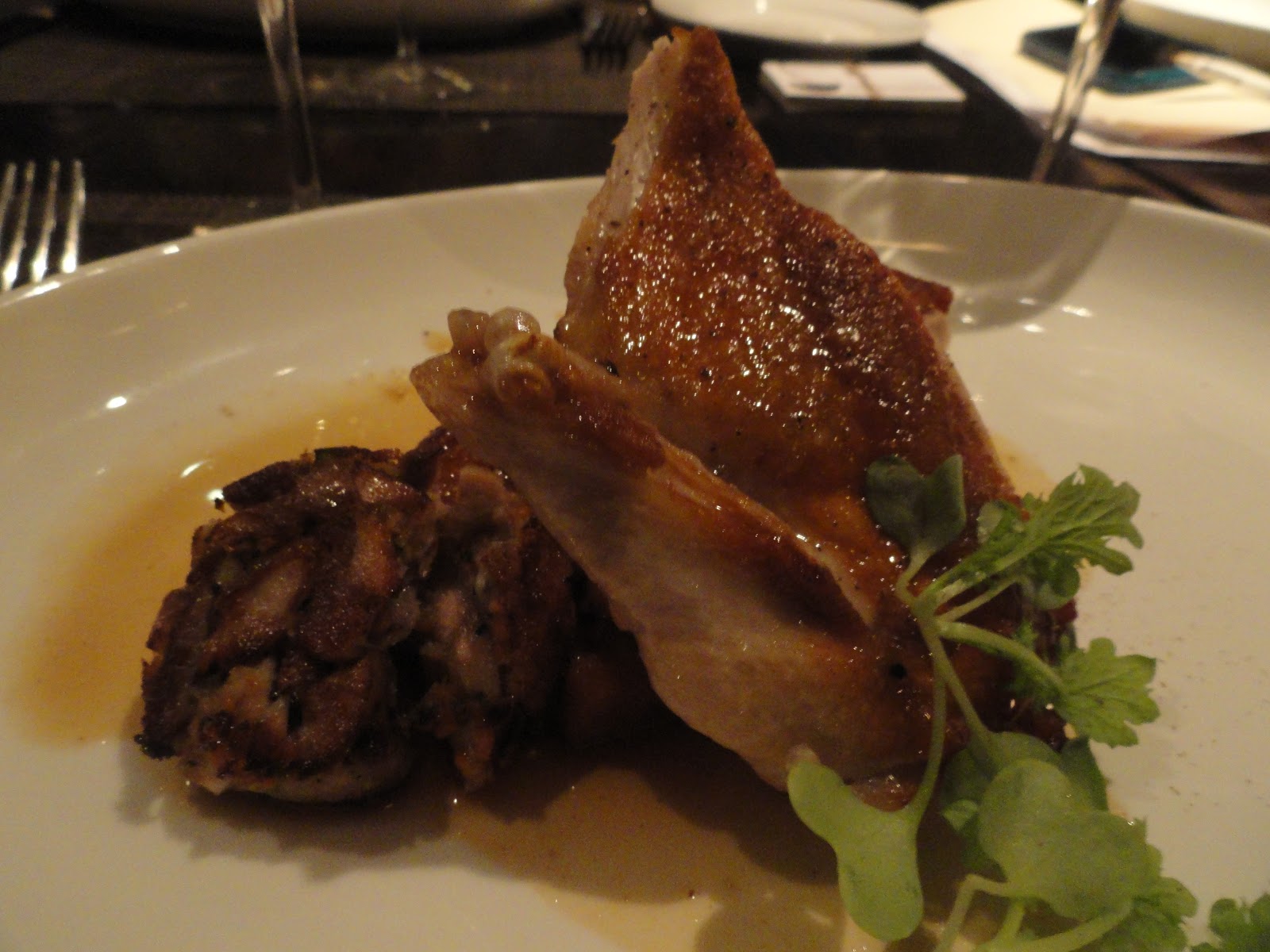
As I mentioned earlier, my favorite dish of the dinner was the Slow-Roasted Pheasant Breast & Confit Leg with quince, chestnuts, and matsutake mushrooms. This possessed everything you desire from a perfect poultry dish, that addictive crispy skin and tender, moist and flavorful meat. I don't recall ever having a better pheasant dish. Chef Maws may be best known for his pork dishes, but his culinary talents are far broader.

Two Gewurtztraminers were paired with the pheasant, including the certified organic 2001 Becker Gewurtztraminer ($25), which has the usual Gewurtz flavor profile and was light and tasty. The 2010 Zind-Humbrecht Hengst Grand Cru Gewurtztraminer ($65) is Biodynamic and was darker in color than the Becker, as well as possessing a stronger Muscat aroma. It had more complexity and intensity of flavor than the Becker, a fine example of the potential of Gewurtz.

Finally, dessert arrived, Whole Wheat Crepes with Macoun apples, pepitas, and butternut ice cream. A nice treat to end the meal, with two Vendages Tardives, late harvest wines. The 2001 Charles Koehly Alternburg Grand Cru Pinot Gris ($55) was thick, rich and complex, with a mild sweetness well balanced by acidity. Delicious flavors of apricot, honey and dried fruits. It was my favorite of the two. The 2008 Valentin-Zusslin Bollenberg Gewurtztraminer Vendages Tardives ($50) was not as rich or sweet, having more acidity, though pleasant tropical fruit flavors.

Help spread the word about Alsatian wines so that they become something well known even to the average consumer. For a couple other recommendations of Crémant d'Alsace, check one of my recent posts.

Craigie On Main on Urbanspoon
Read More
Posted in alsace, Cambridge, Restaurant, restaurant reviews, sparkling wines, Wine Reviews | No comments

Friday, 28 December 2012

Crémant d'Alsace: A New Year's Eve Recommendation

Posted on 00:00 by Unknown
With New Year's Eve around the corner, Sparkling Wine takes center stage, including Champagne, Prosecco, Cava and domestic bubbly. Some people are willing to splurge on pricey Champagne while others are more frugal, seeking inexpensive, value sparkling wines. One excellent value option, which may be overlooked by the average consumer, is Crémant d'Alsace.

In 2008, Americans consumed almost 99 million bottles of domestic sparkling wine, 17 million bottles of French Champagne and over 45 million bottles of sparkling wine (like Cava and Prosecco) from other countries. Out of that 161 million bottles, only about 300,000 bottles, a mere drop in the bucket, were Crémant d'Alsace. It is clear how little Crémant d'Alsace is consumed here, though the amount of imports seems to be slowly increasing.

In the Alsace region of France, they have been producing sparkling wines since the early 19th century but it was not until 1976 that the Crémant d'Alsace AOC was created. Back in 1979, their total production was less than 1 million bottles but that has now increased to around 33 million bottles. The term "crémant" basically means "creamy" and originally referred to sparkling wines that were produced with less pressure, which tended to make them taste more creamy than effervescent. There are six other Crémant AOCs in France, including Bordeaux, Bourgogne, Die, Jura, Limoux and Loire.

Crémant d'Alsace is produced in a similar fashion to Champagne, though there are some differences as well. The Crémant d'Alsace AOC has strict regulations on viticulture and viniculture, and six grapes are permitted including Pinot Blanc, Riesling, Pinot Gris, Auxerrois Blanc, Chardonnay, and Pinot Noir. Most of their Blanc de Blancs is made from Pinot Blanc while Pinot Noir is the only grape permitted in their Rosé. For those who want value, Crémant d'Alsace usually sells for $10-$20, making it very affordable. But what does it taste like?

Based on my recent experiences with several Crémants, they generally seem to be more Old World in style, with restrained and subdued flavors. They generally don't possess bold fruity flavors like Prosecco and Cava, and are more dry, crisp and clean. They are refreshing, excellent with food and offer good complexity at their price point. I want to review two Crémants I recently enjoyed around the Christmas holiday (both being media samples) and I'll be discussing more Crémants in the near future. In short though, consumers should be seeking out Crémant d'Alsace if they want an excellent value sparkling wine.

The Willm Crémant d’Alsace Blanc de Blancs Brut NV ($13) is produced in a winery that has been around since 1896, and their wines were the the first Alsatian wines imported into the U.S., in the early 1930s, just after Prohibition. This Crémant is made from 100% Pinot Blanc. using the méthode traditionnelle. Crisp, dry and fresh, it possessed pleasant tastes of green apple and pear. A refreshing bubbly, it made for an excellent apertif as well as an accompaniment to some pre-Xmas dinner appetizers, including cheese. At this price, I strongly recommend this Crémant.

My favorite of the two wines though was the Pierre Sparr Crémant d'Alsace Rosé ($19). The winery extends back to 1680 so it has a long, rich history, making a comeback after being nearly destroyed during World War 2. This wine is produced from 100% Pinot Noir and is aged for about 12 months on the lees. It has a rich and vibrant pink color with a compelling nose of red fruits. The red fruit flavors, strawberry, cherry and hints of watermelon, are more subtle on the palate with mild accents of peach and minerality. Clean, crisp and dry with a pleasing finish. It reminded me of a delicious Provence Rosé and was a fine choice for my Xmas Eve dishes. Highly recommended for year round pleasure.
Read More
Posted in alsace, champagne, France Wines, rose, sparkling wines, Wine Reviews | No comments

Tuesday, 12 June 2012

Barons de Rothschild Champagnes: A "Drops of God" Rave

Posted on 01:00 by Unknown
"Champagne is something to enjoy."
--Philippe Sereys de Rothschild, Chairman of Champagne Barons de Rothschild.

There is more evidence of the significant impact on wine sales from The Drops of God, a Japanese manga (comic) about wine. I have written several prior posts about this compelling manga, which has a weekly readership in Japan of approximately 500,000! It is currently being translated into English, with three volumes already out, and a new volume is due out later this month. When the manga mentions a wine, it often leads to increased sales, sometimes quite significantly. That is exactly what happened to a new Champagne I recently got to taste.

On Monday, I attended a media luncheon at L'Espalier, hosted by Pasternak Wine Imports, which showcased the new Champagnes from Champagne Barons de Rothschild. This was the first time these wines were being officially tasted in Boston. They have previously been available, on a very limited basis, in New York City and Los Angeles, but are now poised to hit many of the major U.S. markets. In Boston, they are being distributed by Classic Wines Imports and representatives of some local wine stores and restaurants also attended the lunch.

Philippe Sereys de Rothschild, the Chairman of Champagne Barons de Rothschild, presided over the lunch, talking about their new project, discussing the Champagnes and answering questions. Philippe has roots in the Boston area, having graduated from Harvard Business School in 1991. His last visit to Boston was back in 2001, and now he has returned to showcase his family's latest wine project. Philippe was very personable and unassuming, as well as very open about their endeavor.

The Rothschild family has long been involved in numerous wine projects around the world, including their namesake Bordeaux. Yet until recently, they had not produced a Champagne and the family thought it was time to do so. Thus, the three branches of their family, including Baron Eric de Rothschild (Château Lafite Rothschild), Baroness Philippine de Rothschild (Château Mouton Rothschild) and Baron Benjamin de Rothschild (Château Clarke), united behind a single project instead of working on separate ones.

Creating a Champagne was not an easy task, and Philippe stated it was a  "Balance of what they know and don't know." They certainly understood how to produce wine, from viticulture to viniculture, but they knew little about producing Champagne. Thus, there was a learning curve, and they also needed to hire experienced and knowledgeable individuals to assist them with the processes, such as the art of blending Champagne.

One of their important first steps was to try to locate an adequate supply of quality grapes, especially Chardonnay, which is what they wanted for the primary base of their Champagnes. Eventually, they discovered what they sought in the Côtes des Blanc region, in the southern section of Champagne. Many of their grapes come from Grand Crus in this region, and they had no difficulty in obtaining suppliers. In fact, some suppliers now seek them out. They eventually would like to purchase their own vineyards, but they need to find a sufficiently large vineyard, at least 10-15 acres. They have found some very small plots, but they don't want a collection of tiny plots scattered about.

Their next important step was to find a Champagne producer and their search ended with the Caves de Vertus. They needed an experienced Champagne maker and found what they desired there. They now possess eight years of supply, and are in it for the long term. With their long history of involvement in the wine industry, they feel that time is on their side. Their goal is to produce the best quality Champagne they can, and are willing to take the necessary time to do so. They have plenty of future plans to expand their portfolio, such as maybe to include vintage Champagnes or a tête de cuvée.

Getting everyone in the Rothschild family to agree on all of the elements of this endeavor was not always easy, the typical problems any family would have in such a massive project. There was a lengthy discussion over what to call their Champagne. They knew that most of the major producers put their own names on the labels so they eventually decided to do the same. That was not a simple decision though as they realized the import of placing their name on the label, that the Champagne had to reflect their reputation and be a high quality product.

As part of this, they have chosen to serve their champagne at all of their formal events and functions, worldwide, to stand behind their product. They would not be good role models if they chose to drink other Champagnes rather than their own. Baroness Philippine designed the bottle and label, and there was actually lots of debate over the size of the logo, whether it was too small or too big.

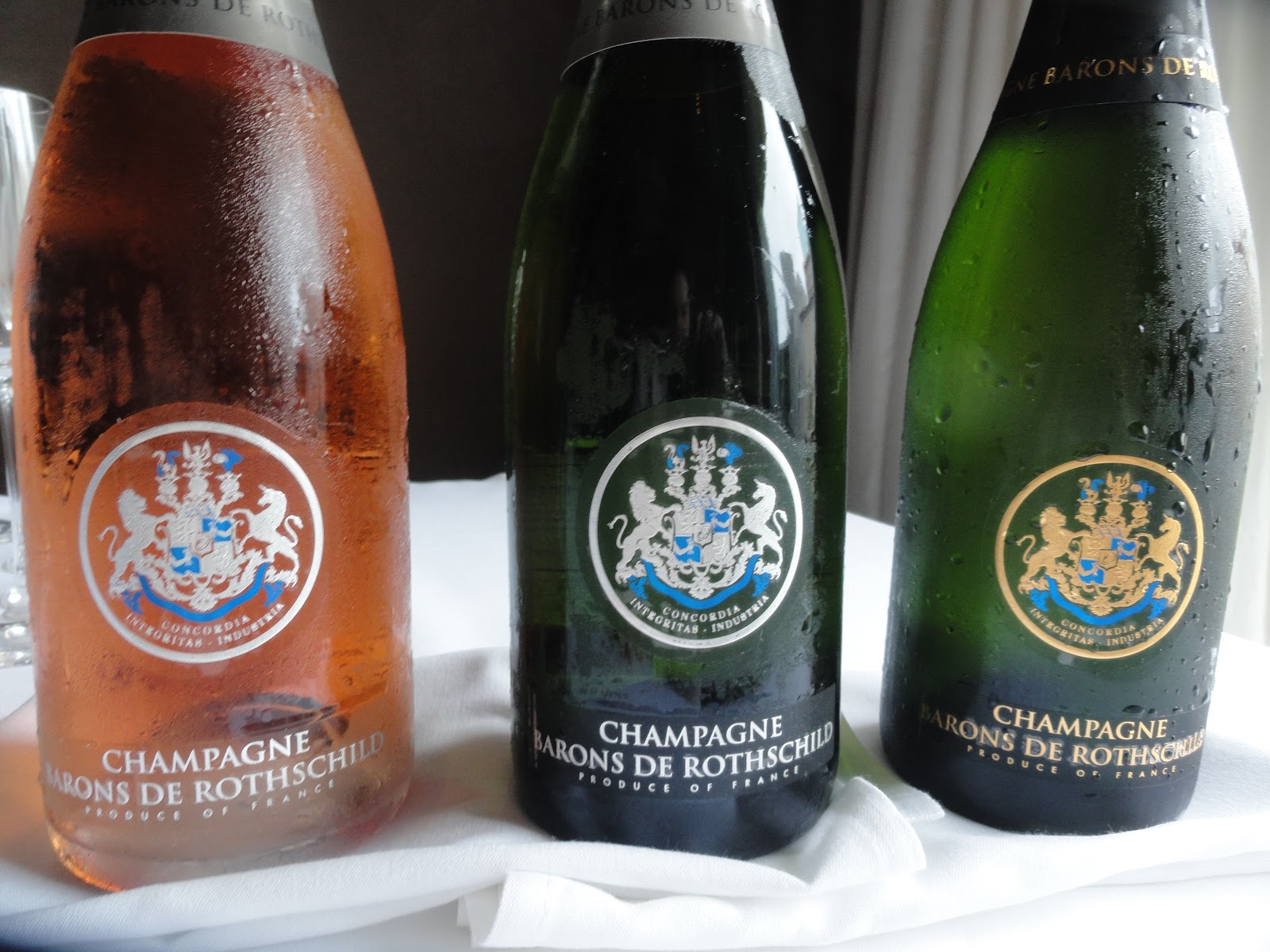
Their portfolio now includes a Brut, Blanc de Blancs and Rosé. These Champagnes share some similarities, such as all being Chardonnay dominant, even the Rosé. The blends include about 40% of reserve wine and have a low dosage, about 6-8 grams of sugar. Philippe stated they would probably never create a "no dosage" Champagne as he feels it needs at least a little bit of sugar to be palatable. Their Champagnes also are aged for about 6-9 months after disgorgement and their alcohol content is around 12%.


They first began selling their Champagnes in 2009, selecting Japan as their initial market. This was more a matter of convenience and expediency as all three branches of the family had connections in Japan. That proved a fortunate and successful endeavor, and their Brut was featured in The Drops of God manga. Philippe learned of this when he received an order for an additional 12,000 cases of Champagne, and was told that the reason for the great demand was the mention in the manga. That is especially significant considering the high price of these Champagnes, from $100-$125. Who would have thought that a comic book could be so influential in selling wine?

After Japan, the Rothschilds began selling their Champagne in Switzerland and Belgium, both which proved very good markets. They are continuing to expand their distribution, though still being select, and sell about 250,000 bottles annually. They are now trying to expand into the U.S., and Boston was Philippe's first stop in his tour of the U.S. At our lunch, he presented his three Champagnes, each paired with a different course of food.

Our first dish was Georges Bank scallops with fava bean-ham ragout and Ben's wild mushrooms. The scallops were tender and nicely seared and went very well with the Brut ($100). The Brut is a blend of about 60% Chardonnay, mostly Grand Crus from Côtes des Blancs, and 40% Pinot Noir with a tiny addition of Pinot Meunier. With a pleasant aroma of green apple and pear, the Brut was crisp, dry and elegant. It had an appealing and prominent taste of apple, with subtle toasty elements, and plenty of tiny bubbles. No "frog eyes" here. Philippe stated the Brut would go very well with lobster and cheese. I would certainly agree it would be excellent with seafood, chicken or other light dishes.

The second course was a Hay-braised spring rabbit shoulder with sunchoke puree and ASF spring onions. I am a huge fan of rabbit and this was moist, tender and delicious. It too made a nice pairing with the Blanc de Blancs ($125). This wine is made from 100% Chardonnay from the Côtes des Blancs crus of Avize, Cramant, Mesnil-sur-Oger, Oger and Vertus. Like the Brut, it was crisp, dry and elegant with a lengthy finish. It also had green apple notes, as well as hints of citrus, floral notes and some minerality. Another good choice for seafood, chicken or light dishes.

Our last course was a slice of Brillat-Savarin, a triple cream cow's milk cheese, that was creamy and delectable. This was paired with the Rosé ($125), a blend of over 85% Chardonnay, from Côtes des Blancs crus, and 15% Pinot Noir, from Montagne de Reims. The blend includes 5-6% which is vinified as a red wine. This was a superb Rosé Champagne with a compelling aroma, subtle red fruit and citrus notes. On the palate, it was crisp, dry and elegant with flavors of red fruits, especially strawberry, and a little orange peel. Complex, a lengthy finish and an excellent balance. I would love to drink this on a warm, summer's day and I think it is very food friendly as well. I wish I had another glass right now.

The Champagnes of Barons de Rothschild do justice to the reputation of this esteemed family. They are quality Champagnes, which can stand head and shoulders next to comparable Champagnes from any of the major Houses. My favorite was their Rosé, which is especially unique due to the large amount of Chardonnay in the blend. Yes, it needs to be acknowledged that these Champagnes are expensive, more for when you want to splurge for some special occasion. But they are priced commensurately with quality Champagnes from other major Houses.

I wish I had a glass of the Rosé right now.
Read More
Posted in Boston, champagne, France Wines, Restaurant, restaurant reviews, sparkling wines, Wine Reviews | No comments

Wednesday, 14 December 2011

2004 Aubry Le Nombre D'Or Millesime Premier Cru

Posted on 01:00 by Unknown
It is nearly a secret, a bit of information which much of the Champagne literature chooses to ignore or hide. Ask the average wine lover and they probably won't know about it. Though it may not be of major significance, it is still an intriguing fact and provides an element of uniqueness to the Champagne region. There is probably no other sparkling wine anywhere in the world which can make the same claim.

It is commonly known that Champagne may be made from Pinot Noir, Chardonnay and Pinot Meunier. But, much fewer people are aware that four other grapes are permitted as well, including Arbanne, Petit Meslier, Pinot Blanc and Pinot Gris, though those grapes constitute less than 0.3% of all plantings. Arbanne? Petit Meslier? Many people probably never even heard of these grapes, let alone knew that they were permitted in Champagne.

Because of their limited availability, very few producers use these additional four grapes and one of them is Domaine Aubry. With roots extending back to 1790, the Aubry estate and one of their vineyards is located in the village of Jouy-les-Reims, while they also own vineyards in Coulommes-la-Montagne, Pargny-les-Reims, and Villedommange. It is a small Grower's winery, producing only about 12,000 cases annually. One and a half hectares are devoted to the four uncommon Champagne grapes, and they produce two different cuvees using these grapes.

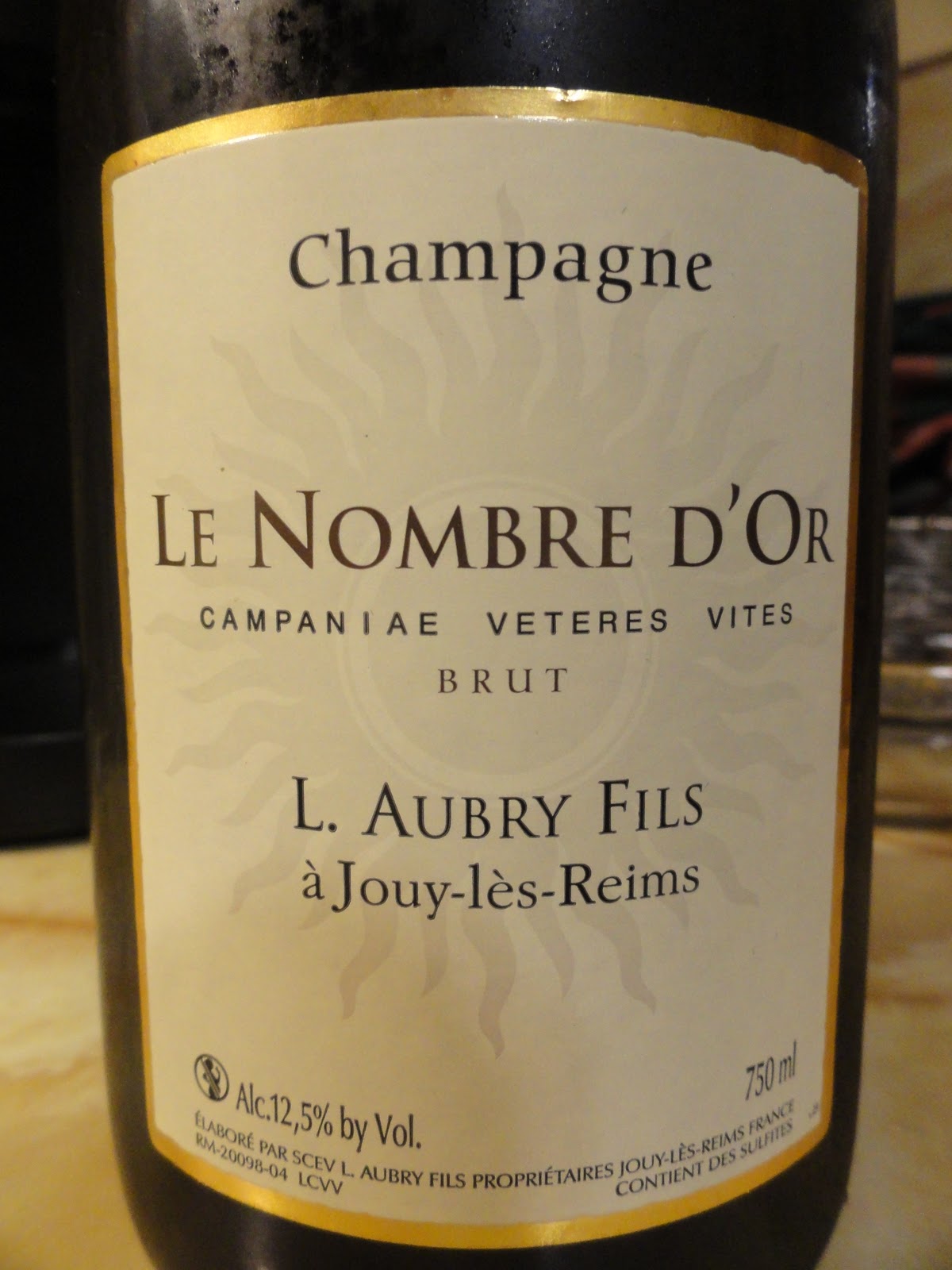
I purchased one of these cuvees, the 2004 Aubry Le Nombre D'Or Millesime Premier Cru Jouy, Campaniae Veteres Vites (about $50). The phrase "campaniae veteres vites" means “the old vines of the countryside.” This cuvee is a blend of all seven permitted grapes so it is a very unique cuvee. Most importantly, it is a compelling wine, with delicious flavors and plenty of character and complexity. The melange of flavors I discerned included orange, honey, peach, lemon, and mild herbal notes, minerality and floral accents. It is elegant and intriguing, a Champagne to slowly savor and enjoy rather than guzzling your flute. Like many other Grower's Champagnes, I think this wine is an excellent value for the price, which should easily compete with House Champagnes at twice the price or more.

Go beyond the ordinary and seek our Grower's Champagne.  And when you do, consider the winery Aubry, which is keeping alive some rare Champagne grapes.
Read More
Posted in champagne, France Wines, grapes, sparkling wines | No comments
Older Posts Home
Subscribe to: Posts (Atom)

Popular Posts

  • Taste Camp: The Wine Industry of Quebec (Part 1)
    Exploring emerging wine regions is always a fascinating endeavor even if their wines are not readily available outside of that region. It is...
  • Tuscan Market: One Stop Shopping & Cafe
    Many of us would love to be able to easily purchase fresh baked bread, fresh local produce, artisan cheese, meats, seafood, fresh pasta, win...
  • Rant: Beware The Self-Proclaimed Expert
    I am very tired of self-proclaimed wine experts, gurus, ninjas and whatever whose actual knowledge is lacking. This is obviously not a prob...
  • Rant: U.S. Sake vs Japan Sake--Context Is Everything
    Is sake produced in the U.S. as good as sake produced in Japan? Does the question require more specificity? Or is it even a fair question? A...
  • Rant: Where Is The Roast Chicken Love?
    1990 was a pivotal year in the battle of beef versus chicken . It was the first year that Americans ate more chicken than beef, and that has...
  • Boston Wine Expo: Pinotage Rosé to Cape Verde
    Here is a sampling of some of the other wines that I found interesting at the Boston Wine Expo , and I will be posting about even more wines...
  • Rant: Rushing To Judge A New Restaurant
    As soon as a hot, new restaurant opens, there is a rush for food bloggers and online reviewers to dine there and immediately report back. Ti...
  • International Boston Seafood Show: Fish Fun & Photos
    “ Fish is held out to be one of the greatest luxuries of the table and not only necessary, but even indispensable at all dinners where there...
  • Rant: Outraged By Sake Prices At Restaurants
    We often hear complaints about the outrageous prices  of wine sold at many restaurants. Some places charge three, four or even fives times t...
  • Rant: Post-Labor Day Wine Advice
    With today as Labor Day , it is seen by many people as a signal of the end of summer, despite the fact that the official end is not until Se...

Categories

  • 2011 (8)
  • 2012 (9)
  • 2013 (2)
  • alabama (1)
  • alaska (1)
  • alcohol (1)
  • allergy (1)
  • alsace (3)
  • Andover (3)
  • animal (1)
  • anniversary (1)
  • Argentina Wines (10)
  • Arlington (11)
  • armenia (1)
  • art (4)
  • Australia Wines (2)
  • austria wines (5)
  • author (12)
  • award (2)
  • Bacon (1)
  • Bakery (15)
  • bar (1)
  • bbq (3)
  • beauty (1)
  • Bedford (2)
  • beer (19)
  • biodynamic wine (1)
  • biography (1)
  • blogging (35)
  • Book reviews (30)
  • book store (3)
  • Boston (165)
  • bourbon (11)
  • braintree (2)
  • brazil wines (1)
  • brazilian (1)
  • breakfast (2)
  • brewery (6)
  • brighton (1)
  • Brookline (9)
  • brunch (15)
  • Burlington (3)
  • business (1)
  • butcher (4)
  • California Wines (20)
  • Cambridge (29)
  • canada (8)
  • Canada Wines (7)
  • candy (3)
  • cape cod (6)
  • cape verde wines (1)
  • casino (7)
  • caviar (1)
  • celebrity (2)
  • champagne (11)
  • Charity (33)
  • cheese (23)
  • chef (27)
  • chianti classico (10)
  • children (2)
  • Chile (2)
  • Chile Wines (2)
  • china (6)
  • chinatown (3)
  • chinese cuisine (8)
  • chocolate (1)
  • christmas (3)
  • cider (8)
  • cocktails (47)
  • colorado (2)
  • concord (10)
  • conference (9)
  • Connecticut (12)
  • consumers (2)
  • contest (8)
  • controversy (97)
  • cookbooks (5)
  • cooking (15)
  • cuba (1)
  • cyprus wines (1)
  • dance (1)
  • Danvers (2)
  • dessert wine (1)
  • desserts (21)
  • diet (2)
  • dining service (1)
  • discount (1)
  • distillery (14)
  • dlw13 (1)
  • donuts (1)
  • dorchester (16)
  • easter (6)
  • Eating Habits (2)
  • ebook (6)
  • ethics (3)
  • ethiopia (1)
  • farming (10)
  • father's day (1)
  • fiction (11)
  • finger lakes (2)
  • florida (1)
  • Food (4)
  • Food Event (8)
  • Food Market (12)
  • food news (2)
  • food processing (2)
  • food safety (4)
  • food truck (1)
  • France (3)
  • France Wines (19)
  • fruit (7)
  • Games (2)
  • gardening (1)
  • georgia wines (1)
  • gin (1)
  • glasses (1)
  • grapes (4)
  • Greece Wines (1)
  • guest post (1)
  • health (21)
  • history (34)
  • holiday (46)
  • hotel (2)
  • Hungary Wines (3)
  • hybrid (2)
  • ibss12 (14)
  • ibss13 (13)
  • Ice Cream (5)
  • ice wine (2)
  • iceland (1)
  • interview (5)
  • ipswich (4)
  • ireland (2)
  • italian cuisine (43)
  • Italy (19)
  • Italy Wines (38)
  • jamaica plain (1)
  • japanese (70)
  • kentucky (12)
  • korea (1)
  • law (13)
  • legend (9)
  • lincoln (6)
  • liqueur (1)
  • local wine (2)
  • los angeles (1)
  • louisiana (2)
  • louisville (7)
  • lynnfield (1)
  • madeira (1)
  • magazine (16)
  • Maine (2)
  • Malbec (1)
  • Malden (1)
  • mallorca (1)
  • mardi gras (2)
  • Massachusetts (4)
  • Massachusetts Wines (6)
  • mead (5)
  • meat (23)
  • Medford (6)
  • melrose (3)
  • mexican cuisine (16)
  • mexico wine (3)
  • mezcal (1)
  • milk (2)
  • milton (1)
  • mississippi (1)
  • montreal (2)
  • mothers day (1)
  • music (4)
  • natick (1)
  • needham (3)
  • new england (2)
  • New Hampshire (17)
  • new year's eve (10)
  • New York (3)
  • New York City (3)
  • New York wines (1)
  • New Zealand Wines (1)
  • newburyport (1)
  • newport (1)
  • news (1)
  • newspaper (7)
  • newton (9)
  • North Andover (16)
  • north end (12)
  • nova scotia (5)
  • Oregon (2)
  • Oregon Wines (6)
  • organic food (1)
  • organic wine (2)
  • paso robles (3)
  • peruvian cuisine (1)
  • phillipines (2)
  • pinotage (2)
  • pisco (1)
  • Pizza (2)
  • pork (3)
  • port (13)
  • portland (1)
  • portsmouth (6)
  • Portugal (6)
  • Portugal Wines (19)
  • poultry (1)
  • providence (1)
  • provincetown (5)
  • quebec (5)
  • rant (97)
  • Reading (1)
  • Recipe (11)
  • Restaurant (198)
  • restaurant going (8)
  • restaurant reviews (65)
  • Rhode island (4)
  • rose (7)
  • rum (11)
  • Sake (61)
  • Sake Reviews (15)
  • salem (2)
  • salmon (4)
  • sandwich (5)
  • science (10)
  • scotland (4)
  • seafood (72)
  • Seattle (1)
  • sherry (10)
  • shochu (1)
  • shopping (3)
  • social media (1)
  • soda (2)
  • Somerville (13)
  • South Africa Wines (7)
  • spain (8)
  • Spain Wines (18)
  • sparkling wines (6)
  • spirits (42)
  • sports (4)
  • st. patrick's day (4)
  • steakhouse (12)
  • sudbury (1)
  • sushi (5)
  • sustainability (61)
  • sweden (1)
  • tastecamp (5)
  • tea (6)
  • television (4)
  • tequila (2)
  • texas (1)
  • thai (2)
  • thanksgiving (9)
  • theater (2)
  • top ten (14)
  • toronto (1)
  • travel (8)
  • twitter (1)
  • united states (1)
  • Uruguay Wines (1)
  • valentine's day (5)
  • vegetables (3)
  • vermont (4)
  • virginia (1)
  • virginia wines (1)
  • vodka (8)
  • Wakefield (1)
  • walpole (2)
  • watertown (1)
  • wayland (1)
  • wbc (3)
  • west concord (1)
  • westwood (1)
  • whiskey (19)
  • Winchester (14)
  • Wine (3)
  • Wine Education (19)
  • wine event (14)
  • wine importers (1)
  • wine marketing (11)
  • Wine news (3)
  • wine pairings (15)
  • wine personality (1)
  • Wine Prices (5)
  • Wine Reviews (68)
  • wine sales (13)
  • Wine Stores (23)
  • Wine tasting (11)
  • wine writing (1)
  • winemaker (4)
  • winemaking (6)
  • wineries (5)
  • winery (21)
  • Woburn (3)
  • women (3)

Blog Archive

  • ▼  2013 (171)
    • ▼  September (5)
      • Why Are You Fat?
      • Thursday Sips & Nibbles
      • Heirloom Flavor: From a Dragon's Tongue to a Nebra...
      • Papa's Pilar Rum: What Would Hemingway Do?
      • Rant: Post-Labor Day Wine Advice
    • ►  August (19)
    • ►  July (18)
    • ►  June (19)
    • ►  May (19)
    • ►  April (20)
    • ►  March (32)
    • ►  February (20)
    • ►  January (19)
  • ►  2012 (283)
    • ►  December (21)
    • ►  November (23)
    • ►  October (30)
    • ►  September (17)
    • ►  August (26)
    • ►  July (23)
    • ►  June (19)
    • ►  May (21)
    • ►  April (20)
    • ►  March (34)
    • ►  February (26)
    • ►  January (23)
  • ►  2011 (46)
    • ►  December (27)
    • ►  November (19)
Powered by Blogger.

About Me

Unknown
View my complete profile