ShrimpTempura

  • Subscribe to our RSS feed.
  • Twitter
  • StumbleUpon
  • Reddit
  • Facebook
  • Digg
Showing posts with label rant. Show all posts

Friday, 6 September 2013

Why Are You Fat?

Posted on 00:00 by Unknown
According to the CDC, about 36% of U.S. adults are obese and as of 2010, about 23% of the people in Massachusetts are considered obese. Their definition of obesity is based on the Body Mass Index (BMI), though they acknowledge that is not a fully accurate way of assessing individuals, such as athletes. These obesity figures do not include those people who are only overweight, though that would raise the percentage significantly of those Americans who weigh too much.

Each year, these figures continue to increase but why is that so? Why are so many putting on extra pounds? We think we understand the reasons but is that really the case? Could we be looking at all of this in the wrong way? That might very well be the case.

Scientific American recently published a special Food Issue (September 2013), which contains nine fascinating articles about food related issues, from How (and Why) To Eat Invasive Species by Chef Bun Lai to The First Cookout, an interview with Richard Wrangham. Two of the articles dealt with issues of weight gain, offering interesting takes on what is often considered "common knowledge." We need to start looking at some of our treasured beliefs, to reassess what we think, and hopefully find a better path to weight loss.

The first thing we need to do is to reconsider the calorie, understanding that the calorie counts on food labels are not accurate indicators of the amount of calories an individual will receive. Rob Dunn, a biologist at North Carolina State University, penned an article, Everything You Know About Calories Is Wrong, explaining the problems of calorie counts. Calorie determination is based on a 19th century system that uses averages, ignoring numerous important factors such as the effects of digestion and cooking.

Dunn states: "To accurately calculate the total calories that someone gets out of a given food, you would have to take into account a dizzying array of factors, including whether that food has evolved to survive digestion; how boiling, baking, microwaving or flambeing a food changes its structure and chemistry; how much energy the body expends to break down different kinds of food; and the extent to which the billions of bacteria in the gut aid human digestion and, conversely, steal some calories for themselves." (p.58) What that means is that two individuals, eating the same amount of calories, will not incur the same amount of calories, so that one person might lose weight while the other might not.

For example, cooking food allows a person to obtain more of the calories in that food than you would if the food was raw. So if two people consumed 2000 calories of food, and one person cooked all his food while the other ate all his raw, the person with the raw food would actually take in less calories. The type of food matters as well. For example, nuts generally are less completely digested than some other foods, meaning you get less calories from them. In addition, each individual is different in their biological make-up, meaning they will take in more or less calories than another person.

What that all means is that a diet that merely counts calories is overly simplistic and potentially doomed to failure. It would explain the frustration some dieters have when seeing others lose weight, on similar amounts of calories, which they can't seem to lose. People need more education about calories, to understand that label calorie counts are probably closer to suggestions than actual facts. At best, those calorie counts might stand as a potential maximum amount that can be derived.

All this discussion of calories though is based on the theory that weight gain is due to an imbalance between calories consumed and calories expended. In short, if you eat too much, ingest too many calories, or are too sedentary, exercising little, then you will gain weight. Most people accept this as a given, yet it hasn't prevented more and more people each year gaining excess weight nor has it prevented an increase in metabolic disorders like Type 2 Diabetes. Why is that so if we know exactly what causes weight gain?

Gary Taubes, co-founder of the Nutrition Science Initiative, in his article Which One Will Make You Fat?, poses an alternative theory of weight gain. He notes that the calorie theory actually never was based on proper scientific studies, being accepted more as a given. It sounds like a logical theory but even those should receive empirical proof of their validity. Gary offers another potential theory, which he believes deserves to be investigated, and which a few scientists have now started to address in new studies.

Rather than being due to an energy imbalance, weight gain could be instead due to a hormonal defect, with the primary offender being carbohydrates. The science is interesting. The carbohydrate glucose causes the pancreas to secrete insulin, to prevent glucose levels from being too high. The insulin causes some of that glucose to be stored as fat for some future use, which means that if insulin levels remain high, then you gain more and more fat. By avoiding or limiting carbohydrates, you prevent this fat storage from occurring, and that might be the best way to avoid gaining weight. So worrying about calorie intake might not be as important, as where those calories come from.

More scientific studies are needed to resolve this conundrum, but just the fact that we are questioning "common knowledge," which never actually was proven, is a major step forward. If you are having trouble losing weight, and you believe you are doing everything right, then it is time to reconsider the basis of your beliefs.
Read More
Posted in controversy, diet, food news, health, rant, science | No comments

Monday, 2 September 2013

Rant: Post-Labor Day Wine Advice

Posted on 00:00 by Unknown
With today as Labor Day, it is seen by many people as a signal of the end of summer, despite the fact that the official end is not until September 22. Labor Day also presages changes in the wine world, beyond the fact it is harvest season, and consumers need to pay attention. There are opportunities now that they should take advantage of, to learn more about wine, to experience different wines, and to enjoy plenty of delicious wines.

First, far too many wine stores stop stocking Rosé wines after Labor Day, though the situation improves each year. All those delicious pink wines you have been savoring all summer? Well, there is absolutely no reason you should stop drinking them just because fall is coming. Rosé should be enjoyed year-round, especially as it is excellent with food. More and more wine lovers are coming to this realization, which will spur wine stores to carry more Rosé all the time. We need to get over the misconception that certain wines should only be enjoyed seasonally. All wines are appropriate year-round, and so I hope you keep drinking Rosé through autumn, winter and spring.   

Second, after Labor Day, wine stores will begin stocking up on new wines as their busiest season is about to begin. This will also mean that many of those wine stores will start holding large wine tasting events, where you may be able to taste many different wines, sometimes as many as 100 wines. Most of these events will be free, providing you a perfect opportunity to experience many wines which you may not have tasted before. The best way to learn about wine is to taste it so you should attend these events to expand your horizons, to delve into a wealth of diversity.

You might be tempted at these events to taste only those wines which you already know and love, or which are similar to those wines. However, don't do that! Instead, experiment and take chances, tasting new wines of which you might never have heard about  Expand your palate and broaden your horizons by tasting lots of different wines, especially considering that these tastings are free and you thus have nothing to lose. You might find a new favorite wine, or even several new favorites.

At these events, with so many wines, you will want to remember those wines which you most enjoyed. Take notes of those wines so you can recall them later, so you can find them again. If you don't want to take notes, use your cell phone to take a photo of the wine label. You can then take that picture to a wine store and they can see if they carry that wine. With a tasting of 25 or 50 wines, it can be difficult to remember your favorites merely by memory. Memorializing your favorites in notes or a picture will be very helpful when you seek your new favorite weeks later.

Third, with all of the holidays coming up, you might be hosting parties for your family and friends. You might then need a selection of wine for these celebrations. Price is usually a significant factor in your decision as to which wines to purchase. Remember that many wine stores provide a discount, commonly 10%-20%, if you purchase a case of wine, and sometimes a discount for as little as six wines. Instead of buying just the cheapest wine at a shop, ask the staff at that store for their recommendations for the best value wines. They might be able to suggest wines you might not have considered, wines which offer excellent value as well as taste. For example, Portuguese wines can offer great value, especially for wines under $10, but many consumers don't realize that fact.

What post-Labor Day wine advice do you have for consumers?
Read More
Posted in controversy, rant, rose, wine sales, Wine tasting | No comments

Monday, 26 August 2013

Rant: Wineries, Don't Assume It's Brand Loyalty

Posted on 00:00 by Unknown
A woman makes her weekly stop at a local wine store, buying the same wine every time, a Yellow Tail Pinot Grigio. Every time a man wants to splurge on a higher end wine, he buys a bottle of Caymus Cabernet Sauvignon. To celebrate every special occasion, a woman purchases a bottle of Veuve Clicquot Champagne. Many people might assume that these three examples are indicative of brand loyalty, customers who intentionally support and choose to make repeated purchases of a specific product. However, what if it isn't really brand loyalty that is leading to their repeated purchases?

To marketers, wineries and others, brand loyalty is a significant attribute to their bottom line. Customers who are loyal to a specific brand tend to buy more of that product than anyone else, making them very important to a product's success. Such customers are often treated differently, if possible, to continue to make them happy. The problem is that a number of customers who make regular purchases are incorrectly labeled as "brand loyal." Instead, their purchasing actions are due rather to habit, and that is a much more fragile reason which needs to be addressed differently than if they were brand loyal.  

Neurobranding, by Peter Steidl, provides a fascinating look into consumer behavior, touching on important neuromarketing studies and research. And Steidl indicates that brand loyalty is vastly over estimated. "Too often we assume that consumers who regularly buy the same brand have a strong brand preference. However, most likely these consumers are engaging in habitual buying. They aren’t making purchase decisions but are simply repeating a behavior without giving it a second thought. This behavior is driven by their memories without any conscious intervention." In all three of the examples I provided, it could easily be said that they are buying by habit, not brand loyalty.

Steidl gives additional explanation of this issue. "Ehrenberg, the father of consumer panels, has proven again and again that repeat purchases are typically not a result of brand loyalty but of habit. True loyalty is based on consumers believing that the brand they buy is the best choice for them. Habitual buying means that the consumer doesn’t think about whether the product or brand is the best choice for them; they simply repeat past purchases. This suggests that the brand ‘works for them,’ but we cannot assume that they are loyal to it. Habitual buying allows consumers to simplify their lives by avoiding the need to spend many hours checking all options open to them with each purchase." How many of your own regular purchases are habitual rather than brand loyal? Steidl has an answer for that as well. "The truth is more like approximately 95% of grocery items are bought habitually."

Habitual purchasers are still important to brands, such as wineries. "Research undertaken by Nielsen shows that customers who purchase a brand eight times have a 97% likelihood of buying the brand a ninth time." It becomes so ingrained that it can be tough to change, especially as those consumers really don't think about their purchases. That is good for wineries, except it also can be dangerous as habitual buyers need to be treated differently than those who are brand loyal. If they are not, you may stand to lose those habitual buyers.

The main difference between habitual buyers and brand loyal customers is that the former does not think about their purchasing decision while the latter actively makes a conscious decision that their purchase is the best for them. That is a significant difference and marketing needs to address those differences. To avoid losing habitual buyers, Steidl states: "When consumers buy your brand on a habitual basis, you don’t want them to think about this purchase. If the consumer starts thinking consciously about the purchase, they may well also start to consider alternative brands and products." With brand loyal customers, you want them to think about their decisions, so you can see the how poses a dilemma to wineries.

What can cause a habitual buyer to think about their purchasing decision? "Any significant change in any aspect of your product – for example, its pricing, distribution or promotion – can activate the conscious mind, ..." For a mass brand like Yellow Tail, raising its price a dollar or more, could trigger a significant number of habitual buyers to reconsider and potentially move onto another brand. For the truly brand loyal, such a price change would stop very few of them from changing brands. Steidl also explains that: "Habits can be broken more easily when a change carries low risk, requires low effort and results in immediate rewards."

That also means that habitual buyers can change their habits due to numerous factors outside the control of wineries and marketers. For example, a wine store that has a wine tasting could make a habitual buyer reconsider their actions. A customer might buy the same Champagne all the time, until they taste a few different ones and find they like the taste of another better. Because they got to taste a different Champagne, the risk of change is low, takes no real effort and results in the reward of a wine they prefer more. Or a wine store might be temporarily out of a specific brand that a customer habitually buys, so that customer must think about choosing something else, which could break their habit.

It is safer for wineries to build brand loyalty rather than rely on habitual buyers. However, that also means that first such wineries need to realize that all repeat purchasers of their products do not possess brand loyalty. And that is something many wineries fail to understand, leading to marketing mistakes which ultimately cost them customers. Not all repeat purchasers are the same so treating them as if they were will only cause problems.

Wineries, do you know how many of your repeat purchasers actually possess brand loyalty and how many are merely habitual buyers?
Read More
Posted in consumers, controversy, rant | No comments

Monday, 19 August 2013

Rant: Food Trucks Are So Yesterday

Posted on 00:30 by Unknown
Food trucks have had their time in the spotlight, being the next big trend, but that was yesterday. Don't worry though as they are not going to suddenly vanish and new food trucks will still continue to make their debut. However, a new restaurant innovation is poised to take the country by storm and New York City may be leading the way. Will Boston wait to jump on this trend, or will it try to seize the initiative and capitalize on this new trend right now?

About a week ago, Crain's New York Business posted an interesting article, Tiny restaurants turn into small wonders, written by Adrianne Pasquarelli. She wrote about essentially new restaurants which are basically "stationary" food trucks. These new places are brick & mortar establishments, but they occupy small pieces of real estate, usually less than 200 square feet. In New York City, you'll find these places selling sliders to meatballs, cupcakes to gelato.

Such tiny places have advantages, such as low overhead, though there are limitations as well, such as the fact that they need to concentrate on very limited menus. Though even those limitations can potentially be turned into advantages. A restaurant can concentrate on making just a couple of items very well, and can become well known for those two items. The article details several successful businesses, noting that their profits can be lucrative.

Obviously the mobility of food trucks can be seen as an advantage in some respects to a brick & mortar spot though that mobility can be a problem as well, especially in winter when the snows come. It might also be difficult for customers to find a particular food truck at any particular time unless they find its schedule, and the truck has followed that schedule. A brick & mortar gives permanence so customers will be able to find it more easily. And the owner doesn't need to know how to drive!

Running these tiny restaurants might be good experience, and give some indication to the owner whether they might succeed at a larger place or not. They let you concentrate on excelling in a couple items, rather than spreading out your general skills over a large menu. It would also help the community by occupying empty rental properties, providing taxes to the city and more. Bring several of these tiny restaurants together in the same area, and you end up with a far better version of a mall food court.

Place blocks under those food truck wheels and occupy some real estate, though just a tiny piece.
Read More
Posted in controversy, rant, Restaurant, restaurant going | No comments

Monday, 12 August 2013

Rant: Stop Eating Pangolin!

Posted on 00:00 by Unknown
Shark fins get all the attention.

You've probably read plenty of articles calling for bans on shark fin soup, a famous Chinese soup, with a history extending back centuries to at least the Ming Dynasty, if not older. Millions of sharks have been slaughtered for only their fins, the rest of their bodies tossed back into the sea. The outrage has been loud and prevalent, and there is nothing wrong with that. Except that some of that outrage should be directed toward protecting other endangered species, like pangolin.

Pangolin. You probably have never heard of them before. And you probably didn't know that they were endangered. I know that I wasn't aware of that fact until recently. They just haven't received sufficient publicity, haven't been brought before enough of the public. It is time that they had the spotlight shined on their plight.

They have no teeth but have a long, sticky tongue. They primarily dine on ants and termites. When threatened, they usually choose to roll up into a ball, protected by their overlapping scales. And they are endangered because too many people are illegally catching them to dine on their meat and to use their scales in medicine.

Also known as scaly anteaters, there are eight species of Pangolin, four in Africa and four in Asia. They are cute creatures and pose no threat to man. They actually help with pest control, and it is estimated that a single pangolin might be able to consume around 70 million insects in a single year. As many pangolin live hidden underground, scientists don't know much about their behavior. And with their dwindling numbers, it is even harder to learn about them.

Under the Convention on International Trade in Endangered Species (CITES), trade in the Asian species is illegal and trade in the African species is severely restricted. Despite its illegality, there is a large blackmarket trade in these creatures, with the primary markets being in China and Vietnam. They enjoy the taste of its meat, but also use its other body parts for medicinal purposes. Their scales are though to cure everything from cancer to asthma, though there is absolutely no scientific evidence that they possess any efficacy.

From 2011 to August 2013, it is estimated that 91,390 and 182,780 pangolin were illegally slaughtered. Last week, seven people were arrested in India for smuggling 70 kilograms of pangolin scales, an amount that could have come from nearly 300 pangolin. In April, French authorities seized 50 kilograms of pangolin scales that were headed to Vietnam. This is a serious issue but not enough people people in the U.S. are aware of this issue.

Now that you know about pangolin, then I hope you will lend some of your outrage to their plight. For more information, you can check out a couple organizations dedicated to helping these scaly anteaters, including Save Pangolins and Project Pangolin,
Read More
Posted in animal, china, controversy, health, rant, sustainability | No comments

Monday, 5 August 2013

Rant: Making Food & Drink Taste Better

Posted on 00:30 by Unknown
Wines with corks tend to taste better than wines with screw caps. If you placed the same exact wine into two bottles, one with a cork and the other with the screwcap, the wine with the cork will more likely be preferred by wine lovers. The explanation has nothing to do with the amount of oxygen that reaches the wine. The reason for the taste difference is not restricted to wine closures, but affects many different foods and drinks.  

Here are a few examples of similar situations. Saying grace, a blessing, before dinner will tend to make the food taste better. Having someone else pour your cup of Sake, the custom of oshaku, tends to make it taste better. Selectively choosing which body part of a gingerbread man to eat first tends to make the cookie taste better.

What is the common element in all of these situations? These are but a few examples illustrative of a greater principle, showcasing the power of ritual.

"Rituals have a surprising degree of influence over how people experience what comes next."

In the July 17 edition of the journal Psychological Science, Kathleen Vohs, Yajin Wang, Francesca Gino, and Michael I. Norton published the results of a study based on four experiments analyzing the effect of rituals on food and drink consumption. Their experiments involved items including chocolate, lemonade and carrots, though they believe their results extend to all types of food and drink.

They concluded that: "Rituals enhance consumption enjoyment due to the greater involvement they prompt in the experience." In addition, personal involvement in the specific ritual generally garners more enhanced pleasure than merely observing the ritual. That provides a fascinating insight into our eating and drinking habits, one which I believe has validity.

Removing a cork from a wine bottle is a long standing ritual, and people emotionally react to the pop of the cork once it is finally removed. Opening a screw cap lacks that same ritual, and thus the wine may not taste as good due to the lack of such ritual. There is less personal involvement in opening a screw cap. You could try to make the opening of a screw cap more ritualistic, but it might take time before people accept the validity of such a new ritual.

Taste does not contain only a sensory aspect. Part of our appreciation of the taste of food and drink is psychological. It is why eating and drinking with friends is usually better than doing it alone. It is why wine you drink on vacation can sometimes taste so much better than the same wine you later have at home. It seems logical then that rituals, which can build a deeper emotional connection, will make food and drink taste better. Such rituals involve you more closely to the entire experience, investing yourself deeper into everything. And rituals are often easy to do, requiring only a little time and effort.

What food and drink rituals do you perform? What is your favorite ritual?
Read More
Posted in controversy, rant, Sake, wine marketing | No comments

Monday, 29 July 2013

Rant: Brand Loyalty & Wine Geeks

Posted on 00:00 by Unknown
"...hard-core wine buffs...have no product loyalty. They like to sample a different wine every day, so they don’t support brands very well even when they love them."
--Postmodern Winemaking: Rethinking the Modern Science of an Ancient Craft by Clark Smith

How much brand loyalty do you possess? How many bottles of the same wines do you buy every year? If you truly love a wine, do you buy multiple cases of it every year? Or, despite your love for specific wines, do you generally spend most of your time and money exploring new and different wines? Are wine bloggers less brand loyal because of their desire and efforts to review numerous wines each year?

One of the most fascinating wine books I have read recently is Postmodern Winemaking by Clark Smith, a controversial figure in the wine industry because of his involvement in technological methods of wine making. Some see his efforts as over manipulation of wine, a charge he vehemently denies. The book itself does not shy from controversy, yet it raises many intriguing issues and should cause any reader to think about some of their closely held beliefs. At times, the book gets technical, and could confuse a non-winemaker, though Clark has tried to make it as easy to understand as possible. There is plenty in the book which any reader though will be able to comprehend and I highly recommend this book to all wine lovers.

But back to Clark's quote at the top of this post. Each year, we all drink and buy a limited amount of wine. We are constrained by our finances, by time, by our capabilities to drink. As I ponder my own annual wine consumption, I would have to agree with Clark that my own brand loyalty, in regards to repeat purchases and drinking, is low. I am definitely a wine explorer, always seeking out something new and different to try. If I go to a restaurant, I am more likely to try something new than I am to drink an old favorite. At a wine store, I more often buy something new rather than pick up the same old wines. And I don't think I am unique in this regard, especially among other wine bloggers.

However, despite my lack of repeated purchases of the same wine, I possess brand loyalty in another regard, in my promotion and advocacy of those wines, whether it be on my blog, in print media or by word of mouth. If I love a wine, I might not purchase it on a regular basis, but I will rave about that wine to others, encouraging them to try the wine. And those written recommendations on my blog remain available to everyone all the time. People regularly ask me for wine recommendations, and I will tell them about the wine I love, spreading brand loyalty.

To me, Clark's words have some relevance, but they do not address the complete situation. Even hardcore wine lovers who do not have blogs will spread their love for wines through word of mouth. Wine bloggers and writers have an additional forum to spread their brand loyalty. Though they might not purchase a specific wine often on their own, their advocacy is likely to lead to far more sales from others who take their recommendations.

Are you brand loyal or not?
Read More
Posted in blogging, controversy, rant, wine marketing, wine sales | No comments

Monday, 22 July 2013

Rant: Andelman, Liquor License Quotas & Food Trucks

Posted on 00:00 by Unknown
""Liquor licenses are a lot like food trucks, chefs and owners won't say that they bitterly resent that these trucks are pulling up right in front of them after they built up a restaurant and pay rent.""
--Dave Andelman

It seems that Dave Andelman, of the Phantom Gourmet and also President of the Restaurant & Business Alliance (RABA), has a seeming obsession with attacking food trucks, no matter what the topic of conversation. Andelman recently appeared with Boston Councilor Ayanna Pressley on Greater Boston, hosted by Emily Rooney. The topic of discussion was Pressley's home rule petition that would essentially remove the cap on liquor licenses in Boston. Despite that being the topic at hand, Andelman made sure to interject his disgust for food trucks into the conversation.

I previously ranted at length about the topic of Pressley's petition in Eliminating the Liquor License Cap. In brief, I am opposed to the petition as I believe it will unnecessarily hurt over 1000 existing business by drastically reducing the existing value of their liquor licenses, creating an economic hardship through the reduction of a valuable asset. I also offered a solution, which would help to protect that asset while also making liquor licenses more accessible and affordable to businesses in places like urban renewal areas and empowerment zones. And that is the primary concern of Pressley, helping out such urban renewal areas and empowerment zones which currently have few liquor licenses.

During the Greater Boston segment, Pressley restated most of the talking points she has repeated before, adding really nothing new to the discussion. She failed to indicate if Mayor Menino supports the petition, or what members of the legislature support the position. The only support she has offered is now Andelman and RABA. She also failed to address the economic problems her petition would cause to existing restaurants with liquor licenses. Though she states her petition would allow them to still sell their licenses, those licenses would be nearly worthless if there is no longer a cap on licenses in Boston. Pressley remained silent on that point.

Andelman has now stepped forward, speaking on behalf of RABA, and apparently supporting this petition. Though if you review the RABA website, there is nothing on it about the petition. Andelman believes the petition is a good idea for "depressed" areas like Dorchester and Mattapan. He believes, and I agree, that restaurants are often helped out if they possess a liquor license. Andelman indicated that the petition should be sensitive to restaurants that already possess a liquor license, and he seems content with Pressley's petition as currently written.

However, that petition is a slap in the face to the RABA restaurants that Andelman represents. By supporting that petition, Andelman is doing a major disservice to those restaurants. Maybe he fails to understand the effect of the petition. It certainly is not sensitive to the restaurants that have already paid large amounts of money for their liquor licenses.

We all know that the only reason the existing liquor licenses are so valuable is because there is a limit on the amount of licenses in Boston. If you suddenly remove that cap, as this petition wants to do, then obviously the value of existing liquor loses drops drastically. The only bone the petition throws to these restaurants is that they retain the ability to sell their liquor licenses. But who cares? As the licenses will be worth so little, selling them won't amount to anything. The restaurants certainly won't recoup what they paid for their licenses. Why buy a license from an existing restaurant when you can simply apply for a new one instead?

Hurting over 1000 restaurants with existing liquor licenses is wrong! And Andelman, as a restaurant advocate, should be ashamed for supporting this petition which will hurt RABA members and other restaurant owners. The solution I offered previously will accomplish Pressley's primary goal, helping places like urban renewal areas and empowerment zones, but also will help protect existing licenses.

If you are concerned about this petition, the Boston City Council's Committee on Government Operations will hold a public hearing on this matter on Wednesday, August 14 at 2pm. If you cannot attend in person, the hearing will also be broadcast live on Comcast Channel 8, RCN Channel 82 and online in City Council TV. You can even send in written comments to the Council via email, christine.o'donnell@cityofboston.gov
Read More
Posted in Boston, controversy, law, rant, Restaurant | No comments

Monday, 15 July 2013

Rant: Don't Drink & Durian

Posted on 00:00 by Unknown
The infamous Durian fruit, native to Southeast Asia, has a reputation for possessing one of the most foul odors you will ever smell. However, there are plenty of people, especially in Southeast Asia, who love the taste, and even the smell, of this fruit. In Indonesia, Durian flavored condoms are even very popular. You can find Durians locally in some Asian grocery stores, and its thorny exterior is very distinctive and recognizable. For some people, they might have to be really drunk before they were willing to try a Durian.

I was intrigued this weekend to learn from The Drinks Business that some students from the National University of Singapore have created the world’s first wine made from Durian. Allegedly, the wine has a rich creamy color and a buttery taste, and does not taste like the fruit itself. The students hope to make it commercially available, though I wouldn't expect to see it on U.S. shelves anytime in the near future. It would likely start in Southeast Asia and could take years before it reaches us.

However, this raises an important health issue, that drinking and Durian don't mix. What do I mean? Well, drinking alcohol while consuming Durian fruit can be dangerous, and potentially even lethal. For a long time, this has been considered a bit of folklore, and though there were alleged incidents of deaths caused by alcohol and Durian, most seemed to believe there was no rational basis for the belief. But there is at least one scientific study which provides support to this belief.

A New Scientist article reported on the results of a study by John Maninang and Hiroshi Gemma from the University of Tsukuba, Japan who sought to determine if durian and alcohol did pose any danger. The results seemed to show that the high sulfur content of Durian significantly impaired the breakdown odd alcohol in the body. More specifically, the Durian "inhibited the activity of aldehyde dehydrogenase - an enzyme that clears toxic breakdown products - by up to 70%." This enzyme is the liver's primary defense against the toxic effects of alcohol, so that if the enzyme is prevented from doing its job, a person could technically die from alcohol poisoning.

So it might be better to be safe than sorry, and don't drink alcohol while consuming Durian fruit.

However, what about this Durian wine? It should be safe as the fermentation process significantly reduces sulfur levels, to trace amounts, so its effect on the enzyme should be nominal. So if the Durian wine ever ends up on U.S. shelves, it will be safe to consume.
Read More
Posted in controversy, fruit, health, rant | No comments

Monday, 8 July 2013

Non-Rant: Family, Friends, Wine & Food

Posted on 00:00 by Unknown
Though it is Monday, this is going to be a glorious week so I don't have a Rant in me. Instead, I just want to emphasize one aspect of wine drinking which is deserving of far more attention than it may receive. It's fine to read a wine review, to learn the history of a grape, to understand the life of the winemaker, and similar such items. However, when it comes down to it, nothing tops sharing wine with friends and family.

For example, last week, I spent the day with Adam, of Wine Zag, and his lovely wife, Liz, at their summer house on Lake Wentworth in New Hampshire. We drank wine (from an Alsatian white blend to a fine white Burgundy), ate some delicious grilled foods (plus Liz's excellent potatoes), and just had a great time together. It was the experience which elevated everything we drank and ate, just being together with such good friends.

This week will also be special, and it will be the family and friends that I spend time with which will make the drinking and dining experiences even better. And I am sure that is the same way it is with most people, that our food & drink experiences are so much better when shared.

Starting on Thursday, I will be attending Readercon, a convention devoted to imaginative literature, such as science fiction, fantasy and horror. I will get to meet writers in person that I have previously known only online. I will get to share meals and drinks with these writers, and those experiences will be even better because it is with cool new friends, like Zachary Jernigan and Wesley Chu.

On Saturday, I am having a festive birthday party, for a milestone birthday, with plenty of wine, beer, homemade Sangria and plenty of food (though my official birthday is on Friday). What will make it most memorable though will be all my friends who will be there to share my special day. Though the food and drinks will be good, it will be the friends and those memories which will remain with me the longest. And that is how it should be.

Don't fret over selecting the wine so much. Instead, fret more over who you will share the wine with, which of your friends or family will best elevate the experience for you. That is the most important thing to know about wine.
Read More
Posted in controversy, rant, Wine tasting | No comments

Monday, 1 July 2013

Rant: Eliminating The Liquor License Cap?

Posted on 00:00 by Unknown
Let us hurt 1000 existing businesses so we can help new businesses get established.

Is that a fair trade-off? Is there an alternative which can help promote new businesses without hurting existing ones? Though several news articles have praised this potential new law, they have largely ignored the negative impact it will have on existing businesses. The proponent of this new law also seems to be avoiding discussing this negative effect.

Recently, Boston Councilor Ayanna Pressley, after working on the issue for a year or so, filed a home rule petition which will basically remove the numeric cap on liquor licenses in Boston, allowing the licensing board to determine who can get a new liquor license. Though the petition is not posted on the Councilor's website, her office sent me a copy. In short, the petition seeks to amend Massachusetts General Laws, Chapter 138, Section 17 by striking out the sixth and seventh paragraphs in their entirety, and replacing them with some different language.

Curiously, Councilor Pressley's website says very little about the petition beyond an initial press release and a few links to news articles about the petition. I would expect to find much more supporting information about the petition on her site, such as the results of studies or a list of everyone who supports the petition. Why fail to post supporting information on your website? How can anyone make an informed decision about the petition if they can't find sufficient information on the website of the person proposing this petition?

There are approximately 1,030 liquor licenses (675 full licenses and 355 beer/wine) in Boston. Because it is nearly impossible to obtain a new liquor license, new businesses must usually purchase a liquor license from another business, and the cost for a full license can reach over $400,000. Essentially, an existing liquor license has become a financial asset of the business and it has significant value. If you possessed such a significant asset, would you support a law which drastically devalued that asset? Seems doubtful.

Councilor Pressley is concerned because many liquor licenses have been sold to downtown restaurants, in neighborhoods like the Seaport and North End. That means that some of the more outlying neighborhoods have fewer liquor licenses. Good restaurants can help elevate a community so the inability to obtain liquor licenses, which greatly help profitability, can hurt neighborhoods. The lack of licenses can also mean that some businesses will choose to locate in places like Cambridge and Somerville, where it may be easier, and less expensive, to get a liquor license. I agree that this is a valid problem which needs to be addressed. However, I don't think Pressley's petition is the best way to fix this matter.

People must also understand that Pressley's petition still has a long way to go before it might even become law. First, it must be signed by Mayor Tom Menino, who has not yet taken a public position on this matter. Second, if the mayor signs off, then the petition must be approved by the state legislature. I have not yet seen any public positions that anyone in the legislature will support this petition. What is the chance that this petition will overcome those hurdles?

Councilor Pressley's website does not provide a list of any people and organizations which support the petition. I have contacted her office to gather such a list but I have not yet received any response. I have also tried to determine the position of any of the local restaurant associations on this petition, but none have responded either. Does this petition have any significant support?

I have heard from a few individual restaurants about the potential effect of this petition, and how it would devalue their existing liquor licenses. With such licenses being able to be sold for $200-$400K, that forms a significant asset for their businesses. If there is no longer a cap on liquor licenses, then the value of those existing licenses drastically drops. They might be worth maybe 10% of their current value. The petition does nothing to address that problem, or compensate existing liquor license holders for that financial loss.

Under the new law, these businesses would still be able to sell their liquor licenses, but who would buy them when new licenses were now available? And if someone would buy them, they would be willing to pay only a tiny fraction of their prior value. With over 1000 existing liquor licenses, that is a lot of businesses that would lose a significant asset due to this law. They are very unlikely to support Pressley's petition and I am sure many of those businesses would actively oppose the petition.

Most of the recent news articles about this petition have been very supportive of the petition, and I see how allowing more liquor licenses could help small business owners start new restaurants, which could help to revitalize certain neighborhoods. However, helping those businesses should not come at the cost of significantly hurting other existing businesses. Businesses with existing liquor licenses don't want to stifle competition, but they also don't want to lose their financial assets. That is a very reasonable position.

Though I approve of the basic concept, of helping certain neighborhoods obtain liquor licenses, I think it could be accomplished another way beside simply lifting the cap on all liquor licenses in Boston. Instead, you could simply raise the limits on some liquor licenses, especially those set forth in the current paragraph 7, like "main street districts, urban renewal areas, empowerment zones or municipal harbor plan areas."

The current law already sets aside a small number of liquor licenses for such areas. If that limit was raised, there would not be a need to eliminate the main cap of liquor licenses. It would make liquor licenses available in the areas of concern. In addition, it would largely protect the value of liquor licenses belonging to existing businesses. I think that small change would be far more likely to gain general support than Pressley's petition.

What do you think?
Read More
Posted in Boston, controversy, law, rant, Restaurant | No comments

Monday, 24 June 2013

Rant: Teens, Binge Drinking & Irresponsible Parents

Posted on 00:00 by Unknown
Parents, do you care that you may be causing brain damage to your children? Do you care whether you get arrested and maybe face prison? Do you care that you might have to pay millions of dollars in compensation? This is your wake-up call so pay close attention or otherwise face the consequences of your reckless behavior.

During this season of high school graduations, proms, and other related occasions, why do some parents allow alcohol-fueled parties at their homes for underage teenagers? I am not talking about letting your children drink a glass or two of wine or beer with dinner. I am talking about parties where cases of beer, bottles of hard liquor and other alcohol are available to teenagers and where they generally can drink as much as they like. What the hell are these parents thinking?

The most common reason given seems to be that the parents would rather their children drank in front, or near them, rather than sneak it outside somewhere. I think that is a weak argument, and the situation can cause far more harm than good.

It is extremely doubtful that the only time those teenagers are drinking is at a home sanctioned party. They are doing so in the woods, at homes where the parents are away, in parks, and elsewhere. There are parties every weekend somewhere. Many of these teens are not just sipping a beer or two. They are getting drunk, swigging down beer after beer, or shot after shot. Letting those children drink at a house sanctioned party only tells them that is it ok to drink at other times as well.

Compounding this matter is that when those drunken teens stumble home from their unsanctioned parties, their overly permissive parents might gently chide them, if even that, and the scene will get repeated time and time again. The teens know their parents won't really do anything about their drunkenness, so they have no incentive to curb their behavior. And that behavior comes with a cost those parents are not even considering.

Even at a house sanctioned, I think parents are deluding themselves if they think they have it under control. Do they personally ensure that each and every underage child at their party does not drink too much? How do they monitor that? Do they personally monitor and inspect each and every child as they enter and leave the party? Or are the parents off in another room of the house, allowing the children their freedom? It seems likely the parents are not in the main room with all of the teenagers. How many children want their parents hovering around their party, watching everything? I generally believe that any monitoring is lax, and fails to accomplish its intended purpose.

What harms could result from the action of these parents?

First, such behavior is illegal, a violation of Massachusetts General Law, Chapter 138, Section 34, which states in part: "whoever furnishes any such beverage or alcohol for a person under 21 years of age shall be punished by a fine of not more than $2,000 or by imprisonment for not more than one year or both. For the purpose of this section the word “furnish” shall mean to knowingly or intentionally supply, give, or provide to or allow a person under 21 years of age except for the children and grandchildren of the person being charged to possess alcoholic beverages on premises or property owned or controlled by the person charged." By allowing an alcohol-fueled party for your underage children's friends, you could be fined or even go to prison. Is it worth the risk?

As an example this year, there was an arrest of parents in Connecticut for hosting an underage drinking party as well as an arrest of an adult in Hingham for the same. And every year, there seems to be other parents and adults arrested for allowing parties at their homes where alcohol is served to minors. Do you really want to be in the news, maybe even on the front page, for such an arrest? What example does that serve to your children?

Second, you open yourself up to potential civil liability if one of the drunk, underage teenagers at your party injures themselves or others. Every year we read about a deadly drunk driving accident involving a teenager. In 2010, according to statistics from the National Highway Traffic Safety Administration, about 30% of the 15-20 year olds that were killed in automobile crashes had a blood alcohol content of .01 or higher while 25% had a blood alcohol content of 08 or higher. That doesn't consider all of the other drunk driving accidents that occur where there is serious injury, but not loss of life.

No matter how many times teenagers are warned about the dangers of drunk driving, some of them still do it each year. Some parents like to think that their children are smart enough not to drink and drive, but teenagers don't always make the best decisions. They think they are invulnerable, that bad things happen to other people, not themselves. They screw up, cause they are teenagers and sometimes  don't choose the right thing to do.

Do you really want to be partially responsible for a death or serious injury of one of those children you claim you want to protect? Do you really want to open yourself up to potential liability, which could be in the millions? If you can't guarantee 100% monitoring of any such underage party, and it is probably impossible to do, then there is a possibility one of those drunk teenagers could injure or kill themselves, or someone else. I certainly wouldn't want that on my conscience. Would you?

Third, and a point that most parents don't seem to realize, is that binge alcohol drinking by teenagers can permanently harm their developing brains. In the latest issue of Scientific American Mind (Juy/August 2013), there is a disturbing article, Bad Mix For the Teen Brain by Janet Hopson. It discusses the effect of binge drinking on teenage brains and the results should scare any parent who allows their children to have alcohol-fueled parties at their homes, or who does little to curb their teen's drinking away from the house.

Approximately 24% of high school seniors and 44% of college students binge drink, which means they consume at least 4-5 drinks at a single occurrence at least once every two weeks. Just consider how many weekly alcohol parties occur with teenagers, and it is easy to see that binge drinking for some of them can occur every week, and not even every other one.

What is the harm in that? A very serious one. "An emerging body of data indicates that alcohol damages specific regions of the maturing brain." (p.68) It gets even worse.  "Periodic heavy drinking is more damaging to both body and brain than smaller amounts of alcohol consumed more often because extremely high blood alcohol levels are toxic to organs, severely impair sensory and cognitive functions, and encourage habit formation of addiction." (p.68) Teenage brains are still developing and binge drinking can wreak havoc with that development, especially in cognitive abilities. It is currently unknown whether that damage is permanent, or whether there may be a way to fix the damage. The key obviously is to protect your child from sustaining that damage in the first place, and allowing underage children to binge drink at your home is part of the problem, not the solution.

And don't expect your children to be able to control their alcohol consumption. "In addition, a youthful brain has weaker controls that would stop a person from drinking too much." (p.68) If they have access to alcohol at a party, their psychological ability to control their drinking is far less than it would be in an adult. They often make poor choices in regarding to drinking, which can cause additional damage to their maturing brains. Those weaker controls also contribute to why such teenagers may drive while they are drunk.

Stop allowing your teenage children to drink alcohol. You are not doing them any favors. Instead, you are opening yourself up to arrest, civil liability, endangering the lives of those children and you could be contributing to damaging their maturing brain. Being the cool or permissive parent is an insufficient reason to allow underage drinking. Parents, wake up and start acting like a responsible adult and do the proper thing for your children.
Read More
Posted in alcohol, children, controversy, health, magazine, rant | No comments

Monday, 17 June 2013

Rant: Wine Blog Awards, Sexism & More Questions

Posted on 00:00 by Unknown
Last week's Rant created a stir of discussion, in the comments, on Twitter, Facebook and in emails. I questioned the reason why so few women have been named as finalists in the Wine Blog Award (WBA) category of Best Overall Wine Blog. I hoped to start a discussion and it happened, especially sparked by the hot button issue of sexism, despite the fact that was only one element of many in my post. That topic raised emotions as well as defensiveness, and it overwhelmed the rest of the discussion.

In my prior post, my only conclusion was that there was a disparity between the number of female wine bloggers and the number of women, on their own, who were finalists in the Best Overall Wine Blog. With female wine bloggers constituting roughly 38% of all wine bloggers, yet only 1 woman, on their own, being a finalist in that category, that raised a red flag to me.

As an example, let us consider that the widget field has an annual contest for the Best CEO. Women constitute 38% of the CEOs in this field yet in the last seven years, only 1 of those female CEOs has even been a finalist for this award. You can be sure that people are going to questions the reason for the disparity. And that is all I did, question the reasons for the disparity I noticed in the top WBA category.

Women tended to accept that sexism was involved in the disparity, as well as elsewhere in the wine industry. They mentioned some of the contributions of female wine bloggers and also noted that such sexism extends far beyond wine blogging. To them, it was more a given that required no further evidence. Sexism certainly still exists in many aspects of our society so it would not be surprising to find it in the wine industry. For example, I have been following the huge discussion in the science fiction publishing field over sexism. That doesn't necessarily mean sexism exists in the Wine Blog Awards, but it does mean it is a possibility.

That raises another important issue, even if sexism is not involved in this WBA category, or the awards in general, women still perceive sexism there. Perception is an important issue. Why do many women have this perception about the awards? Is it based on valid grounds? How do you change that perception if it is not accurate? Do you need more women involved in the operation and judging of the awards? Trying to combat that perception should be considered by the WBA organizers.

On the other hand, men were more apt to assume sexism was not involved in the disparity. In fact, a number of them got very defensive about the issue. They wanted concrete evidence before they would accept that sexism existed. Some even seemed disturbed that the question was asked without providing definitive proof. The issue of sexism also clouded the other questions and issues I posed. Many men got stuck on the issue of sexism and looked no further. That might have been partially due to the comments by the women that sexism did exist.

To many men, they saw no problems with the Best Overall Wine Blog category, seeing it as a meritocracy, that the best blogs were nominated. However, that raises another important issue, which underlies such assumptions yet which few men wanted to speak aloud. In essence, the assumption is that best male wine blogs generally have been of higher quality than the best female wine blogs. Maybe that is the case, and it is a question I asked in my original post, though no one wanted to directly address that question.

Some men also offered that the disparity was because there are more male bloggers but there still are 38% female bloggers, and only a tiny fraction of that percentage is represented in the finalists. If it was a meritocracy and the quality of the best female wine blogs was high, then they should be represented far more as finalists, even if there are overall less female wine bloggers than men. If people truly believe that the best male wine blogs generally have been of higher quality than the best female wine blogs, then just come forward and admit it.

I was asked to present the names of female bloggers who were "snubbed." I presented four names of female wine bloggers who I felt were deserving of being finalists in the category. I am sure there are others as well, but I only provided four. These were generally women who also had been nominated in other WBA categories, but not for Best Overall Wine Blog. Though some agreed that a couple of my choices were deserving of being a finalist, they still would not accept that those women had been intentionally "snubbed." I never claimed they were intentionally snubbed, merely that they were deserving of being a finalist yet had not garnered that honor. It could be due to more subconscious biases. No one provided a valid reason why these women were omitted.

A few other possibilities were raised. It was alleged that the WBA are merely a popularity contest, and have little to do with who is actually the best. If true, that would tend to show that male blogs are more popular than female blogs. Why is that the case? Is it a matter of quality or sexism/bias? Do the Wine Blog Awards actually present the "best" wine blogs, or is there something else involved?

Paul Mabray, who has been a judge every year of the WBA, stated that only 30% of the judges this year were women, and "which I am sure can be improved." It is interesting though that in 2012, 9 of the judges were women and 8 were men. Even when women were the majority, a female wine blogger was not chosen as a finalist. Definitely a complicated issue.

We all know sexism still exists in our society. We also know that there is a large disparity in the number of women who have been finalists in the Best Overall Wine Blog category. In addition, there are some women worthy of being finalists who have not been awarded that honor. Finally, there are numerous women who believe sexism is involved in these awards. Each of these elements is a building brick in a wall of evidence. Combined, these elements are still insufficient to prove anything, but they provide enough to warrant a further examination.

Such an examination should start with a deeper investigation of the statistics of nominations, finalist selections and voting for the 7 years of the Awards. Though that of course depends on whether such records were kept and still exist by the WBA organizers. If those records do not exist, it will be far harder to examine this situation. However, at the very least, if nothing is done, if no examination is conducted, the perception of sexism will continue to taint the WBA.

It must be remembered too that the examination I think is warranted should not concentrate solely on sexism. The goal should be to determine the reason for the disparity, whatever that reason may be. It is a topic which garnered much passion and discussion, from both men and women. Let us hope that passion and discussion does not die off.
Read More
Posted in award, blogging, controversy, rant, wbc, women | No comments

Monday, 10 June 2013

Rant: Best Overall Wine Blog? It's A Man's World

Posted on 00:00 by Unknown
Yes, plenty of women blog and write about wine. 

Back in March 2008, I began to compile a list of women wine bloggers, and have continually updated it, constantly adding new women to the list. There are now over 100 women on that list. In the 2013 State of Wine Blogging Report, the survey found that about 38% of bloggers are female. It seems likely that the number of female wine bloggers will continue to grow.   

This past weekend, the Wine Bloggers' Conference was held in Penticton, British Colombia, and the winners of the 7th Annual Wine Blog Awards were announced. Out of the nine different categories, most people would probably agree that the most prestigious is the Best Overall Wine Blog, won this year by David White of Terroirist. You can read the Criteria for the selection of the Best Overall Wine Blog.

It has struck me as curious that in the last seven years, no female blogger has won the award for Best Overall Wine Blog. Yes, they have won in some of the other categories, but the most prestigious award has so far been elusive. It goes beyond the fact that they have not won this award. During these past seven years, there have been 31 finalists in this category and only a single woman, for her own blog, has ever been a finalist. The sole female finalist, back in 2008, was Dr. Debs of Good Wine Under $20. A few collaborative blogs, with male and female contributors, have been finalists too. However, during the last three years, all of the fifteen finalists have been male bloggers.    

Why is this so? Why are almost no women becoming finalists in this category, especially despite the fact that they have won awards in some of the other categories? I don't have any answers to these questions. I don't know the reason for these omissions. However, I believe it is an area that needs exploration and analysis. With the large number of female bloggers out there, why is it so hard for them to become a finalist in this category? 

Some people will speculate that sexism is involved, but is that the case? Of the judges for 2013, 8 were men and 4 were women. They were the ones who selected the finalists.  One might speculate that with more women on the judges panel, then female bloggers might have a better chance of becoming a finalist. But in 2012, 9 of the judges were women and 8 were men. Even when women were the majority, no female blogger ended up as a finalist in this category. 

Are female wine bloggers just not as talented as male wine bloggers? I am positive most people would fervently dispute that point. And I would agree. So if there are these highly talented female wine bloggers out there, why haven't they been recognized in the Best Overall Wine Blog category?

So many unanswered questions and lots of speculation. What are your thoughts on these matters? Why is the Best Overall Wine Blog category a "man's world?"

Addendum (6/10/13): It has been pointed out to me that though David White is listed on the Wine Blog Awards as the "Author" of Terroirist, it is actually a collaborative effort of eight individuals, two of which are women. 
Read More
Posted in award, blogging, controversy, rant, wbc, women | No comments

Monday, 3 June 2013

Rant: Going Gaga For Goat?

Posted on 00:30 by Unknown
“Put silk on a goat and it is still a goat.”
--Irish saying

Despite the fact that approximately 70% of the red meat eaten in the world is goat, it is not the easiest meat to find locally. It is most likely to be found in ethnic restaurants and shops. Why aren't more local restaurants, markets and butcher shops using and showcasing goat? A recent article in the Pittsburgh Post Gazette claims that goat is "becoming trendy" but is their evidence more anecdotal than definitive? What isn't the U.S. more gaga for goat?

“Bring me a bowl of coffee before I turn into a goat.”
--Johann Sebastian Bach

The article offers few actual statistics, concentrating more on discussions with specific restaurants which serve goat. It also mentions that few fine dining restaurants offer goat on their regular menus. One of the only statistics they offer is that the Maryland-West Virginia-Pennsylvania Meat Goat Association noted that their goat production increased 20% in the past five years and that the number of goat farms had almost doubled since 2011. That is only a local figure and may not be representative of the rest of the country.

“He who lets the goat be laid on his shoulders is soon after forced to carry the cow.”
--Italian saying

The Agricultural Marketing Resource Center (AMRC) has a darker picture for goat production in the U.S. They note that meat goat inventory has declined since 2009. Texas currently produces about 40% of the goat meat in the U.S. and Tennessee. Oklahoma, California and Missouri are produce significant amounts too. So, the Maryland-West Virginia-Pennsylvania Meat Goat Association is apparently not a major national goat producer. AMRC also indicates that the goat industry has been growing in Hawaii, Oklahoma, Louisiana, New Mexico and Idaho. In addition, goat meat exports recently decreased 49% though live goat exports actually increased by 37%. And where did most of those goats go? Canada and the Philippines. Last year, the U.S. also imported $72.1 million in goat meat, mostly from Australia.

"The lust of the goat is the bounty of God."
--William Blake

On a more positive note, the USDA indicates that they inspected 779,000 goat carcasses in 2010, which is an increase from 558,857 in 2004. Apparently though, the 2010 figure is slightly lower than it had been in 2008 and 2009. In addition, the U.S. still ranks very low in goat consumption compared to the rest of the world. As of 2005, the U.S. ranked 136th out of 174 countries in goat consumption. Mongolia was in 1st place. In the U.S., the groups that eat the most goat include Hispanics, Muslims and those from the Caribbean. So why aren't more people eating goat?

“If the beard were all, goats could preach.”
--Danish saying

Healthwise, goat is a great option. It is very low in fat, about 3%, which makes it lower than turkey, chicken, pork, lamb and beef. In addition, it has less calories and cholesterol than these meats and even has more protein than beef. Goat also has more iron than chicken, pork, lamb and beef. Overall, goat is a very nutritious alternative to other commonly consumed meats. Another compelling element is that raising goats is more sustainable than many other meats. They are browsers, not grazers, meaning they do less damage to the land, and even eat weeds which helps other plants grow better. Goats need less land than cattle as well.

“Every man can tell how many goats or sheep he possesses, but not how many friends.”
--Cicero

Currently, good goat can be expensive which means not as many people are willing to pay such high prices for an unfamiliar meat. Many consumers also do not know how to properly cook goat so their negative experiences in home cooking may not make them to want to try it again. The demand for goat needs to lead to lower prices and the average consumer needs to be educated on proper preparation. Restaurants need to be willing to place goat onto their menus, and make it more appealing to their customers. Goat is getting some good press which might help more people be willing to give it a try. I wouldn't go so far as say it is trendy yet, but it is definitely a meat worthy of exploration.

So stop wolfing down those hamburgers and chicken fingers. Go find yourself a delicious dish of goat!
Read More
Posted in bbq, controversy, meat, rant, sustainability | No comments

Monday, 20 May 2013

Rant: How Do You Melt Cheese In A Fridge?

Posted on 00:30 by Unknown
It sounds like an impossibility, or maybe an enigmatic Zen koan. However, I learned this weekend that you can melt cheese in a fridge. And that knowledge didn't make me happy.

Over the weekend, I stayed at a hotel in Montreal while attending TasteCamp, a wine bloggers' conference. Montreal is a great city for food lovers and I spent some time wandering through the stalls of the Jean-Talon Market, a large and compelling food market. While I was there, I purchased a number of different local cheeses from Quebec, including a superb blue cheese. As many people know, good cheese isn't cheap.

When I returned to my hotel room, I placed the cheeses into the cool fridge in the room. Which any normal hotel guest might do. Inside that fridge, I also placed some water as well as a bottle of wine. Everything seemed normal until the next afternoon when I opened the fridge to find that it was actually hot inside of it! Hot? Why the hell was it hot inside a fridge?

Several of the cheeses had started to melt due to the heat. I immediately contacted the front desk but they were less than helpful. I was told that sometimes when the outer door is closed, the fridge overheats. Though no one ever warned me of that contingency, and there was no warning posted on the fridge. I was also told that the fridges were not meant to keep anything cold. Instead, they were allegedly intended to keep things "fresh." This made no sense to me.

The manager was not on duty so I was not able to raise this issue with her. I will have to email her about this issue. Later that evening, the hotel placed a small box of chocolates in my room, as a little way to make me happier over this issue. That was not successful.

This episode helps to point out an important issue that arises every summer. Summer is a major time for traveling and food & wine lovers often explore markets, shops, wineries, farms and more. They are likely to purchase various foods and drinks but they still need to transport their purchases home. If such items are just placed in your car, the summer heat could damage or destroy them, and your money will have been wasted. Those valuable items need protection.

It is essential to have a cooler and/or insulated bag in your car at all times when you travel. You never know when you might need it. They will keep your food and drink cool and safe during the hot weather. I always travel with both a cooler and insulated bag, and often find use for them in my travels. I would hate to lose a fine bottle of wine or two to the heat while driving home with it from a wine region. I hated to lose some of my Quebec cheese to the heat of the hotel fridge.

This summer, don't lose your valuable food and drink. Make sure to keep it properly insulated while traveling. And be wary of hotel fridges. They might not actually keep your items cool like they should. Instead, they might turn into an oven, like the inside of your car on a hot summer day.
Read More
Posted in controversy, rant, travel | No comments

Monday, 13 May 2013

Rant: If You Truly Loved Your Mom, Would You Buy Her White Zin?

Posted on 00:30 by Unknown
Yesterday was Mother's Day, a time to honor our mothers, to show the love we possess for them. I love my mother, and she is worthy of much honor for her love, devotion, and sacrifice in raising me. However, she will say that she doesn't need any specific day to be honored, that she feels my love every day. Many mothers probably feel that very same way about their children, yet we children still enjoy celebrating this holiday.

I actually worked at the Beacon Hill Wine & Gourmet store on Mother's Day and it was fairly busy with people buying wine for their mothers. I sold more White Zinfandel today than any other day I can ever recall. One of the customers seemed almost guilty buying it, telling me that it was for his mother. That made me ponder the matter, raising a question in my mind.

If you truly love your mother, would you really buy her an inexpensive wine like a White Zinfandel?  

Some might think the answer is easy, that their mother deserves much better than White Zinfandel. Some might think she deserves a high-end Cabernet Sauvignon, a fine Bordeaux or a vintage Port. In some respects, they are correct. Your mom is certainly worthy of a pricey, high end wine. My own mom is certainly worthy of any wine I know. However, that doesn't mean you should buy your mother such a wine.

In fact, sometimes a White Zinfandel is the best wine you can buy for your mom.

For Mother's Day, I believe that you should give your mother the things she loves. No matter what they might be. I don't believe it is the day to test your mom, to give her mother something she might or might not enjoy. You want the day to be as perfect as possible for your mother, so you should cater to her desires. If she loves White Zinfandel, then the best wine you can give her for Mother's Day is White Zinfandel. You shouldn't feel guilty or cheap. You shouldn't feel like a bad child.

Even if you are a wine lover, conversant with wines from all over the world, having tasted wines made from hundreds of different grapes, don't shy away from buying White Zinfandel if that is what your mother loves. Maybe your mom has never had a Provence Rose or a Gruner Veltliner, and might enjoy them if she did. Then again, maybe she won't. Don't try to change your mother's palate on Mother's Day. Give her what you know she already loves, even if it is White Zinfandel.

Yes, Love for your mother can be expressed through White Zinfandel.  
Read More
Posted in controversy, rant, wine sales, Wine tasting | No comments

Monday, 6 May 2013

Rant: Brandt Beef, Is It "The True Natural"?

Posted on 00:00 by Unknown
It was a flavorful dinner with several different presentations of beef, each dish which would likely have appealed to even the most discerning of carnivores. Based on its taste, it is understandable why numerous chefs and restaurants, including many local ones, have embraced this beef. However, there is an aspect of this beef which disturbs me, an aspect that appears to have been largely ignored by the media and which is not mentioned on the company's website. I have doubts that many of the chefs who purchase the beef even know about this matter.

Is Brandt Beef really The True Natural?

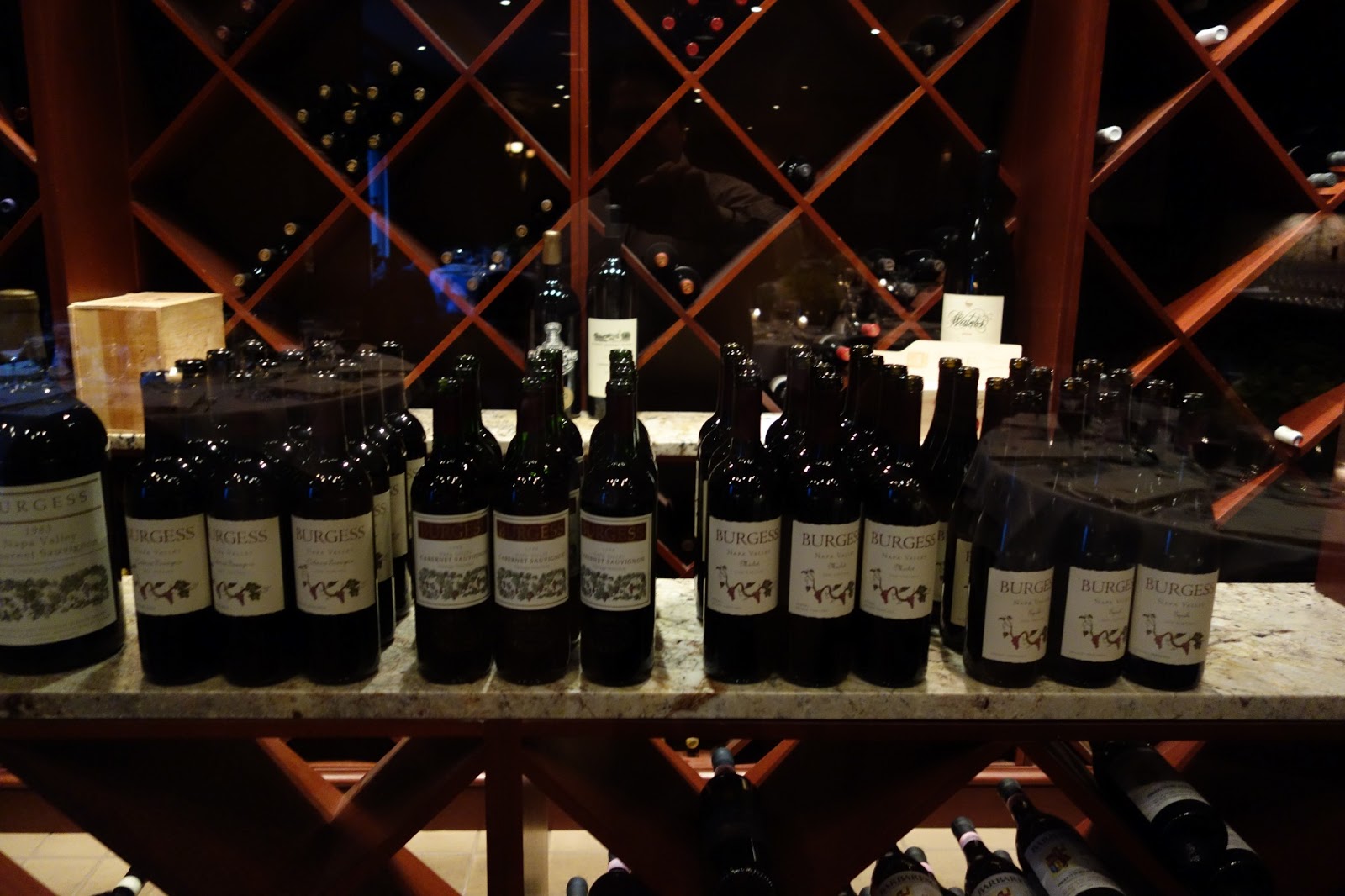
Recently, Grill 23 held a special dinner which was partially in honor of their 30th anniversary, as well as to showcase the wines of Burgess Cellars and Grill 23's ten year relationship with Brandt Beef. I was invited as a media guest to this event and it was well attended, offering a five course meal accompanied by six wines. Both the food and wines were delicious and I had no complaints in the least about the taste or presentation.

The Burgess wines included a 2010 Grenache, a 2008 Syrah, a 2008 Merlot, a 2009 Cabernet Sauvignon, a 1998 Liberty Release Cabernet Sauvignon and a 1983 Cabernet Sauvignon. They were all good wines, and my favorites were the Cabernets. Even the 1983 still possessed lots of life, having aged quite well. Paired with the beef dishes, the wines showed well.

Our first course was a Beef Carpaccio, with mushroom and smoked tongue. The beef was superb, silky smooth and bursting with flavor.

Next up were Pierogi, with beef sweetbreads, cheek confit and caramelized onions. The pasta was cooked just right with an intriguing sauce and a tasty filling, with a blend of earthy and sweet flavors.

The Brisket, made with red wine, sunchoke, carrot and turnip, was incredibly tender, the meat easily falling apart, and its meaty taste appealed to me. The chef did an excellent job with the brisket and I would easily order this again. One of the best briskets I have tasted in some time.

Our next savory course was a Ribeye & New York Strip, with family style sides such as mac n' cheese and tater tots. Once again, the beef was compelling, tender and flavorful, and it is easy to see why many chefs like serving this product to their customers.

Prior to attending the dinner, I researched Brandt Beef, checking out their website and reading other articles about the company. I was left with numerous questions, by what I found and didn't find, and hoped to get some of them answered at the dinner. Eric Brandt, the managing partner at Brandt Beef, attended the dinner and I was fortunate to get a chance during the course of the dinner to ask him a series of questions about their operations. It was an enlightening conversation.

Brandt Beef refers to itself as "The True Natural," a phrase which they have even trademarked. Their website states they are a "premium natural beef producer that is dedicated to sustainable practices." However, the website fails to actually define the term "true natural," instead listing some of their practices, such as choosing not to use antibiotics and hormones. So what is the definition of "true natural"? Would the average consumer believe Brandt Beef is "true natural?"

The USDA defines "natural" beef as: "A product containing no artificial ingredient or added color and is only minimally processed. Minimal processing means that the product was processed in a manner that does not fundamentally alter the product. The label must include a statement explaining the meaning of the term natural (such as "no artificial ingredients; minimally processed"). As you can see, that is a very general definition which says nothing about how the animal is raised. There is no USDA definition for "true natural" beef.

The average consumer probably doesn't even know that the above is the government's definition of "natural." When they see "natural" on a food product, they have a far different idea of what it should entail. As such, food labels such as "natural" and "organic" can deceive the public who fail to understand what they actually entail, which differs from what they expect.

Brandt Beef conforms to the USDA definition, not a tough hurdle, but they go further, choosing not to use antibiotics and hormones, which is admirable. Eric Brandt originated their compost operation, earning the moniker "King Shit" among his family and friends. This manner of handling their waste is another admirable practice, especially considering how other farms have significant problems due to their great waste. In their alfalfa fields, they use ladybugs and owls as more natural means of pest control. Despite these practices, there are still occasions when they feel the need to spray pesticides, which prevents them from becoming an organic farm.

Eric stated that "Being responsible and balanced is the key." An admirable philosophy. Eric also stated that Brandt was a pioneer in raising natural beef, beginning about 20 years ago, foregoing the use of antibiotics and hormones. Because of this pioneering, they consider themselves a "true natural," unlike other "natural" cattle farms which still use those products on their cattle. Under the USDA definition of natural, these farms can still use antibiotics and hormones. However, is this sufficient to earn Brandt the designation of "true natural?"

For a time, Brandt Beef used to raise cattle for other companies, such as Whole Foods, but in 2001 they decided to create their own brand. About 30% of their cattle is now sold under their own name. How many cattle do they raise? Eric asked that I did not report the number of cattle that they raise so I will not do so. I can report though that Brandt is a feedlot operation, and such operations due have their critics and potential problems. The maternal side of the Brandt family is involved in the dairy industry.

What do the Brandt cattle eat? The website mentions that the cattle are fed a diet of alfalfa and corn, though no specifics are given. Eric told me that the diet consists of approximately 15% alfalfa with about 10% sugar beet pulp (not mentioned on their website) and possibly some other ingredients too. Corn is the major ingredient in their diet, and they are fed this diet over the course of a year or so.

There is some disagreement over whether feeding cows corn is natural or not, and there appears to be some scientific evidence that a cow's stomach needs to adjust to large amounts of corn or could potentially have health problems. That requires that corn consumption be regulated to protect the health of the caste. This is partially why some feedlots use antibiotics, to handle illnesses related to corn consumption. Corn is also what brings excellent marbling to beef, and what makes it taste as good as it does.

Now we get to foundation of my issue with Brandt Beef calling themselves "true natural", which centers on their use of corn. I value transparency and honesty, and definitions are extremely important to me. If you wish to make bold statements in your marketing, then you better ensure you live up to them. The average consumer doesn't understand many of the nuances of legal definitions of words such as natural, organic or cage free. They see these terms in the most common way, something marketers understand and use to take advantage of those perceptions.

If you want to be known as "true natural," then I have high expectations for what that should entail. With Brandt Beef, I do not believe they live up to those expectations. The main problem I have with Brandt Beef is that they feed their cows GMO (genetically modified organism) corn. You won't find that fact listed on their website, though I think it should be. It is an issue of great importance to many consumers, as well as a topic of great controversy. Though Brandt purchases a small percentage of non-GMO corn, Eric indicated that it is far more expensive and difficult to obtain.

In an informal poll on Facebook and Twitter, no one believed that beef from GMO corn fed cattle should be labeled as "true natural." I also do not believe that beef from cattle fed GMO corn should be labeled as "true natural." For Brandt Beef to truly be transparent and up-front, they should be informing the public on their website that their cattle are fed GMO corn. The public has a right to know such information.

Currently, the U.S. has about 170 million acres of transgenic crops, especially soy and corn. About 90% of all the corn grown in the U.S. is now GMO corn. Consequently, non-GMO corn is likely more expensive and difficult to obtain. That is not an excuse though to conceal the fact that a company uses GMO corn. GMO crops have been genetically modified to make them more resistant to pests or tolerant of herbicides. Interestingly, the use of GMO crops has increased herbicide use 7% since 1996 due to new herbicide resistant superweeds.

On the other hand, Europe has been very resistant to the use of GMO crops, and the field is heavily regulated. They grow only a small percentage of GMO crops as compared to the U.S. In the U.S., food does not have to be labeled as GMO, and that has become a political hot button topic, indicating the passion of many against GMO food.

There is much skepticism about the safety of consuming GMO food, as well as the effect of feeding GMO crops to animals that end up as food, especially as there are insufficient studies concerning its safety. As foods are not labeled as GMO based, it becomes far more difficult to track and study negative reactions. The American Academy of Environmental Medicine has mentioned some of the potential health hazards of GMO food. Far more studies are necessary to assess the potential dangers. It is clear that many people object to GMO food and don't consider it natural. I find it disingenuous for a company to tout itself as "true natural" when it feeds its cattle GMO corn.

Brandt Beef does plenty that is admirable, and is better than many other cattle operations, however I believe they could and should be better, especially if they want to claim to be "true natural." They should be more transparent in their operations, owning up on their website to their use of GMO corn. And if they truly wish to be "true natural," I believe they should completely end the practice of using GMO corn.

Grill 23 & Bar on Urbanspoon
Read More
Posted in controversy, health, meat, rant, Restaurant, sustainability | No comments

Monday, 29 April 2013

Rant: Boston Restaurants, Follow New York City's Lead

Posted on 00:30 by Unknown
Consider a hypothetical restaurant which, on average, does 150 covers per night. In a week, they will do 1050 covers and in a month, that will total about 31,500 covers. Think of all the many pounds of ingredients that restaurant needs to create all those dishes. The major problem is that approximately 40% of that food will be wasted, discarded as refuse.

Where does all that trash end up? Far too often, it goes to landfills, creating larger and larger mounds of refuse.

Last summer, I ranted that Restaurants Should Cut Portion Sizes to reduce food waste. "It is estimated that over 40% of the food that is produced for consumption ends up as waste. What an incredible statistic which should bother everyone. The EPA states that in 2010, more than 34 million tons of food waste were generated." Food waste is a huge problem and needs to be addressed by everyone, from home owners to restaurants.

The New York Times recently reported that New York City acknowledged the problem of food waste, indicating that 1/3 of their 20,000 tons of daily refuse are from food waste and that restaurants account for 70% of commercial food waste. Over 100 New York City restaurants have stepped up the plate, vowing to "reduce the food waste they send to landfills by 50%" through composting and recycling. Both high end restaurants and chains will be participating, and hopefully other restaurants will join into this pledge as well.

That seems like a great start to an united effort to reduce food waste in New York City. Let us hope that other cities emulate their efforts and I am calling on all Boston restaurants to step up and make a similar pledge, to reduce their food waste by 50% through composting and recycling. I am sure there are some Boston area restaurants which already engage in such practices, such as Taranta in the North End. Chef Jose Duarte of Taranta is dedicated to making his restaurant green and sustainable, and has engaged in many beneficial practices toward that goal, including composting and recycling.

If any Boston restaurant currently practices composting and recycling, please contact me and I will add you to the post, making known your efforts to help reduce food waste. Or feel free to leave a comment on this post telling us all about your practices. If you are not composting and recycling yet, but want to start, please tell me this as well. If you don't want to compost and recycle, please step forward and tell me why you do not wish to do so.

Let us all do our part to reduce the problem of food waste.
Read More
Posted in chef, controversy, New York, rant, sustainability | No comments
Older Posts Home
Subscribe to: Posts (Atom)

Popular Posts

  • Taste Camp: The Wine Industry of Quebec (Part 1)
    Exploring emerging wine regions is always a fascinating endeavor even if their wines are not readily available outside of that region. It is...
  • Tuscan Market: One Stop Shopping & Cafe
    Many of us would love to be able to easily purchase fresh baked bread, fresh local produce, artisan cheese, meats, seafood, fresh pasta, win...
  • Rant: Beware The Self-Proclaimed Expert
    I am very tired of self-proclaimed wine experts, gurus, ninjas and whatever whose actual knowledge is lacking. This is obviously not a prob...
  • Rant: U.S. Sake vs Japan Sake--Context Is Everything
    Is sake produced in the U.S. as good as sake produced in Japan? Does the question require more specificity? Or is it even a fair question? A...
  • Rant: Where Is The Roast Chicken Love?
    1990 was a pivotal year in the battle of beef versus chicken . It was the first year that Americans ate more chicken than beef, and that has...
  • Boston Wine Expo: Pinotage Rosé to Cape Verde
    Here is a sampling of some of the other wines that I found interesting at the Boston Wine Expo , and I will be posting about even more wines...
  • Rant: Rushing To Judge A New Restaurant
    As soon as a hot, new restaurant opens, there is a rush for food bloggers and online reviewers to dine there and immediately report back. Ti...
  • International Boston Seafood Show: Fish Fun & Photos
    “ Fish is held out to be one of the greatest luxuries of the table and not only necessary, but even indispensable at all dinners where there...
  • Rant: Outraged By Sake Prices At Restaurants
    We often hear complaints about the outrageous prices  of wine sold at many restaurants. Some places charge three, four or even fives times t...
  • Rant: Post-Labor Day Wine Advice
    With today as Labor Day , it is seen by many people as a signal of the end of summer, despite the fact that the official end is not until Se...

Categories

  • 2011 (8)
  • 2012 (9)
  • 2013 (2)
  • alabama (1)
  • alaska (1)
  • alcohol (1)
  • allergy (1)
  • alsace (3)
  • Andover (3)
  • animal (1)
  • anniversary (1)
  • Argentina Wines (10)
  • Arlington (11)
  • armenia (1)
  • art (4)
  • Australia Wines (2)
  • austria wines (5)
  • author (12)
  • award (2)
  • Bacon (1)
  • Bakery (15)
  • bar (1)
  • bbq (3)
  • beauty (1)
  • Bedford (2)
  • beer (19)
  • biodynamic wine (1)
  • biography (1)
  • blogging (35)
  • Book reviews (30)
  • book store (3)
  • Boston (165)
  • bourbon (11)
  • braintree (2)
  • brazil wines (1)
  • brazilian (1)
  • breakfast (2)
  • brewery (6)
  • brighton (1)
  • Brookline (9)
  • brunch (15)
  • Burlington (3)
  • business (1)
  • butcher (4)
  • California Wines (20)
  • Cambridge (29)
  • canada (8)
  • Canada Wines (7)
  • candy (3)
  • cape cod (6)
  • cape verde wines (1)
  • casino (7)
  • caviar (1)
  • celebrity (2)
  • champagne (11)
  • Charity (33)
  • cheese (23)
  • chef (27)
  • chianti classico (10)
  • children (2)
  • Chile (2)
  • Chile Wines (2)
  • china (6)
  • chinatown (3)
  • chinese cuisine (8)
  • chocolate (1)
  • christmas (3)
  • cider (8)
  • cocktails (47)
  • colorado (2)
  • concord (10)
  • conference (9)
  • Connecticut (12)
  • consumers (2)
  • contest (8)
  • controversy (97)
  • cookbooks (5)
  • cooking (15)
  • cuba (1)
  • cyprus wines (1)
  • dance (1)
  • Danvers (2)
  • dessert wine (1)
  • desserts (21)
  • diet (2)
  • dining service (1)
  • discount (1)
  • distillery (14)
  • dlw13 (1)
  • donuts (1)
  • dorchester (16)
  • easter (6)
  • Eating Habits (2)
  • ebook (6)
  • ethics (3)
  • ethiopia (1)
  • farming (10)
  • father's day (1)
  • fiction (11)
  • finger lakes (2)
  • florida (1)
  • Food (4)
  • Food Event (8)
  • Food Market (12)
  • food news (2)
  • food processing (2)
  • food safety (4)
  • food truck (1)
  • France (3)
  • France Wines (19)
  • fruit (7)
  • Games (2)
  • gardening (1)
  • georgia wines (1)
  • gin (1)
  • glasses (1)
  • grapes (4)
  • Greece Wines (1)
  • guest post (1)
  • health (21)
  • history (34)
  • holiday (46)
  • hotel (2)
  • Hungary Wines (3)
  • hybrid (2)
  • ibss12 (14)
  • ibss13 (13)
  • Ice Cream (5)
  • ice wine (2)
  • iceland (1)
  • interview (5)
  • ipswich (4)
  • ireland (2)
  • italian cuisine (43)
  • Italy (19)
  • Italy Wines (38)
  • jamaica plain (1)
  • japanese (70)
  • kentucky (12)
  • korea (1)
  • law (13)
  • legend (9)
  • lincoln (6)
  • liqueur (1)
  • local wine (2)
  • los angeles (1)
  • louisiana (2)
  • louisville (7)
  • lynnfield (1)
  • madeira (1)
  • magazine (16)
  • Maine (2)
  • Malbec (1)
  • Malden (1)
  • mallorca (1)
  • mardi gras (2)
  • Massachusetts (4)
  • Massachusetts Wines (6)
  • mead (5)
  • meat (23)
  • Medford (6)
  • melrose (3)
  • mexican cuisine (16)
  • mexico wine (3)
  • mezcal (1)
  • milk (2)
  • milton (1)
  • mississippi (1)
  • montreal (2)
  • mothers day (1)
  • music (4)
  • natick (1)
  • needham (3)
  • new england (2)
  • New Hampshire (17)
  • new year's eve (10)
  • New York (3)
  • New York City (3)
  • New York wines (1)
  • New Zealand Wines (1)
  • newburyport (1)
  • newport (1)
  • news (1)
  • newspaper (7)
  • newton (9)
  • North Andover (16)
  • north end (12)
  • nova scotia (5)
  • Oregon (2)
  • Oregon Wines (6)
  • organic food (1)
  • organic wine (2)
  • paso robles (3)
  • peruvian cuisine (1)
  • phillipines (2)
  • pinotage (2)
  • pisco (1)
  • Pizza (2)
  • pork (3)
  • port (13)
  • portland (1)
  • portsmouth (6)
  • Portugal (6)
  • Portugal Wines (19)
  • poultry (1)
  • providence (1)
  • provincetown (5)
  • quebec (5)
  • rant (97)
  • Reading (1)
  • Recipe (11)
  • Restaurant (198)
  • restaurant going (8)
  • restaurant reviews (65)
  • Rhode island (4)
  • rose (7)
  • rum (11)
  • Sake (61)
  • Sake Reviews (15)
  • salem (2)
  • salmon (4)
  • sandwich (5)
  • science (10)
  • scotland (4)
  • seafood (72)
  • Seattle (1)
  • sherry (10)
  • shochu (1)
  • shopping (3)
  • social media (1)
  • soda (2)
  • Somerville (13)
  • South Africa Wines (7)
  • spain (8)
  • Spain Wines (18)
  • sparkling wines (6)
  • spirits (42)
  • sports (4)
  • st. patrick's day (4)
  • steakhouse (12)
  • sudbury (1)
  • sushi (5)
  • sustainability (61)
  • sweden (1)
  • tastecamp (5)
  • tea (6)
  • television (4)
  • tequila (2)
  • texas (1)
  • thai (2)
  • thanksgiving (9)
  • theater (2)
  • top ten (14)
  • toronto (1)
  • travel (8)
  • twitter (1)
  • united states (1)
  • Uruguay Wines (1)
  • valentine's day (5)
  • vegetables (3)
  • vermont (4)
  • virginia (1)
  • virginia wines (1)
  • vodka (8)
  • Wakefield (1)
  • walpole (2)
  • watertown (1)
  • wayland (1)
  • wbc (3)
  • west concord (1)
  • westwood (1)
  • whiskey (19)
  • Winchester (14)
  • Wine (3)
  • Wine Education (19)
  • wine event (14)
  • wine importers (1)
  • wine marketing (11)
  • Wine news (3)
  • wine pairings (15)
  • wine personality (1)
  • Wine Prices (5)
  • Wine Reviews (68)
  • wine sales (13)
  • Wine Stores (23)
  • Wine tasting (11)
  • wine writing (1)
  • winemaker (4)
  • winemaking (6)
  • wineries (5)
  • winery (21)
  • Woburn (3)
  • women (3)

Blog Archive

  • ▼  2013 (171)
    • ▼  September (5)
      • Why Are You Fat?
      • Thursday Sips & Nibbles
      • Heirloom Flavor: From a Dragon's Tongue to a Nebra...
      • Papa's Pilar Rum: What Would Hemingway Do?
      • Rant: Post-Labor Day Wine Advice
    • ►  August (19)
    • ►  July (18)
    • ►  June (19)
    • ►  May (19)
    • ►  April (20)
    • ►  March (32)
    • ►  February (20)
    • ►  January (19)
  • ►  2012 (283)
    • ►  December (21)
    • ►  November (23)
    • ►  October (30)
    • ►  September (17)
    • ►  August (26)
    • ►  July (23)
    • ►  June (19)
    • ►  May (21)
    • ►  April (20)
    • ►  March (34)
    • ►  February (26)
    • ►  January (23)
  • ►  2011 (46)
    • ►  December (27)
    • ►  November (19)
Powered by Blogger.

About Me

Unknown
View my complete profile