ShrimpTempura

  • Subscribe to our RSS feed.
  • Twitter
  • StumbleUpon
  • Reddit
  • Facebook
  • Digg
Showing posts with label sustainability. Show all posts

Wednesday, 28 August 2013

Verlasso Salmon: A Seafood Watch "Good Alternative"

Posted on 00:00 by Unknown
Do you avoid farmed salmon? Do you believe that farmed salmon is not sustainable? Maybe you need to reassess the situation.

Wild or farmed salmon? That is often the dilemma. There have been numerous real problems with farmed salmon, so organizations like the Monterey Bay Aquarium Seafood Watch have generally labeled all farmed salmon as Avoid. However, I have previously criticized such watchdog organizations for making too broad an assessment which can ignore the good work of specific producers. Not all farmed salmon is the same, and the Seafood Watch is finally paying attention and making positive changes to their assessments to account for such exemplar producers.

For the last two years at the International Boston Seafood Show, I have reported about Verlasso Salmon, a farmed salmon operation which seemed to be avoiding the problems of other salmon farms. In 2012, I stated: "Verlasso seems to be headed in an excellent direction, working hard to be sustainable, and I applaud their efforts." This year, I repeated my sentiments: "Verlasso continues to move in the right direction and it is worthy of your support." You can read my previous posts for some of the specifics that make Verlasso salmon more sustainable, and you will be able to see that they also continue to improve their practices. Plus, and importantly, their salmon is tasty.

In 2012, the Seafood Watch instituted a pilot program for an External Assessment Model, which would "...allow third parties to utilize the Seafood Watch criteria and methodology to assess fisheries and aquaculture operations that would not otherwise be assessed by the Seafood Watch program." The Seafood Watch understands that they have a limited ability to assess all of the aquaculture and wild seafood operations around the world, and this pilot program would allow them to expand their assessments, without decreasing the quality of their program. Since 2012, the Seafood Watch has been testing out this new program on a limited basis and the results are starting to come in.

Verlasso Salmon became part of the Seafood Watch's new pilot program, the External Assessment Model, and its aquaculture practices were reviewed and assessed over a sixteen month period. And the result was a striking success for Verlasso. Verlasso is now the first and only ocean-raised farmed Atlantic salmon to receive a “Good Alternative” rating from the Seafood Watch program. All other Atlantic Farmed Salmon still has an "Avoid" rating, making Verlasso Salmon unique, indicative of their strong efforts to produce sustainable seafood.

“The Seafood Watch assessment of Verlasso’s hatcheries, farms, processing plants and management took 16 months,” said Jennifer Dianto Kemmerly, director of Seafood Watch. “Based on the extensive data we collected, which was vetted internally and by external peer reviewers, we’re confident that Verlasso is raising Atlantic salmon with environmentally responsible practices.” This announcement is a positive sign for other individual seafood operations who are committed to sustainability, but who might have fallen under a general Avoid rating in the past. I am impressed that the Seafood Watch has instituted the External Assessment Model and hope it continues to reward worthy fisheries.

Scott Nichols, the Verlasso director, stated. “Verlasso is devoted to finding comprehensive solutions for salmon aquaculture’s historic challenges. We are deeply gratified by Seafood Watch’s recognition of our efforts. We have collaborated with conservation leaders to help us on our journey to raise the best salmon with sustainable practices. The Good Alternative ranking is an exciting validation of our achievement.”

Congratulations to Verlasso Salmon for their achievement, and congratulations to the Seafood Watch for making the effort to improve their ratings and address the issue of worthy, individual operations which were previously marginalized under their overly broad assessments.
Read More
Posted in salmon, seafood, sustainability | No comments

Monday, 12 August 2013

Rant: Stop Eating Pangolin!

Posted on 00:00 by Unknown
Shark fins get all the attention.

You've probably read plenty of articles calling for bans on shark fin soup, a famous Chinese soup, with a history extending back centuries to at least the Ming Dynasty, if not older. Millions of sharks have been slaughtered for only their fins, the rest of their bodies tossed back into the sea. The outrage has been loud and prevalent, and there is nothing wrong with that. Except that some of that outrage should be directed toward protecting other endangered species, like pangolin.

Pangolin. You probably have never heard of them before. And you probably didn't know that they were endangered. I know that I wasn't aware of that fact until recently. They just haven't received sufficient publicity, haven't been brought before enough of the public. It is time that they had the spotlight shined on their plight.

They have no teeth but have a long, sticky tongue. They primarily dine on ants and termites. When threatened, they usually choose to roll up into a ball, protected by their overlapping scales. And they are endangered because too many people are illegally catching them to dine on their meat and to use their scales in medicine.

Also known as scaly anteaters, there are eight species of Pangolin, four in Africa and four in Asia. They are cute creatures and pose no threat to man. They actually help with pest control, and it is estimated that a single pangolin might be able to consume around 70 million insects in a single year. As many pangolin live hidden underground, scientists don't know much about their behavior. And with their dwindling numbers, it is even harder to learn about them.

Under the Convention on International Trade in Endangered Species (CITES), trade in the Asian species is illegal and trade in the African species is severely restricted. Despite its illegality, there is a large blackmarket trade in these creatures, with the primary markets being in China and Vietnam. They enjoy the taste of its meat, but also use its other body parts for medicinal purposes. Their scales are though to cure everything from cancer to asthma, though there is absolutely no scientific evidence that they possess any efficacy.

From 2011 to August 2013, it is estimated that 91,390 and 182,780 pangolin were illegally slaughtered. Last week, seven people were arrested in India for smuggling 70 kilograms of pangolin scales, an amount that could have come from nearly 300 pangolin. In April, French authorities seized 50 kilograms of pangolin scales that were headed to Vietnam. This is a serious issue but not enough people people in the U.S. are aware of this issue.

Now that you know about pangolin, then I hope you will lend some of your outrage to their plight. For more information, you can check out a couple organizations dedicated to helping these scaly anteaters, including Save Pangolins and Project Pangolin,
Read More
Posted in animal, china, controversy, health, rant, sustainability | No comments

Wednesday, 24 July 2013

How Restaurants Can Be More Sustainable

Posted on 00:00 by Unknown
“To me, it’s about bringing community together. I look at what we do in our restaurants as being something bigger than just providing nutrition for people."
--Rick Bayless

Sustainability. It's a hot buzzword and its definition has been warped and twisted by many companies, trying to use it as a marketing tool. However, it's an important concept and a worthy goal to help some of the problems which plague our world. Restaurants need to pay attention to sustainability, but it can be a complex issue and restaurants can use all the help they can get to know what are the right things to do. There is a new, free resource which provides some basic, but valuable, information on sustainability and every restaurant owner should download and read this report.

“When a restaurateur grabs hold of the role of storyteller and starts telling about where the food is coming from and how you can connect with people in your community who have supplied some of it, suddenly the restaurateur takes on a role that is, to me, sort of the ground level of real sustainability.”
--Rick Bayless

The National Restaurant Association recently held their annual Restaurant, Hotel-Motel Show and there was a strong concentration on sustainability, including seven educational programs. Fortunately, if you didn't or couldn't attend, they have released a special report, collecting much of the information on sustainability. The report, Bright Ideas: Sustainability Tips From Industry Experts, is available as a free download and I strongly encourage all restaurant owners to read it. The report contains information from people like Chef Rick Bayless and Joe Carbonara as well as companies such as Starbucks and Chipotle Mexican Grill.

"..restaurants use five to 10 times more energy per square foot than other businesses, ..."
--Joe Carbonara

Some of the information is a bit philosophical, detailing how some people view sustainability as much bigger than merely worrying about local products and waste. For Chef Rick Bayless, sustainability is all about community. Some of the information is more practical, from the general down to detaiiled specifics. For Caitlin Leibert, of Chipotle, the general starting principle is to ask lots of questions, to gain as much knowledge, data and information as you can obtain. Joe Carbonara provides some specifics on designing a restaurant to be more sustainable while Jim Hanna, of Starbucks, give advice on recycling and composting. You'll even find a discussion on seafood sustainability.

“Don’t settle for what is out there. Research, ask questions and dig in. It’s really just about asking the right questions."
--Caitlin Leibert

At the bottom line though, a restaurant needs to be profitable. If it isn't making money, then it won't be sustainable itself and will eventually have to close. That doesn't mean a restaurant needs to compromise on its principles and convictions. You can be both profitable and sustainable, though there can be friction between these two goals. That sometimes means you must better educate your customers about food costs and sustainability.

“The most successful franchisees believe that being socially involved helps their sales.”
--Don Fox

Customers have a growing interest in the corporate and business practices of restaurants, from how they treat their employees to how they handle complaints. They want restaurants to be more socially responsible, concerned about issues from fair trade to environmental issues. Sustainability falls within that purview and a failure to address such issues can lead to a strong blacklash, especially in social media. It is not enough to just serve food anymore. People expect far more from restaurants.

“We first and foremost have to stay in business. But we aren’t going to give up on our convictions. We will find the balance in the middle.”
--Rick Bayless

Besides eight articles, the report also contains eight sidebars, with more practical advice, including lists of actions to take. You'll find sidebars on topics like Energy Efficient Best Practices, Convert Trash Into Cash, Four Keys To Food Sustainability and How To Be Socially Responsible. Overall, this report is a great starting place for restaurants to think more about sustainability, and will hopefully give you some new suggestions that you might not have considered before. Sustainability is only going to become more and more vital, so the time to work at it is now.

What are you waiting for?
Read More
Posted in law, Restaurant, sustainability | No comments

Thursday, 11 July 2013

Thursday Sips & Nibbles

Posted on 00:00 by Unknown
I am back again with a new edition of Thursday Sips & Nibbles, my regular column where I briefly highlight some interesting wine and food items that I have encountered recently.
**********************************************************
1)  51 Lincoln Owner Jeff Fournier and Chef de Cuisine Nate Gibson present Raw August, a month-long celebration of internationally influenced raw cuisine, featuring vegetables from 51 Lincoln’s own rooftop garden and proteins in their purest form.

During the month of August, Jeff Fournier and Nate Gibson will prepare dishes that are globally influenced, yet locally sourced. These carefully prepared dishes will not only delight your palate, but also provide you with a love of proteins in their natural state. Served with complimentary wine pairings, these dishes provide the perfect finishing touch to summer. Below are sample menu items for Raw August:

Wagu Steak Tartare with Red Onion, Capers, Truffle Dijon Dressing
Onset Oysters on the Halfshell, Pickled Ramp Mignonette, Peach Gastrique, Fresno Chili, Chervil
Colorado Lamb Kibbe, White Onion, Parsley, Kalamata Olive Vinaigrette, Naan Bread
Scallop and Mango Poke, Poi and Taro Root Chips, Radish Slaw
Cold Smoked Sail Island Salmon Tartare, House Baked Fennel Bread, Soft Boiled Farm Egg, Fennel Fronds, Pickled Mustard Seed Vinaigrette
Duo of Tartares: Yellow Fin Tuna & Fresh Blueberries, Red Onion, Lemon, Cilantro, Blueberry Aioli
Rhode Island Fluke Ceviche, Jalapeño, Lime, Cilantro, Pineapple, Avocado Espuma
Faroe Island Salmon Carpaccio, Crispy Green Bean Frites, Brandy Cream sauce

When: August 1-31 (Tuesdays through Saturdays, starting at 5:00pm)

2) From Sunday, September 8 to Sunday, September 15, restaurants and wine shops located north of Boston will join together to hold the third annual North of Boston Wine Week (NOBOWW). Sponsored by Merrimack Valley Magazine, in conjunction with NECN’s “TV Diner,” M.S. Walker, Horizon Beverage Company and Cape Ann Foodie Tours, North of Boston Wine Week will celebrate the towns north of Boston as a premier destination for fine wine and food. Throughout the week, the area’s finest businesses will highlight their wine selections with various events and great deals including everything from specially crafted wine tastings, wine dinners, wine flights, pairings, special events and more. For the complete calendar listing of events visit www.NorthOfBostonWineWeek.com.

North of Boston Wine Week will kick-off with a complimentary inaugural event at the Wine ConneXtion, located in North Andover, on Saturday, September 7, from 1pm-5pm, during an exclusive, free wine tasting event featuring cuisine from several participating venue’s chefs.

Buy local, drink global and join North of Boston as a vibrant food and wine community and support local businesses including: 50 Warren Restaurant, 62 Restaurant & Wine Bar, Adriatic Restaurant and Bar, Alchemy Bistro, Andiamo Restaurant + Bar, Angelina’s Italian Restaurant and Pizzeria, Blue Stove at Nordstrom, Burton’s Grill, Busa Wine & Spirits, Café Escadrille, Centro, China Blossom, Emerson By The Sea, Evviva Cucina, The Grapevine, Hanover Street Chophouse, Joseph's Trattoria, Laurie's 9:09 Gastro-Diner, Luna Rossa Ristorante, Michael's Harborside, Nathanial's at the Hawthorne Hotel, On The Bone, Oregano Pizzeria, Orzo Trattoria, Phat Cat Bistro, Ristorante Olivio, Salvatore's Restaurants, Smolak Farms, Stonehedge Inn & Spa, Ten Center Street, Tryst Restaurant, Tuscan Kitchen, Tuscan Market, Waterside Grille, and the Wine ConneXtion.

3) Executive Chef/Owner Paul Turano of Tryst Restaurant in Arlington, MA (and the soon to open “Cook” restaurant in Newton), has been nominated by Governor Deval Patrick to represent the state of Massachusetts at the Great American Seafood Cook-Off in New Orleans, Louisiana on August 3. The Great American Seafood Cook-Off is one of the nation’s most prestigious seafood competitions showcasing domestic, sustainable seafood featuring acclaimed chefs from across the country. Chefs are asked to create unique dishes and flavor combinations with domestic seafood that is native to their home states and representative of their region. Hosted in New Orleans, Louisiana, one of the most renowned cities for all things gourmet, the event is sponsored by the National Oceanic Atmospheric Administration (NOAA) and presented by the Louisiana Seafood Promotion & Marketing Board.

“It’s such an honor to represent Massachusetts in this competition,” said Chef Paul Turano. This will be the first time Massachusetts is represented at the Great American Seafood Cook-Off. The Great American Seafood Cook-Off takes place at the Morial Convention Center in New Orleans, in Hall J, alongside the Louisiana Restaurant Association Food Service Expo on August 3.

4) On Sunday, July 28, at 6pm, Chef Paul Turano of Tryst Restaurant in Arlington is collaborating with New England’s very own root beer company, Tower Root Beer, for the third annual Root Beer Dinner, celebrating Tower’s 99-year-old classic soda recipe.

Founded in Somerville, MA, in 1914, Tower Root Beer evolved from a tonic company into a specialized root beer company. During the Prohibition of the 1920’s when root beer became the substitute for beer that was no longer available, their pharmacist- perfected recipe contributed to Tower’s early success and allowed them to withstand the stock market crash of 1929, even when the bank that held their working capital could not. Spanning New England, Tower Root Beer grew into a well-known business before an unsuccessful merger and competition from the two major soda conglomerates forced them off the market. For the past 30 years, Tower’s recipe has sat under lock and key, before a third generation of the family decided to reestablish the family business after finding their grandfather's handwritten recipe.

Tryst Restaurant is celebrating the return of the timeless drink with a classic three course, $34 prix fixe dinner ($14 for optional cocktail pairing) by Chef Paul Turano featuring root beer inspired dishes and innovative cocktails inspired by the sweet treat. Reservations are required and can be made by calling Tryst at 781-641-2227.

And here is a special Recipe from Chef Turano for Root Beer Braised Short Ribs

Ingredients:
3 lbs Boneless Beef Short Ribs (about 1 1/2" thick with good marbling)
1 ea yellow onion, rough chopped
1 ea carrot, rough chopped
2 ea celery stalks, rough chopped
3 ea garlic cloves, rough chopped
3 Tbls tomato paste
4 ea fresh thyme sprigs
1 ea bay leaf
½ bottle dark beer
½ bottle Tower Root Beer
3 cups chicken stock
3 Tbls balsamic vinegar
flour, as needed
salt and pepper
canola oil, as needed

Directions:
Season short ribs with salt and pepper, dredge in the flour, bang to remove excess flour. Heat a sauté pan over medium heat, add a little canola oil and cook the ribs in batches (Do Not Overcrowd the Pan!) Brown the ribs on all sides, taking care not to burn the flour. Remove ribs and place in an oven proof casserole about six inches deep. Sear remaining ribs.

Wipe out excess oil from the sauté pan. Add the onion, carrot and celery, season with salt and pepper and continue to cook until light brown. Add the garlic and cook until fragrant. Add the tomato paste and cook an additional 3-5 minutes, stirring often. Add the beer, root beer and bring to a boil for two minutes. Pour into the casserole over the ribs. Add the aromatics and chicken stock. Cover the casserole with lid or aluminum foil. Place in 300˚ oven. Half way through cooking, flip the ribs in the liquid to ensure even cooking. Cook approximately two and a half hours, until the short ribs are tender, but not falling apart.

Remove the meat from the casserole, strain the liquid through a sieve, skim excess fat and return to casserole or a stove top safe pan. Reduce the liquid until the desired consistency. Return ribs to the liquid to slowly reheat. Serves 4-6 people.

5) On July 31-August 25, Rosa Mexicano will launch their annual Ice Cream Festival, featuring a dedicated menu of sweet and salty ice cream flavors, Paleta popsicles, dessert guacamole, ice cream-stuffed churros and more.

Part of their ongoing Flavors of Mexico series, the beloved festival will introduce specials including but not limited to:
· Guacamole de Postre: a decadent sundae of sweet avocado ice cream "guacamole," prepared tableside with fresh raspberries, white chocolate shavings & coconut crunch; served with piloncillo chocolate sauce and cinnamon sugar Buñuelos
· "Paleta" Popsicles: in flavors such as Guava, Chile & Huckleberry; and Papaya & Passionfruit
· Ice Cream Stuffed Churros: a twist on the traditional "deep fried ice cream," three churro fritters filled with various ice cream flavors such as malted coffee and plantain & peanut butter; served with chocolate fudge ganache
· Ice Cream Cones: highlights include Plantain & Peanut Butter; Strawberry Rose; Sweet Cream, Mexican Chocolate & Cajeta Swirl; and Mexican Sour Gherkin & Jalapeño Sorbet

6) Bringing a taste of the North End to the Greenway, Carla and Christine Pallotta have now opened the doors to the relocated NEBO at 520 Atlantic Avenue. The new 180-seat restaurant, with a 65-seat patio on the edge of the Greenway with 180-degree views of the Financial District, is now open for dinner service, and will add lunch in the next few weeks, followed by a takeout program specializing in Italian sandwiches, baked goods, and pastries.

“After eight years at the original NEBO, our hearts – and our parking spaces – will always be in the North End,” say sisters, chefs, and co-owners Carla and Christine Pallotta. “Though we’re not technically located in the neighborhood any more, we’re still close enough to do our morning shopping. Instead of ‘North End Boston,’ NEBO now means ‘North End brought over’ to the Greenway.”

In addition to the pizzas, handmade pastas, and antipasti for which NEBO is famous for, the new NEBO menu will offer even more traditional Italian dishes that the original, smaller NEBO kitchen wasn’t equipped to execute. These new dishes include about 10 new pizzas and summer entrees that focus on seafood and vegetables such as Branzino, Squid Ink Pasta with Salt Cod Confit, and Cioppino with Lobster, Shrimp, Calamari, Mussels and Smelts in a Spicy Tomato Brodo with Crostini.

NEBO has floor-to-ceiling windows on two sides of the building, a vaulted brick ceiling, and an open layout that includes: a 60-person bar area with two communal tables, an Italian marble bar, and 12-seat drink rail; a 120-person dining room with banquettes, coffee-stained rift oak tables, and chocolate brown Herman Miller bucket chairs interspersed with refinished Thonet chairs from the old NEBO; and a semi-private dining room with an Italian alabaster chandelier. The state-of-the-art open kitchen with adjoining gelato and sandwich bar is the “dream kitchen” Christine imagined eight years ago when she crafted the business plan for NEBO’s original North End location. During the warmer months, NEBO’s outdoor patio on the edge of the Greenway includes custom furniture designed to match the original cast iron work of Atlantic Wharf, nutmeg umbrellas, and Winston Flowers arrangements.

NEBO is now open for dinner Monday through Saturday beginning at 5:00 PM. Lunch service begins late July; takeout by September. NEBO is closed on Sundays.

I am a huge fan of NEBO so I am very excited to check out their new location, and I think it is great that they will soon be open for lunch too. This is definitely a restaurant I strongly encourage my readers to check out.
Read More
Posted in Arlington, Ice Cream, mexican cuisine, newton, North Andover, Recipe, Restaurant, seafood, sustainability, wine event, Wine Stores | No comments

Monday, 3 June 2013

Rant: Going Gaga For Goat?

Posted on 00:30 by Unknown
“Put silk on a goat and it is still a goat.”
--Irish saying

Despite the fact that approximately 70% of the red meat eaten in the world is goat, it is not the easiest meat to find locally. It is most likely to be found in ethnic restaurants and shops. Why aren't more local restaurants, markets and butcher shops using and showcasing goat? A recent article in the Pittsburgh Post Gazette claims that goat is "becoming trendy" but is their evidence more anecdotal than definitive? What isn't the U.S. more gaga for goat?

“Bring me a bowl of coffee before I turn into a goat.”
--Johann Sebastian Bach

The article offers few actual statistics, concentrating more on discussions with specific restaurants which serve goat. It also mentions that few fine dining restaurants offer goat on their regular menus. One of the only statistics they offer is that the Maryland-West Virginia-Pennsylvania Meat Goat Association noted that their goat production increased 20% in the past five years and that the number of goat farms had almost doubled since 2011. That is only a local figure and may not be representative of the rest of the country.

“He who lets the goat be laid on his shoulders is soon after forced to carry the cow.”
--Italian saying

The Agricultural Marketing Resource Center (AMRC) has a darker picture for goat production in the U.S. They note that meat goat inventory has declined since 2009. Texas currently produces about 40% of the goat meat in the U.S. and Tennessee. Oklahoma, California and Missouri are produce significant amounts too. So, the Maryland-West Virginia-Pennsylvania Meat Goat Association is apparently not a major national goat producer. AMRC also indicates that the goat industry has been growing in Hawaii, Oklahoma, Louisiana, New Mexico and Idaho. In addition, goat meat exports recently decreased 49% though live goat exports actually increased by 37%. And where did most of those goats go? Canada and the Philippines. Last year, the U.S. also imported $72.1 million in goat meat, mostly from Australia.

"The lust of the goat is the bounty of God."
--William Blake

On a more positive note, the USDA indicates that they inspected 779,000 goat carcasses in 2010, which is an increase from 558,857 in 2004. Apparently though, the 2010 figure is slightly lower than it had been in 2008 and 2009. In addition, the U.S. still ranks very low in goat consumption compared to the rest of the world. As of 2005, the U.S. ranked 136th out of 174 countries in goat consumption. Mongolia was in 1st place. In the U.S., the groups that eat the most goat include Hispanics, Muslims and those from the Caribbean. So why aren't more people eating goat?

“If the beard were all, goats could preach.”
--Danish saying

Healthwise, goat is a great option. It is very low in fat, about 3%, which makes it lower than turkey, chicken, pork, lamb and beef. In addition, it has less calories and cholesterol than these meats and even has more protein than beef. Goat also has more iron than chicken, pork, lamb and beef. Overall, goat is a very nutritious alternative to other commonly consumed meats. Another compelling element is that raising goats is more sustainable than many other meats. They are browsers, not grazers, meaning they do less damage to the land, and even eat weeds which helps other plants grow better. Goats need less land than cattle as well.

“Every man can tell how many goats or sheep he possesses, but not how many friends.”
--Cicero

Currently, good goat can be expensive which means not as many people are willing to pay such high prices for an unfamiliar meat. Many consumers also do not know how to properly cook goat so their negative experiences in home cooking may not make them to want to try it again. The demand for goat needs to lead to lower prices and the average consumer needs to be educated on proper preparation. Restaurants need to be willing to place goat onto their menus, and make it more appealing to their customers. Goat is getting some good press which might help more people be willing to give it a try. I wouldn't go so far as say it is trendy yet, but it is definitely a meat worthy of exploration.

So stop wolfing down those hamburgers and chicken fingers. Go find yourself a delicious dish of goat!
Read More
Posted in bbq, controversy, meat, rant, sustainability | No comments

Thursday, 16 May 2013

Thursday Sips & Nibbles

Posted on 00:30 by Unknown
I am back again with a new edition of Thursday Sips & Nibbles, my regular column where I briefly highlight some interesting wine and food items that I have encountered recently.
**********************************************************
1) Frank McClelland is the Chef & Proprietor of L'Espalier and he is one of few Chefs in the country to reside on his own farm, Apple Street Farm. In one of the country’s most ambitious sustainable agriculture initiatives for the restaurant industry, Apple Street Farm is the primary source of organic harvests for L’Espalier and is a source for various other restaurants throughout the city of Boston. Apple Street Farm is located just north of Boston in Essex, MA and is Chef McClelland’s revitalization of a two-century pastoral 14-acre equestrian farm.

Every Summer, Chef McClelland and his talented team hosts the Apple Street Farm Summer Dinner Series. Each month from June until October, Apple Street Farm will celebrate the freshest ingredients of the season with a special dinner showcasing the organic produce, poultry and eggs fresh from Chef McClelland’s own backyard. Guests are invited to arrive at the farm and explore the beautiful grounds while enjoying a seasonal cocktail and hors d’oeuvres prepared by the chefs of L’Espalier.

They will then be seated outside (or under a tent in the case of inclement weather) to enjoy a five-course themed meal with wine pairings.
June 21, 22 – Summer Solstice (Reservations open beginning May 15)
July 19, 20 – Firefly Festival 
August 23, 24 – Brandywine Bash 
September 20, 21 – Fire Pit Fiesta 
October 18, 19 – Essex Harvest Feast

Guests are asked to arrive at the farm at 5:30 p.m., with dinner served at 6:30 p.m., rain or shine. The Summer Dinner Series cost $180 per person, inclusive of tax and gratuity. Please call L’Espalier at 617-262-3023 to make a reservation.

2) Fleming’s Prime Steakhouse & Wine Bar announces the return of Small Plates, Big Pours, for wine and food lovers looking for a light meal and elegant pairing options. For a limited time, guests can match any of their seven Small Plates with an oversized wine pour for $24.95. Guests can select any of the seven Small Plates including: New Zealand Petite Lamb Chops (pistachio-mint pesto, "F17" sauce, polenta fries); Fleming’s Lobster Tempura (soy-ginger dipping sauce, arugula, jicama salad); Colossal Shrimp Skewers (chimichurri dipping sauce, fennel citrus salad); New Bedford Scallops (Meyer lemon-honey glaze, carrots, green beans, asparagus); Sliced Filet Mignon (shiitake risotto, chili oil, porcini butter drizzle); Braised Short Ribs (boneless, savory arugula and spinach, natural au jus); or, Ahi Tuna (fresh vegetable salad, spicy mustard sauce). Each Small Plate is matched with one of their seven premium Big Pours, each carefully selected by Fleming’s Director of Wine, Maeve Pesquera.

Available May 15 – June 30
Promotion is only available in the bar area.

3) From May 13 to June 9, Legal Sea Foods is celebrating Wines of Chile, a country that is home to several distinct terroirs that provide ideal growing conditions for a wide range of grape varieties and wine styles, by offering a feature menu of eleven Chilean wines and exclusive wine dinners.

On June 5, at 6:30pm, Legal Sea Foods in Framingham will host the Chilean Emiliana Wine Dinner with Emiliana Organic Vineyard’s Export Director, Fernando Pavon. Chile is a country with spectacular natural advantages for wine production including brilliant sunshine, moderate heat, and little or no rain during the growing season but plentiful mountain water from the Andes for irrigation which all add up to abundant quantities of ripe, structured grapes that are harvested in healthy conditions.

The four-plus-course pairing menu will be presented as follows:
HORS D’OEUVRES
Littleneck Clam* Ceviche, Crispy Shallots
Lobster Tomalley Toasts
Jonah Crab, Cucumber, Yuzu Salt
Caponata, Ricotta Bruschetta
Emiliana "Novas" Gran Reserva Sauvignon Blanc, Casablanca, 2011
FIRST COURSE
Shrimp Empanada (hearts of palm, tomato, creamed corn, herb salad)
Emiliana "Natura" Chardonnay, Casablanca, 2012
SECOND COURSE
Pancetta-Wrapped Block of Tuna* (scallion mashed potatoes, maitake mushrooms)
Emiliana "Novas" Gran Reserva Pinot Noir, Casablanca, 2010
Emiliana "Natura" Carmenère, Colchagua, 2011
MAIN COURSE
Roasted Lamb Shoulder (olive relish, flageolet beans, roasted kale)
Emiliana "Natura" Malbec, Rapel, 2011
Emiliana "Novas" Gran Reserva Cabernet Sauvignon, Maipo, 2009
CHEESE COURSE
A Variety of Cheeses (cashew and honey, crusty bread)
Emiliana "Coyam," Colchagua, 2009

COST: $65 per person (excludes tax & gratuity)
Reservation required by calling 508-766-0600

4) As the Chinese proverb says “deep doubts, deep wisdom…” well, it’s time to doubt the stereotypical beer and sake pairings that generally accompany the intrinsic flavors of Asian cuisine and grab a glass of wine. On Saturday, June 1, from 1pm-5pm join the Wine ConneXtion and China Blossom, both located in North Andover for “Wok n’ Wine,” as they debunk the mysteries of pairing Asian cuisine and wine with a complimentary in-store tasting. Guests will sample authentic sweet, spicy and savory dishes as they discover the art of pairing these two unlikely flavors. The Wine ConneXtion will educate guests on fantastic duo while they learn about the art of pairing Asian cuisine for an upcoming restaurant visit, or become inspired to plan a delicious dinner that is sure to impress guests.

Walk-ins welcome all day!
Cost: Tasting is complimentary; Must be 21+.
Read More
Posted in Boston, Chile Wines, chinese cuisine, farming, North Andover, Restaurant, steakhouse, sustainability, Wine Stores | No comments

Tuesday, 14 May 2013

The Ethical Butcher: How To Eat Responsibly

Posted on 00:00 by Unknown
"We each make a choice every day about the world we want to live in. It follows then that we want to look at the ways we eat with scrutiny, because what, why, and how we eat is shaping the planet and our future." (p.xxiii)

Berlin Reed stopped eating meat when he was 12 years old. By the time he was 21, he was a vegan and even got a tattoo of the word "vegan" on his neck. Several years later, he ended up working as a butcher. A vegan butcher? Yes, that is how he started but soon enough, he heard the siren call of meat, and was vegan no more.

You can read about Reed's journey in his new book, The Ethical Butcher: How Thoughtful Eating Can Change Your World (Soft Skull Press, April 2013, $26). This is a hardcover book of 290 pages, divided into two main parts and with 12 pages of photos dividing the two parts. The first part is more biographical, describing Berlin's journey into becoming a butcher and meat eater. The second part provides information for consumers to take control of their own food decisions. Berlin describes himself as a former militant vegan punk, and there is a bit of edge to his words, though he offers a balanced approach in most respects.

"I have zero interest in telling people what and how to eat. I have astronomical interest in showing people where their food comes from, explaining government and corporate manipulation of information, and in making the 'sustainability' conversation more accessible and relevant to people of all backgrounds." (p.xxi)

Berlin's vegetarianism was of more political origin, as in 1994 in Seattle, "..everyone who was counterculture was vegetarian." He never felt that meat consumption was wrong for everyone. In 2006, he moved to New York City and got a job working in a wine store. That led to the revelation that he wanted to work in the food industry, though not in the wine industry. He eventually got a job at The Green Grape Provisions, ending up at the butcher and fish counter rather than as a cheesemonger as he had desired. His mentor in butchery, Bryan Mayer, became very important in his life.

"Meat is not meant to be eaten several times a day, every day. It is meant to be a hard-won prize." (p.52)

Though he learned much about butchering meat, the techniques and anatomy, he still knew little about how the meat actually tasted, making it more difficult to give recommendations to customers. He became contemplative, reconsidering his reasons for veganism, why he had opposed meat. The more he learned where his food came, he started to realize that his opposition was more with the corporate meat industry, and not meat itself. He started eating meat again and also saw a need to share his revelations with others, thus starting the The Ethical Butcher blog.

"I started the blog with the goal of helping people understand their choices when it comes to buying and eating meat." (p.40)

Along with the blog, Berlin created three different projects, to help educate and feed people. These projects, essentially a community chef model, included Heritage Breed Supper Club, the Bacon Gospel, and the Farm & Table Project. Berlin describes these projects as well as providing the five main tenets under which he operates, from seeking out the most responsibly produced sources available to supporting fair labor and environmental practices.

"Love of food must be at the root of food justice and food politics. To change the food world, one must be of the food world." (p.90)

During the course of these project passages, there are some detailed descriptions of butchery which could bother the squeamish, though those are probably the people who would most benefit from these sections. One of the things Berlin complains about is the disconnect of many people to the source of their food. Not enough people visit farms and sees animals being raised. The closer you get to the source of your food, the better you will appreciate it.

"The following chapters ask you to delve deep into your own experiences and define yourself in this discussion. They will help you understand your food choices, the impact they make, and how to create  a shopping list you can feel good about--and help you learn to argue down any food fascist who tries to make you feel bad about it." (p.164)

The second part of this book is more philosophical as well as practical. Berlin is against absolutism, especially vegans who wish to dictate how everyone should eat. He provides a number of arguments against these types of vegans, pointing out that meat is not necessarily the enemy of the food system. It is a far more complicated issue, and the corporate industry is the greatest villain in this matter. Berlin provides a balanced and reasonable explanation of these issues, and his arguments are persuasive.

"Let's face it, people go for fake meat and meatless versions of traditional meat dishes because meat is GOOD. It just is." (p.176)

Besides meat, Berlin also spends some time discussing seafood sustainability, noting its complexity as well as the severity of the dangers many species face. His warnings are strongest against the consumption of shrimp and salmon. "We MUST stop eating shrimp and salmon." (p.193). I disagree with his choice of these two species, as I feel there are other species that need far more protection, such as bluefin tuna. There is sustainable shrimp and salmon, and consumers should select those choices, rather than avoid all such shrimp and salmon. It would be good for consumers to also eat different species, those not as popular, but I would much rather they avoid bluefin than salmon.

"...keep in mind that it is up to you to decide what eating responsibly means." (p.202)

Though he doesn't really want to tell people how to eat, he provides a series of five suggestions, an almost "How To Eat Meat" guide. These suggestions are well worth considering in your own life, with the caveat that it is ultimately up to you what you do.  
1. Eat a plant-based diet with minimal to no animal products. Learn best how much meat your body will tolerate, for your health.
2. Seek the smallest impact on the environment and push for positive changes in the industry.
3. Be interested in staying connected to sources of both animal and plant based foods.
4. Respects all life and is not arbitrary or wasteful in consumption of animal products. That includes eating offal and the meat of different animals.
5. Stay educated and be more concerned with verifiable standards than labels.

"Making the best food choices you can is all it takes to be a responsible eater. No one diet or eating style fits everyone in all situations in all regions." (p.210)

After those personal suggestions, Berlin describes the larger problems of the corporate food industry, from GMO food to USDA labeling. It is important to understand these matters, as they are areas which truly need change. This is an informative section, explaining food labels and praising heritage breeds.

"It is not about agreeing on a method of action. It is about being engaged with the search for solutions. There are so many little steps that will help you escape the current. It doesn't matter which ones you take. It only matters that you keep moving." (p.278)

The Ethical Butcher is a fascinating book that well handles complex issues and avoids being preachy or dogmatic. It is also an easy read, that will not overwhelm the reader with overly technical details yet it still finds a way to reference the important aspects of these debates. If you are concerned about the food you eat, then I strongly recommend this book. If you are not concerned, read this book anyways and you might become concerned.

*I received a review copy of this book.
Read More
Posted in Book reviews, butcher, meat, shopping, sustainability | No comments

Monday, 6 May 2013

Rant: Brandt Beef, Is It "The True Natural"?

Posted on 00:00 by Unknown
It was a flavorful dinner with several different presentations of beef, each dish which would likely have appealed to even the most discerning of carnivores. Based on its taste, it is understandable why numerous chefs and restaurants, including many local ones, have embraced this beef. However, there is an aspect of this beef which disturbs me, an aspect that appears to have been largely ignored by the media and which is not mentioned on the company's website. I have doubts that many of the chefs who purchase the beef even know about this matter.

Is Brandt Beef really The True Natural?

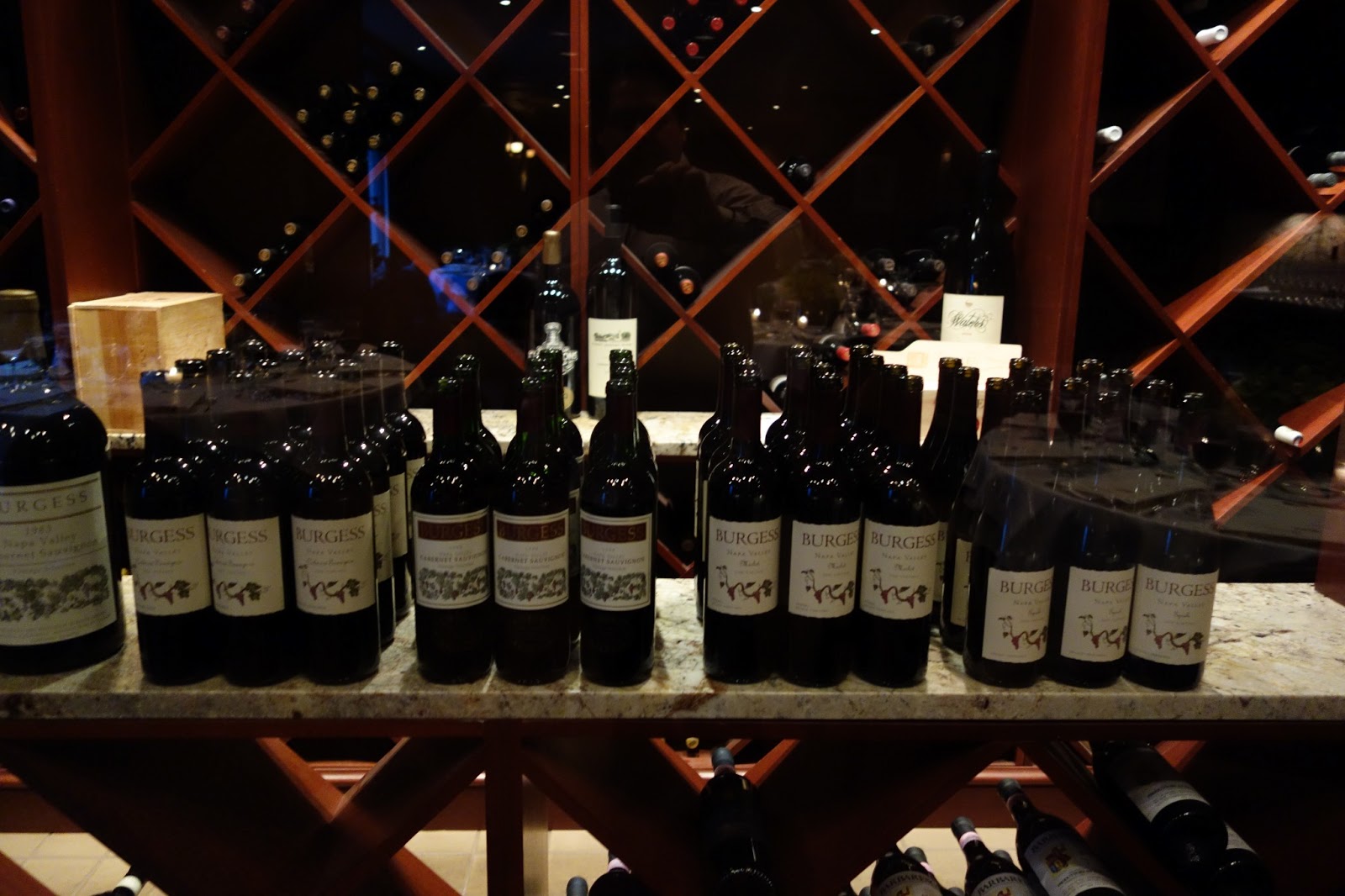
Recently, Grill 23 held a special dinner which was partially in honor of their 30th anniversary, as well as to showcase the wines of Burgess Cellars and Grill 23's ten year relationship with Brandt Beef. I was invited as a media guest to this event and it was well attended, offering a five course meal accompanied by six wines. Both the food and wines were delicious and I had no complaints in the least about the taste or presentation.

The Burgess wines included a 2010 Grenache, a 2008 Syrah, a 2008 Merlot, a 2009 Cabernet Sauvignon, a 1998 Liberty Release Cabernet Sauvignon and a 1983 Cabernet Sauvignon. They were all good wines, and my favorites were the Cabernets. Even the 1983 still possessed lots of life, having aged quite well. Paired with the beef dishes, the wines showed well.

Our first course was a Beef Carpaccio, with mushroom and smoked tongue. The beef was superb, silky smooth and bursting with flavor.

Next up were Pierogi, with beef sweetbreads, cheek confit and caramelized onions. The pasta was cooked just right with an intriguing sauce and a tasty filling, with a blend of earthy and sweet flavors.

The Brisket, made with red wine, sunchoke, carrot and turnip, was incredibly tender, the meat easily falling apart, and its meaty taste appealed to me. The chef did an excellent job with the brisket and I would easily order this again. One of the best briskets I have tasted in some time.

Our next savory course was a Ribeye & New York Strip, with family style sides such as mac n' cheese and tater tots. Once again, the beef was compelling, tender and flavorful, and it is easy to see why many chefs like serving this product to their customers.

Prior to attending the dinner, I researched Brandt Beef, checking out their website and reading other articles about the company. I was left with numerous questions, by what I found and didn't find, and hoped to get some of them answered at the dinner. Eric Brandt, the managing partner at Brandt Beef, attended the dinner and I was fortunate to get a chance during the course of the dinner to ask him a series of questions about their operations. It was an enlightening conversation.

Brandt Beef refers to itself as "The True Natural," a phrase which they have even trademarked. Their website states they are a "premium natural beef producer that is dedicated to sustainable practices." However, the website fails to actually define the term "true natural," instead listing some of their practices, such as choosing not to use antibiotics and hormones. So what is the definition of "true natural"? Would the average consumer believe Brandt Beef is "true natural?"

The USDA defines "natural" beef as: "A product containing no artificial ingredient or added color and is only minimally processed. Minimal processing means that the product was processed in a manner that does not fundamentally alter the product. The label must include a statement explaining the meaning of the term natural (such as "no artificial ingredients; minimally processed"). As you can see, that is a very general definition which says nothing about how the animal is raised. There is no USDA definition for "true natural" beef.

The average consumer probably doesn't even know that the above is the government's definition of "natural." When they see "natural" on a food product, they have a far different idea of what it should entail. As such, food labels such as "natural" and "organic" can deceive the public who fail to understand what they actually entail, which differs from what they expect.

Brandt Beef conforms to the USDA definition, not a tough hurdle, but they go further, choosing not to use antibiotics and hormones, which is admirable. Eric Brandt originated their compost operation, earning the moniker "King Shit" among his family and friends. This manner of handling their waste is another admirable practice, especially considering how other farms have significant problems due to their great waste. In their alfalfa fields, they use ladybugs and owls as more natural means of pest control. Despite these practices, there are still occasions when they feel the need to spray pesticides, which prevents them from becoming an organic farm.

Eric stated that "Being responsible and balanced is the key." An admirable philosophy. Eric also stated that Brandt was a pioneer in raising natural beef, beginning about 20 years ago, foregoing the use of antibiotics and hormones. Because of this pioneering, they consider themselves a "true natural," unlike other "natural" cattle farms which still use those products on their cattle. Under the USDA definition of natural, these farms can still use antibiotics and hormones. However, is this sufficient to earn Brandt the designation of "true natural?"

For a time, Brandt Beef used to raise cattle for other companies, such as Whole Foods, but in 2001 they decided to create their own brand. About 30% of their cattle is now sold under their own name. How many cattle do they raise? Eric asked that I did not report the number of cattle that they raise so I will not do so. I can report though that Brandt is a feedlot operation, and such operations due have their critics and potential problems. The maternal side of the Brandt family is involved in the dairy industry.

What do the Brandt cattle eat? The website mentions that the cattle are fed a diet of alfalfa and corn, though no specifics are given. Eric told me that the diet consists of approximately 15% alfalfa with about 10% sugar beet pulp (not mentioned on their website) and possibly some other ingredients too. Corn is the major ingredient in their diet, and they are fed this diet over the course of a year or so.

There is some disagreement over whether feeding cows corn is natural or not, and there appears to be some scientific evidence that a cow's stomach needs to adjust to large amounts of corn or could potentially have health problems. That requires that corn consumption be regulated to protect the health of the caste. This is partially why some feedlots use antibiotics, to handle illnesses related to corn consumption. Corn is also what brings excellent marbling to beef, and what makes it taste as good as it does.

Now we get to foundation of my issue with Brandt Beef calling themselves "true natural", which centers on their use of corn. I value transparency and honesty, and definitions are extremely important to me. If you wish to make bold statements in your marketing, then you better ensure you live up to them. The average consumer doesn't understand many of the nuances of legal definitions of words such as natural, organic or cage free. They see these terms in the most common way, something marketers understand and use to take advantage of those perceptions.

If you want to be known as "true natural," then I have high expectations for what that should entail. With Brandt Beef, I do not believe they live up to those expectations. The main problem I have with Brandt Beef is that they feed their cows GMO (genetically modified organism) corn. You won't find that fact listed on their website, though I think it should be. It is an issue of great importance to many consumers, as well as a topic of great controversy. Though Brandt purchases a small percentage of non-GMO corn, Eric indicated that it is far more expensive and difficult to obtain.

In an informal poll on Facebook and Twitter, no one believed that beef from GMO corn fed cattle should be labeled as "true natural." I also do not believe that beef from cattle fed GMO corn should be labeled as "true natural." For Brandt Beef to truly be transparent and up-front, they should be informing the public on their website that their cattle are fed GMO corn. The public has a right to know such information.

Currently, the U.S. has about 170 million acres of transgenic crops, especially soy and corn. About 90% of all the corn grown in the U.S. is now GMO corn. Consequently, non-GMO corn is likely more expensive and difficult to obtain. That is not an excuse though to conceal the fact that a company uses GMO corn. GMO crops have been genetically modified to make them more resistant to pests or tolerant of herbicides. Interestingly, the use of GMO crops has increased herbicide use 7% since 1996 due to new herbicide resistant superweeds.

On the other hand, Europe has been very resistant to the use of GMO crops, and the field is heavily regulated. They grow only a small percentage of GMO crops as compared to the U.S. In the U.S., food does not have to be labeled as GMO, and that has become a political hot button topic, indicating the passion of many against GMO food.

There is much skepticism about the safety of consuming GMO food, as well as the effect of feeding GMO crops to animals that end up as food, especially as there are insufficient studies concerning its safety. As foods are not labeled as GMO based, it becomes far more difficult to track and study negative reactions. The American Academy of Environmental Medicine has mentioned some of the potential health hazards of GMO food. Far more studies are necessary to assess the potential dangers. It is clear that many people object to GMO food and don't consider it natural. I find it disingenuous for a company to tout itself as "true natural" when it feeds its cattle GMO corn.

Brandt Beef does plenty that is admirable, and is better than many other cattle operations, however I believe they could and should be better, especially if they want to claim to be "true natural." They should be more transparent in their operations, owning up on their website to their use of GMO corn. And if they truly wish to be "true natural," I believe they should completely end the practice of using GMO corn.

Grill 23 & Bar on Urbanspoon
Read More
Posted in controversy, health, meat, rant, Restaurant, sustainability | No comments

Tuesday, 30 April 2013

Modern Farmer Magazine: A Debut, With Chicken Love

Posted on 00:00 by Unknown
Do you care about the source of your food? Do you prefer local, organic products? Do you frequent farmers' markets and local farms? Do you belong to a CSA or CSF? Do you grow your own herbs,  vegetables or fruits? Do you have respect for farmers? Do you want to learn about all of these topics, and more? If you answer affirmatively to any of these questions, then I recommend you check out a new quarterly magazine, Modern Farmer.

While perusing the magazine stands at Barnes & Noble, I noticed the inaugural issue of Modern Farmer, which was newly released. As I flipped through the pages, it intrigued me, with its fascinating photography and article topics. I bought a copy and have spent several days enjoying its contents. The magazine makes a promising debut, I will be awaiting their next issue and it earns my hearty recommendation.

Their website states their intent: "There has been a movement afoot in recent years to make connections between what we eat, how we live and the planet. Modern Farmer exists for people who want to be a part of that movement—it is for window-herb growers, career farmers, people who have chickens, people who want to have chickens and anyone who wants to know more about how food reaches their plate." Besides being a quarterly magazine, Modern Farmer is also a daily website, events series, and online store.

The magazine runs 136 pages and consists of about 35 articles, columns and reports. I love the diversity of the content, from frozen foods to wild pigs, from smoothies to cocktails. I found the various articles to be well written, informative as well as interesting. They did not come across as preachy or pretentious. The magazine also has a global scope, with articles about the U.S., China, Malawi, South Africa, Italy and more. With the articles, there are plenty of excellent, accompanying photographs of people, animals, items, scenes and much more.

There is a 20+ page center section of the magazine, called The Modern Farmer Handbook, and it is devoted to many more practical issues for farmers. You will learn items such as how to select the best breed of chicken to raise, how to turn your backyard into a four-season farm, and how to build a straw bale house. There is even a section on different type of "poop" used for fertilizer. Immediately following this section is a photo essay, Meet the Modern Farmers, which presents pictures of seven farmers, and some of their families, from around the world and devotes a couple of paragraphs to each one. There is even a farmer and restaurant owner from Massachusetts presented there, Mark Firth of Monterey.

Some of these articles are going to lead me to further research into their topics. I was pleased to see the current surge in organic farms in China and worried about the exploding population of wild pigs, including radioactive pigs wandering across Europe. Another uplifting article was on mangoes in Malawi, and how they have become so popular now for smoothies across the world. And it was cool to end the last page of the magazine devoted to a Durian vendor.

Check out Modern Farmer. You won't be disappointed. You will undoubtedly learn plenty. And you will enjoy it.
Read More
Posted in farming, magazine, meat, organic food, organic wine, sustainability | No comments

Monday, 29 April 2013

Rant: Boston Restaurants, Follow New York City's Lead

Posted on 00:30 by Unknown
Consider a hypothetical restaurant which, on average, does 150 covers per night. In a week, they will do 1050 covers and in a month, that will total about 31,500 covers. Think of all the many pounds of ingredients that restaurant needs to create all those dishes. The major problem is that approximately 40% of that food will be wasted, discarded as refuse.

Where does all that trash end up? Far too often, it goes to landfills, creating larger and larger mounds of refuse.

Last summer, I ranted that Restaurants Should Cut Portion Sizes to reduce food waste. "It is estimated that over 40% of the food that is produced for consumption ends up as waste. What an incredible statistic which should bother everyone. The EPA states that in 2010, more than 34 million tons of food waste were generated." Food waste is a huge problem and needs to be addressed by everyone, from home owners to restaurants.

The New York Times recently reported that New York City acknowledged the problem of food waste, indicating that 1/3 of their 20,000 tons of daily refuse are from food waste and that restaurants account for 70% of commercial food waste. Over 100 New York City restaurants have stepped up the plate, vowing to "reduce the food waste they send to landfills by 50%" through composting and recycling. Both high end restaurants and chains will be participating, and hopefully other restaurants will join into this pledge as well.

That seems like a great start to an united effort to reduce food waste in New York City. Let us hope that other cities emulate their efforts and I am calling on all Boston restaurants to step up and make a similar pledge, to reduce their food waste by 50% through composting and recycling. I am sure there are some Boston area restaurants which already engage in such practices, such as Taranta in the North End. Chef Jose Duarte of Taranta is dedicated to making his restaurant green and sustainable, and has engaged in many beneficial practices toward that goal, including composting and recycling.

If any Boston restaurant currently practices composting and recycling, please contact me and I will add you to the post, making known your efforts to help reduce food waste. Or feel free to leave a comment on this post telling us all about your practices. If you are not composting and recycling yet, but want to start, please tell me this as well. If you don't want to compost and recycle, please step forward and tell me why you do not wish to do so.

Let us all do our part to reduce the problem of food waste.
Read More
Posted in chef, controversy, New York, rant, sustainability | No comments

Thursday, 18 April 2013

Buy American Seafood: Four Excellent Choices

Posted on 07:37 by Unknown
It is disturbing that Americans currently import 91% of their seafood, up 5% from 2010. Less than 10% of the seafood we consume is from our own country. That is a disheartening statistic and I previously Ranted about this issue, imploring Americans to eat more domestic seafood. Paul Greenberg, a writer, speaker and author of Four Fish: The Future of the Last Wild Food, understands this issue and he too strongly recommends that we should purchase more American seafood.

In the new issue of Food & Wine (May 2013), Greenberg wrote an article, Sustainable Seafood: The Good News, offering four excellent and sustainable seafood choices for Americans. These options include Pacific Spot Prawn, Northern Porgy, Atlantic Sea Scallop and Gulf of Mexico Bycatch. Look for these seafoods on restaurant menus, in the supermarket, at farmers' markets and other spots where you purchase seafood.

Though Pacific Spot Prawn is a specific species (Pandalus platyceros), two related species are also sometimes marketed as spot prawn, including Sidestripe Shrimp (Pandalopsis dispar) and Coonstripe Shrimp (Pandalus hypsinotis). They can be found in the Pacific Northwest, British Colombia and Alaska. These are highly sustainable, significantly because of the method of catch. Most other shrimp are caught by trawl nets but spot prawn are captured in small pots, reminiscent of lobster traps. These pots have very little bycatch and cause little, if any, environmental damage. One intriguing fact about spot prawn is that they are protandric hermaphrodites, meaning that they begin their life as a male and later transform into a female for the rest of their life.

These large shrimp can grow to nearly 12 inches in length, which might bring to mind a lobster, and they taste delicious. They can be grilled, steamed, baked or even served as sushi. Greenberg claims that they taste so rich that eating more than a dozen causes a "spot prawn coma." Previously, most spot prawns were sent to Japan but American restaurants and fish markets are starting to see the benefits of spot prawns. Keep an eye out for them!  

Northern Porgy, also known as Scup, are located in the Northwest Atlantic Ocean and they are an example of how fisheries can bring back endangered fish. During the 1990s, porgy was considered endangered due to overfishing so tough regulations were put into place to hopefully bring back the species. This was a great success and in 2009, the species was considered officially rebuilt and stocks are now high. One of the problems had been that squid trawlers caught too much porgy as bycatch so changes to the squid fisheries helped greatly limit this from occurring.

Porgy are available year round, and the fish itself is small, generally weighing around two pounds. They have a mild, but compelling taste, and a fluffy texture, making them versatile in cooking. They can be a good substitute rather than tilapia or flounder.  However, they are still an underutilized species which needs to be promoted more by restaurants and fish markets.

Scallops are a popular seafood but people should realize that Atlantic Sea Scallops are a sustainable choice. Like Porgy, Atlantic Sea Scallops were endangered back in the 1990s but the industry has rebounded and by 2001, the industry was once again sustainable. One beneficial side effect of these new fishing regulations is that many of the scallops are larger than they once were, as the trawling nets have large openings, allowing smaller scallops to remain in the sea. I love scallops and encourage people to seek out Atlantic Sea Scallops.

Greenberg's final recommendation is not a single species but an entire category, Gulf of Mexico bycatch. He mentions that seafood distributor Louisiana Foods created a program, Total Catch, which is a means to sell bycatch from Gulf fishermen. Though some might consider some of these bycatch species to be "trashfish," chefs and home cooks can easily make delicious meals from these varied species. Unfortunately, the Louisiana Foods website has little information, or little easily found, on their Total Catch program beside a listing of seafood. They apparently have a bycatch market at their retail space, and it appears they can also sell these bycatch species all across the U.S. as they do the rest of their seafood. Selling bycatch is certainly an intriguing and sustainable idea, which simply requires consumers to be more open to the types of seafood they will consume.

Eat more domestic seafood, and I hope these four recommendations from Paul Greenberg help motivate you.
Read More
Posted in seafood, sustainability | No comments

Monday, 1 April 2013

Rant: Destroying A Chef's Reputation?

Posted on 00:00 by Unknown
As I am an attorney (and despite the cliched jokes to the contrary), my ethics are very important to me. I have posted a Blogger Code Of Ethics and written numerous posts about ethical issues. I believe that all bloggers should follow a code of ethics as the power of the "pen" can be too easily abused. For example, negative reviews can adversely affect a business so one must be very careful in how one proceeds. One must be objective and fair, honest and upfront.

Rarely do I have an ethical dilemma as I simply follow my own rules, which have served me well for many years. However, I find myself now entangled in an ethical dilemma which has the power to destroy a person's reputation. I have long been pondering over how to properly handle this matter and have asked others for their opinions as well. I have finally made a decision on a course of action and only hope that what I am doing is right.

Because of my Monday Rants, I was approached by a line cook from a popular, Boston-area restaurant. He wanted to share with me some unsavory information concerning the chef and initially I was reluctant to talk with him about this matter. I had little interest in gossip about chefs, such as who they might be sleeping with or whether they do drugs or not. His information though struck at a more important issue, a deception the chef was perpetuating upon the general public, a lie about the sourcing of some of this restaurant's ingredients.

The restaurant has a reputation for serving primarily local foods, from their produce to their meats. The line cook alleged that the restaurant actually served very little meat that was purchased locally. Most of it came from large scale, out of state farms that cost far less than locally purchased meats. It appears that the chef has a close relative who works with one of those large scale meat suppliers and thus is able to acquire his meats more covertly.

This is an explosive allegation and I certainly would not have given it any credence without clear evidence. I met with the line cook and he had a cell phone video showing an incriminating conversation between the chef and his relative. It was not the best of quality, but the voices were clear enough and seemed to support the allegation. He lacked any further evidence and didn't think he could get anything else.

I was considering dropping the matter but decided I would interview the chef, and try to throw in a few questions about rumors concerning his meat sourcing. I arranged an interview through his PR company and met with the chef later one morning at his restaurant. The interview started off well until I started asking questions about his sourcing. My initial questions were rather innocent, without mentioning any rumors, yet the chef's attitude and demeanor changed. He seemed defensive even though there was no reason to be at that time. When I finally asked about the rumors, he ended the interview, leaving quite angrily.

It seemed to me that there was validity to the line cook's allegations. It seemed clear that the chef was trying to hide something. I did some further digging, identifying the chef's relative and his company. I phoned the relative and let me just say that I obtained verification that he delivered meat to the restaurant. With that verification, I contacted the chef again, though this time directly. I indicated I might be publishing this story and wanted to hear his side.

The call was extremely unpleasant, with lots of profanity and threats from the chef. However, the chef realized that he was in a corner, though refusing to admit guilt, and begged that I would not post the story. If I posted my story, it would probably destroy his reputation though he seemed guilty of the allegations. Should I post it or not?

In the end, the chef indicated that he would be leaving the restaurant within the next week, that he would likely be getting a job in another city. I indicated to him that if he quit and move, then I would not post the story. That deadline has passed though and there is no indication that the chef intends to move on. The chef has also not returned my subsequent phone calls or emails. This post is his final chance to do the right thing, to follow through on our agreement.

If nothing changes this week, then next Monday's Rant will identify the chef and restaurant, providing the evidence I possess. I received much support on both Facebook and Twitter for outing the chef if I possessed sufficient evidence of his deception. My outing will not be without repercussion, but I am willing to take on those consequences to expose this fraud. Once I identify the chef and restaurant, the restaurant owner will have the ability to verify this matter on their own. All they will have to do will be to analyze the invoices for the local meat producers and determine there was an insufficient amount  to have fed all of the restaurant's patrons.

Chef, step up and do the right thing or it will be my obligation to reveal the truth.

UPDATE: 
April Fools!!!
Every year, on April 1, I write an April Fools post, and this year is no different. I have no plans to out any chef, and have not received any info about a chef's deception concerning the source of their meat. With the advent of Social Media, it has become even more difficult to fool anyone because everyone talks about April Fools. Before SM, you could go the entire day without someone mentioning it. Now, you often can't go five minutes before someone mentions it. This post does strike at some very important issues and I appreciate all the thoughtful comments it has engendered. Though it has generated a few hateful comments as well. This is an issue that certainly could arise one day. But this time, it is only an April Fools joke.
Read More
Posted in Boston, chef, controversy, ethics, food safety, holiday, rant, sustainability | No comments

Tuesday, 26 March 2013

The Fugu Food Truck Is Coming!

Posted on 00:30 by Unknown
Fugu. The Japanese term for the pufferfish. The above picture of a pufferfish makes it look cute though the actual fish can be lethal.

Fugu is a highly prized fish, which has been eaten by the Japanese for thousands of years. However, it also contains a deadly poison, tetrodotoxin, which is 1250 times more toxic than cyanide and for which there is no antidote. A tiny amount, only 1-2 milligrams, is sufficient to kill someone. Each year, there is an average of 30 or so cases of fugu poisoning, leading to 6-7 deaths each year. Those who did not die consumed enough poison to get sick, but not enough to kill them. Chefs who serve fugu must be specially licensed and the rigorous training to obtain such a license takes at least two years. Most deaths from fugu consumption are due to inexperienced individuals trying to prepare fugu on their own.

Starting on April 1, a new food truck, the Fugu Truck, will be traveling the streets of Boston. Though it is named after the deadly fish, do not worry as they will not be serving actual fugu. Trying to properly slice fugu on a moving truck would have been a formidable task.

This past Sunday, I was invited to attend a special preview event, to view the truck, check out some of their potential food, and to chat with those involved. It was a fun event, with some tasty food, and I believe the Fugu Truck has much potential. The cute pufferfish on their truck is intended to be a symbol, and Chef Bing first saw this fugu on the handle of one of his knives. As it takes much skill and training to prepare fugu, the symbol on their truck is thus meant to represent the "discipline, dedication, and sophistication" they hope to bring to their food.

The Fugu Truck will essentially serve Asian street food, inspired by a number of different Asian countries and regions. Each day, they will stop at different Boston locations for lunch and dinner and you can check their schedule for where they will be on any specific day. Though much of their food will be authentic, they won't limit themselves and may create some of their own Asian-inspired dishes. The menu will change constantly, and they will likely sell about 7-8 items each day. About half the items will be prepared off the truck and the other half will be prepared on the truck. They are still working on their pricing, though it will probably be something like two Pork Belly Buns for $5 and Bubble Tea for $2.50.

It is good to see that the Fugu Truck will try to be environmentally responsible, using biodegradable dishes, cups and silverware, engaging in recycling and more. In addition, they will also incorporate charitable giving into their business plan. They want to give back to the community and seem sincere in their beliefs and actions.

Chef Bing, the culinary leader of the Fugu Truck, grew up in Harbin, a major city in Northeast China, where he was exposed to plenty of street food. He eventually studied engineering at the University of Michigan yet his true passion was in cooking food. Against his parents' wishes, he journeyed to Paris where he trained at Le Cordon Bleu. While in France, he spent time working at Taillevent and Chocolaterie by Jean Charles Rochoux. Upon his return to the U.S., Bing moved to New York where he worked at places such as Dovetail and Corton. Eventually, he came to Boston, where he learned about Japanese cuisine at Oishii.  

Bing wanted to move out on his own, to indulge his culinary creativity. While pondering a number of ideas, he and several college friends checked out the SOWA Open Market and were intrigued by the idea of food trucks. After more discussion and exploration of the concept, they decided to create an Asian street food truck. They succeeded in fund raising through Kickstarter and are ready to launch their truck in less than a week.

These are some of the good people involved with the Fugu Truck, with Chef Bing at the center.

Upon arrival at the preview event, I received a cup of Iced Bubble Tea, made from black tea, condensed milk, and tapioca balls. It was a tasty tea, wasn't sweet, and the straw is wide enough for the chewy tapioca beads to flow up the straw.

Kimbap is a Korean dish which is akin to Japanese maki, a seaweed wrap holding rice and fillings. This particular kimbap contained BBQ beef and a few vegetables, like radish and cucumber. They also offer a vegetarian option. A nice blend of flavors and textures, it made for a good, one-bite treat.

Chef Bing stated that the most challenging dish to prepare are the Spring Rolls, which contain bean sprouts, cabbage, and mushrooms. He stated that the preparation is time consuming, slicing all of the vegetables the proper size and shape, and then carefully wrapping them all in the skin. I was not a fan of this dish only because it contained far too many veggies for my preference. However, the spring roll skin was delicious, thin and crispy, and any veggie lover is likely to enjoy it.

A Stuffed Eggplant dish may also not seem like something I would enjoy, but this was quite delicious. The fried eggplant slices are filled with pork, tofu and spices, and the whole thing was topped by a spicy garlic sauce. First, the sauce was a clear winner, and I would love to try that sauce on a variety of dishes. The eggplant itself was tender and the stuffing was flavorful, spiced well. It is something I would order again, which is saying much for the eggplant.

My initial plate of appetizers, and we were able to get more of anything we liked.

I wanted to dive into this tray of Pork Belly! Or grab it and run out the door. But I was good.

I got to try their Steamed and Grilled Pork Belly Buns, each which contained a good-sized, tender slice of pork belly, some scallions and a sweet bean spread. You also receive a side of housemade pickles, which seemed like crisp, lightly pickled cucumber pieces. The pork belly was compelling and flavorful, with plenty of silky fat to melt in your mouth. Grilling the outside of the bun added a nice layer to the dish and I would recommend it over the plain steamed bun. I had several of these pork belly buns as they were rather addictive. For vegetarians, they will make tofu buns but I can't comprehend why someone wouldn't enjoy the pork belly.

The Yakitori Ramen was prepared with a chicken broth, edamame, bamboo shoots, a poached egg and slices of chicken, though Chef Bing indicated he is unsure whether it will end up on their truck menu. The broth had an excellent spicy kick to it, and the noodles were tasty. It was a very satisfying bowl, except that the thin, chicken slices were a bit too big, and using the plastic spoon to cut the chicken was tough though the chicken itself was tender. Using smaller pieces of chicken would have made it easier to eat. For vegetarians, they make a miso broth and will substitute oyster mushrooms for the chicken.

For dessert, there was Coconut Rice Pudding, a vanilla creamed sticky rice pudding. This picture is before the dishes were completed, before they were topped with local clover honey, poached mango slices, and lemon peel.

It is clear that much care has been invested in their recipes and food preparation, and they are still very open to suggestions and recommendations. The staff members I spoke to seemed both positive and passionate, excited to begin this new endeavor. Kudos to Chef Bing and I wish him and his partners the best of luck with their Fugu Truck.
Read More
Posted in Boston, chinese cuisine, food truck, japanese, meat, sustainability | No comments
Older Posts Home
Subscribe to: Posts (Atom)

Popular Posts

  • Tuscan Market: One Stop Shopping & Cafe
    Many of us would love to be able to easily purchase fresh baked bread, fresh local produce, artisan cheese, meats, seafood, fresh pasta, win...
  • Rant: Rushing To Judge A New Restaurant
    As soon as a hot, new restaurant opens, there is a rush for food bloggers and online reviewers to dine there and immediately report back. Ti...
  • Rant: Outraged By Sake Prices At Restaurants
    We often hear complaints about the outrageous prices  of wine sold at many restaurants. Some places charge three, four or even fives times t...
  • Rant: Where Is The Roast Chicken Love?
    1990 was a pivotal year in the battle of beef versus chicken . It was the first year that Americans ate more chicken than beef, and that has...
  • Rant: Post-Labor Day Wine Advice
    With today as Labor Day , it is seen by many people as a signal of the end of summer, despite the fact that the official end is not until Se...
  • Rant: Beware The Self-Proclaimed Expert
    I am very tired of self-proclaimed wine experts, gurus, ninjas and whatever whose actual knowledge is lacking. This is obviously not a prob...
  • Heirloom Flavor: From a Dragon's Tongue to a Nebraska Wedding
    " Fresh ingredients--especially heirlooms--packed with flavors are the hallmark of great cuisine ." ( Howard, p.7 ) The quality of...
  • Rant: Wine Blog Awards, Sexism & More Questions
    Last week's Rant created a stir of discussion, in the comments, on Twitter, Facebook and in emails. I questioned the reason why so few ...
  • Taste Camp: The Wine Industry of Quebec (Part 1)
    Exploring emerging wine regions is always a fascinating endeavor even if their wines are not readily available outside of that region. It is...
  • Thursday Sips & Nibbles
    I am back again with a new edition of Thursday Sips & Nibbles, my regular column where I briefly highlight some interesting wine and foo...

Categories

  • 2011 (8)
  • 2012 (9)
  • 2013 (2)
  • alabama (1)
  • alaska (1)
  • alcohol (1)
  • allergy (1)
  • alsace (3)
  • Andover (3)
  • animal (1)
  • anniversary (1)
  • Argentina Wines (10)
  • Arlington (11)
  • armenia (1)
  • art (4)
  • Australia Wines (2)
  • austria wines (5)
  • author (12)
  • award (2)
  • Bacon (1)
  • Bakery (15)
  • bar (1)
  • bbq (3)
  • beauty (1)
  • Bedford (2)
  • beer (19)
  • biodynamic wine (1)
  • biography (1)
  • blogging (35)
  • Book reviews (30)
  • book store (3)
  • Boston (165)
  • bourbon (11)
  • braintree (2)
  • brazil wines (1)
  • brazilian (1)
  • breakfast (2)
  • brewery (6)
  • brighton (1)
  • Brookline (9)
  • brunch (15)
  • Burlington (3)
  • business (1)
  • butcher (4)
  • California Wines (20)
  • Cambridge (29)
  • canada (8)
  • Canada Wines (7)
  • candy (3)
  • cape cod (6)
  • cape verde wines (1)
  • casino (7)
  • caviar (1)
  • celebrity (2)
  • champagne (11)
  • Charity (33)
  • cheese (23)
  • chef (27)
  • chianti classico (10)
  • children (2)
  • Chile (2)
  • Chile Wines (2)
  • china (6)
  • chinatown (3)
  • chinese cuisine (8)
  • chocolate (1)
  • christmas (3)
  • cider (8)
  • cocktails (47)
  • colorado (2)
  • concord (10)
  • conference (9)
  • Connecticut (12)
  • consumers (2)
  • contest (8)
  • controversy (97)
  • cookbooks (5)
  • cooking (15)
  • cuba (1)
  • cyprus wines (1)
  • dance (1)
  • Danvers (2)
  • dessert wine (1)
  • desserts (21)
  • diet (2)
  • dining service (1)
  • discount (1)
  • distillery (14)
  • dlw13 (1)
  • donuts (1)
  • dorchester (16)
  • easter (6)
  • Eating Habits (2)
  • ebook (6)
  • ethics (3)
  • ethiopia (1)
  • farming (10)
  • father's day (1)
  • fiction (11)
  • finger lakes (2)
  • florida (1)
  • Food (4)
  • Food Event (8)
  • Food Market (12)
  • food news (2)
  • food processing (2)
  • food safety (4)
  • food truck (1)
  • France (3)
  • France Wines (19)
  • fruit (7)
  • Games (2)
  • gardening (1)
  • georgia wines (1)
  • gin (1)
  • glasses (1)
  • grapes (4)
  • Greece Wines (1)
  • guest post (1)
  • health (21)
  • history (34)
  • holiday (46)
  • hotel (2)
  • Hungary Wines (3)
  • hybrid (2)
  • ibss12 (14)
  • ibss13 (13)
  • Ice Cream (5)
  • ice wine (2)
  • iceland (1)
  • interview (5)
  • ipswich (4)
  • ireland (2)
  • italian cuisine (43)
  • Italy (19)
  • Italy Wines (38)
  • jamaica plain (1)
  • japanese (70)
  • kentucky (12)
  • korea (1)
  • law (13)
  • legend (9)
  • lincoln (6)
  • liqueur (1)
  • local wine (2)
  • los angeles (1)
  • louisiana (2)
  • louisville (7)
  • lynnfield (1)
  • madeira (1)
  • magazine (16)
  • Maine (2)
  • Malbec (1)
  • Malden (1)
  • mallorca (1)
  • mardi gras (2)
  • Massachusetts (4)
  • Massachusetts Wines (6)
  • mead (5)
  • meat (23)
  • Medford (6)
  • melrose (3)
  • mexican cuisine (16)
  • mexico wine (3)
  • mezcal (1)
  • milk (2)
  • milton (1)
  • mississippi (1)
  • montreal (2)
  • mothers day (1)
  • music (4)
  • natick (1)
  • needham (3)
  • new england (2)
  • New Hampshire (17)
  • new year's eve (10)
  • New York (3)
  • New York City (3)
  • New York wines (1)
  • New Zealand Wines (1)
  • newburyport (1)
  • newport (1)
  • news (1)
  • newspaper (7)
  • newton (9)
  • North Andover (16)
  • north end (12)
  • nova scotia (5)
  • Oregon (2)
  • Oregon Wines (6)
  • organic food (1)
  • organic wine (2)
  • paso robles (3)
  • peruvian cuisine (1)
  • phillipines (2)
  • pinotage (2)
  • pisco (1)
  • Pizza (2)
  • pork (3)
  • port (13)
  • portland (1)
  • portsmouth (6)
  • Portugal (6)
  • Portugal Wines (19)
  • poultry (1)
  • providence (1)
  • provincetown (5)
  • quebec (5)
  • rant (97)
  • Reading (1)
  • Recipe (11)
  • Restaurant (198)
  • restaurant going (8)
  • restaurant reviews (65)
  • Rhode island (4)
  • rose (7)
  • rum (11)
  • Sake (61)
  • Sake Reviews (15)
  • salem (2)
  • salmon (4)
  • sandwich (5)
  • science (10)
  • scotland (4)
  • seafood (72)
  • Seattle (1)
  • sherry (10)
  • shochu (1)
  • shopping (3)
  • social media (1)
  • soda (2)
  • Somerville (13)
  • South Africa Wines (7)
  • spain (8)
  • Spain Wines (18)
  • sparkling wines (6)
  • spirits (42)
  • sports (4)
  • st. patrick's day (4)
  • steakhouse (12)
  • sudbury (1)
  • sushi (5)
  • sustainability (61)
  • sweden (1)
  • tastecamp (5)
  • tea (6)
  • television (4)
  • tequila (2)
  • texas (1)
  • thai (2)
  • thanksgiving (9)
  • theater (2)
  • top ten (14)
  • toronto (1)
  • travel (8)
  • twitter (1)
  • united states (1)
  • Uruguay Wines (1)
  • valentine's day (5)
  • vegetables (3)
  • vermont (4)
  • virginia (1)
  • virginia wines (1)
  • vodka (8)
  • Wakefield (1)
  • walpole (2)
  • watertown (1)
  • wayland (1)
  • wbc (3)
  • west concord (1)
  • westwood (1)
  • whiskey (19)
  • Winchester (14)
  • Wine (3)
  • Wine Education (19)
  • wine event (14)
  • wine importers (1)
  • wine marketing (11)
  • Wine news (3)
  • wine pairings (15)
  • wine personality (1)
  • Wine Prices (5)
  • Wine Reviews (68)
  • wine sales (13)
  • Wine Stores (23)
  • Wine tasting (11)
  • wine writing (1)
  • winemaker (4)
  • winemaking (6)
  • wineries (5)
  • winery (21)
  • Woburn (3)
  • women (3)

Blog Archive

  • ▼  2013 (171)
    • ▼  September (5)
      • Why Are You Fat?
      • Thursday Sips & Nibbles
      • Heirloom Flavor: From a Dragon's Tongue to a Nebra...
      • Papa's Pilar Rum: What Would Hemingway Do?
      • Rant: Post-Labor Day Wine Advice
    • ►  August (19)
    • ►  July (18)
    • ►  June (19)
    • ►  May (19)
    • ►  April (20)
    • ►  March (32)
    • ►  February (20)
    • ►  January (19)
  • ►  2012 (283)
    • ►  December (21)
    • ►  November (23)
    • ►  October (30)
    • ►  September (17)
    • ►  August (26)
    • ►  July (23)
    • ►  June (19)
    • ►  May (21)
    • ►  April (20)
    • ►  March (34)
    • ►  February (26)
    • ►  January (23)
  • ►  2011 (46)
    • ►  December (27)
    • ►  November (19)
Powered by Blogger.

About Me

Unknown
View my complete profile