ShrimpTempura

  • Subscribe to our RSS feed.
  • Twitter
  • StumbleUpon
  • Reddit
  • Facebook
  • Digg
Showing posts with label Wine Education. Show all posts

Friday, 22 February 2013

All About Sake

Posted on 00:00 by Unknown
"O what an ugly sight the man who thinks he’s wise and never drinks sake!”
--Otomo no Tabito (c. 662-731)

Sake is an important aspect of The Passionate Foodie and I have written numerous posts on the topic. Though you can search my blog to find all sorts of Sake information, I decided that it might be helpful to my readers to compile the most important links into a single place. This post will be that repository, and as such will be constantly updated when I write another article about Sake. I have not linked to every Sake post I have written, as some possess outdated information, such as mentions of upcoming Sake events. I have also created a separate page for links to all of my Sake reviews, which you can find here.

If you have any Sake-related questions, feel free to email me. Please also remember that I am available for hire for a myriad of Sake services, from restaurant consulting to Sake paired dinners, from Sake tastings to educational classes. You should also check out my Sake-related fiction, the Tipsy Sensei series, which features a Boston-based Sake expert who learns that the supernatural creatures from Japanese folklore are real.

Sake Basics
What is Sake?
Is Sake a Wine or Beer?
Legal Status of Sake In the U.S.
How Does Sake Compare to Wine?
Sake Brewing
Types of Sake
What is Junmai?
Nigori: Unfiltered?
Sake: Chilled vs Warmed
Sake Bottle Labels
Secrets of a Sake Label
Sake Bottles & Cups
Sake in Bottles
Holding Your Sake Cup
Tasting Sake
Sake Terminology
Unanswered Sake Questions
Health Benefits of Sake

More Sake Types
Habu Sake
Bone Sake
Sleety Sake
Bamboo Sake
Fruit Infused Sake
Sake Nog: Cure For a Cold?
O-Toso Sake
Organic Sake

Sake & Food
Sake & Food
Sake, Amino Acids & Food
Sake Does Not Get Into Fights With Food
The Science of Sake & Food Pairings
Sake For Thanksgiving
Slurping Oysters & Sipping Sake
Pairing Cheese & Sake

Nuka & Kasu
Sake Scraps: Nuka & Kasu
Kasu & Cooking
More Uses of Kasu

Sake Customs & Traditions
The Ten Merits of Sake
Sake Customs
Sake Day
Sake Day 2
Sakazuki & Yakuza
Tanuki
Carp Drinking Sake
Shikisankon: Drink Sake, Don't Eat
Shojo & White Sake

Sake Sales & Industry
How Wine Stores Can Sell More Sake
U.S. Sake vs Japan Sake--Context Is Everything
Sake & Shochu: The "National Alcoholic Beverages" of Japan
John Gauntner: Sake Trends & Restaurant Service
Sake Statistics: Ups & Downs
Rant: Drink More Sake Or Godzilla Will Die!

Sake Miscellany
Sake & Nature
Sake Poetry
A Poetry & Sake Game
Sake Resources
Sake Cocktails
Sake Miscellany
Sake Tasting Competitions
Sake Bath
Sake & Cherry Blossoms
Sake & Women
Sake Squid Cup
Sake Bombs
Drink Sake Not Bombs
Sake & Diplomacy
Wine Spectator: New Sake Articles

Annual Sake Summaries
2012: Favorite Sake Items
2011: Favorite Sake Items
2010: Favorite Sake Items
2009: The Sake Experience

Sake Book Reviews
Sake's Hidden Stories
Japanese for Sake Lovers
Sake Dictionary
Oishinbo: Sake
The Scent of Sake by Joyce Lebra
Sake: A Modern Guide
The Niigata Sake Book
Japanese Cocktails
Food Sake Tokyo
Brewing Sake: Release the Toji Within

U.S. Sake Stores & Breweries
Sakaya & A Return Visit
Sake Nomi
True Sake
Sake One

Sake Outside the U.S.
Sake in Australia
Sake in Canada
Sake in Vancouver
Growing Rice in Vancouver
Sake in Norway

Read More
Posted in Book reviews, japanese, Sake, Sake Reviews, Wine Education | No comments

Monday, 4 February 2013

Rant: Make It Simple But Accurate

Posted on 00:00 by Unknown
Though I am always pleased to see Sake articles in the media, helping promote this wonderful beverage, I get dismayed when such articles contain erroneous information. I try to educate people about Sake, to clarify their misconceptions, but that becomes more difficult when articles in popular magazines and newspapers perpetuate such misconceptions. Most of the time, such errors could have been easily corrected and that makes the offense seem even worse.

The new issue of Boston Magazine contains an extensive Asian Dining Guide and one of the articles, Good Libations, discusses Sake. Though it is a brief article, it makes some significant errors and I was initially informed by the Food Editor that the article had been fact checked. That was dismaying and raised numerous questions in my mind. If it was fact checked, and still contained errors, then what did that say about the process? Who fact checked the article? How was it fact checked? What resource(s) was used to fact check it? Why were the errors allowed to stand?

I was later informed that at least some of the errors were intentional. Intentional? Apparently, they did not wish to confuse the public with too much information so they chose to ignore and omit certain basic facts about Sake. They essentially wanted to dumb down the article because they didn't believe the public was capable of handling the truth. I think the use of erroneous information is more harmful to the public in the long run and that the public is capable enough to handle at least a minimal degree of difficulty. They should be treated as adults, not children, and not spoon fed simple data as if incapable of handling more. One can be simple yet accurate.

Let us look more closely at the errors that were put forth in the article.

First, the article states that there are "three types of premium sake" but there are actually six types. The article failed to mention that there are three types of Honjozo Sake, a second premium category. The Honjozo category is actually even larger than the Junmai category.

The magazine intentionally omitted any reference to Honjozo, allegedly for simplicity's sake. However, they still could have remained accurate yet also been simple. All they would have had to say is something like "there are six types of premium sake but we will highlight only three here." That is succinct and accurate, fixes the error and should not unduly confuse readers. As you see, the term Honjozo didn't need to be mentioned yet readers might be intrigued enough by the reference to other types of premium Sake to seek out more information.

Second, the article states that the types of premium Sake are "categorized by the amount of rice milled away" but that is not truly correct either. First and foremost, the most important element that determines whether a Sake is "premium" or not, is the number and type of ingredients used in the production of the Sake. The milling percentage is a secondary consideration and alone not indicative of a premium Sake.

To be a Junmai, a Sake must only contain four ingredients: rice, water, yeast and koji-kin. To be a Honjozo, the Sake can contain one more ingredient, distilled alcohol. No matter how much of the rice is milled away, a Sake is not "premium" unless it also only has those four or five ingredients. Only about 25% of all Sake produced qualifies as "premium."

Again, the fix would have been relatively simple, adding that premium sake is "categorized by the number & type of ingredients, as well as the amount of rice milled away." Succinct and accurate, it fixes the second error and again should not unduly confuse readers.

Third, the article states Junmai must be "milled to 70 percent or less of the original grain."  Beside the awkward construction of that phrase, it is incorrect as there is no minimum milling requirement for a Junmai. A Junmai could be milled down to only 80% and still be considered a Junmai. The only requirement for being a Junmai concerns the number and nature of its ingredients. This is an error that runs rampant in many other Sake articles too.

The fix is also simple. Just state that "Junmai does not have a minimum milling percentage." There is really no reason why that couldn't have been done.

I don't see a valid reason why this article could not have been made accurate. Alleged concerns about dumbing down the article for the general public do not seem warranted, especially considering how easy it would have been to fix the errors. I understand this was not a lengthy educational article on Sake but simple articles can and should still be accurate. Give your readers some credit for being intelligent.

As a final matter, I want to address the lone "tip" in the article, advising people to look for the milling percentage on the label if the writing is in Japanese. I don't think that tip is really helpful and is more likely to confuse someone than help them.

The average person will almost never find a Sake in the U.S. which doesn't specify its type, such as whether it is a Junmai or Ginjo. They will though find a number of bottles which fail to list the milling percentage. So it is far more prudent to remember the type of Sake you prefer and seek out that type on the label rather than hunt on the bottle for milling percentages, which might not even be there. Plus, it is probably easier to remember a word "Ginjo" rather than remember you like Sake that has been milled down to at least 60%.

If you go to a restaurant, their Sake menu will list Sakes by type and almost never mention the milling percentage. Thus, remembering that you like "Ginjo" makes ordering Sake at a restaurant much easier too. Forget milling percentages and learn the name of the Sake type you enjoy.

Kanpai!
Read More
Posted in Boston, controversy, magazine, rant, Sake, Wine Education | No comments

Friday, 21 December 2012

2012: Favorite Sake Items

Posted on 00:00 by Unknown
What were some of my favorite Sake items of the past year?

Let me continue the lists of my best recommendations and favorites of the past year, 2012. I have already posted seven other lists of my Favorites of the past year and this is my final list, my Favorite Sake Items of 2012. This is certainly not a complete list but it is more a sampling of memorable matters I have experienced and posted about over the past year.

This is also a purely subjective list, based on my own preferences, and makes no claims about being the "best" of anything. But all of the items here have earned my strong recommendations and I hope you will enjoy them as well. For more sake related items, you can just search my blog posts for the past year.

Sake continues to maintain a prominent role, a specialized niche, on my blog. My passion for Sake is ever growing and I continue to promote it to others, to spread the word about this fascinating beverage. I want to destroy the stereotypes about Sake and shine a light on the truth, to show its diversity and complexity. I want more and more people to taste it, finding joy in its flavors. I want more stores to carry and sell Sake, to make it something they recommend to their customers. Sake is as worthy as any other alcoholic beverage and deserves at least equal billing.

My New Sake Endeavor: This past year, my thoughts led me to a new and exciting project, the publishing of Sake-related fiction. I have always loved writing fiction and previously posted several short stories on my blog. However, now I wanted to go beyond that, to actually publish some new fiction. I created the Tipsy Sensei series, a collection of stories about a Sake expert in Boston who learns that the supernatural creatures from Japanese folklore actually exist. The intent of this series is to share my passion and knowledge of Sake, as well as to tell interesting and thrilling stories, delving into the rich legends and folklore of Japan. During 2012, I published three short stories, all as ebooks, including Yurine's Pot, The Ghost Of A Ninja, and The Fox & The Katana. As the fourth installment in the series, I also published a novel, Demons, Gods & Sake, as both a trade paperback and ebook. They have been well received so far and I am currently working on the next novel in the series.

Sake Tastings & Classes: I have presided over a number of Sake Tastings, Dinners & Classes this past year, helping to promote this worthy beverage. This included a Sake & French cuisine dinner at AKA Bistro, a number of Sake & Sushi classes at Haru, and a Sake Tasting for International Sake Day at Thelonious Monkfish. The response from the attendees at these events has been very positive, and many have been surprised by the diversity of Sake, often finding styles they enjoyed. You can look forward to more tastings, dinners and classes in 2013. I also was a guest host for a Sake Wine Chat on Twitter, which led to an intense Q&A where I spent much of the hour typing responses to everyone. The discussion was very well received, and numerous people voiced their pleasure at learning so much about Sake. The passion and excitement about Sake was contagious and some of the attendees were even drinking Sake at home while they participated in the discussion.

Sake Exports: There is good news to report on this front. Sake exports in 2011 set a new record of 14,013 kiloliters, a rise of 1.2%, and the first positive increase in 16 years. This rise in exports appears that it will continue through 2012. During the first eight months of 2012, exports were up 2.1% over the same period in 2011, so if that continues, we could see a new record made in 2012. Exports still constitute only a small portion of the Sake industry but it may be the best path for growth for breweries in Japan. Let us hope these figures continue to grow, and even faster.

Favorite Junmai Sake: The Nishiyama Kotsuzumi Tokubetsu Junmai is made with a local, rare rice called Hyogo Kita Nishiki and the rice was milled down to 65%. It also has a Sake Meter Value of +9, meaning it is more on the dry side. This Sake possessed a subdued aroma, an intriguing whiff of steamed rice combined with nutty elements. On the palate, it was very dry, crisp and full bodied with a pleasant blend of flavors, including marshmallow, almonds, and caramel, reminding me in some respects of an aged Sherry. The finish was pleasing and fairly long, and it earns a hearty recommendation.

Favorite Ginjo Sake: The Yuki No Bosha Junmai Ginjo Limited Release technically qualifies as a Daiginjo, as 50% of the rice has been polished away, but they chose to label it as a Ginjo. It is a light, dry and complex Sake, with some subtle fruit flavors, including peach and melon, with hints of herbs on the smooth finish. A very easy drinking Sake which would appeal to newcomers to Sake as well as experienced Sake lovers.

Favorite Daiginjo Sake: There was a tie in this category and interestingly both were produced using the rare shizuku ("drip") method, where bags of the sake and lees are tied off at the neck and hung up, so the sake will slowly drip out over time. This is also sometimes known as kubi-tsuri ("hung by the neck") and is supposed to produce a high quality Sake, though you also produce less Sake than through other pressing methods. The Okunomatsu Juhachidai Ihei Daiginjo was one of my favorite Sakes from a tasting of over 45 Sakes. It was elegant, restrained, complex, and absolutely compelling. Words don't do justice to the experience of this Sake. The Shichi Hon Yari Shizuku Junmai Daiginjo is another amazing sake, crisp and clean, complex and subtle, delicious and dry. It goes down so smoothly, as they say, "like drinking water," which is a high compliment for Sake. Both of these are expensive but well worth the price.

Favorite Kimoto Style Sake: Kimoto is an old and laborious method of production, though still used by a small number of breweries, and which often produces Sake with an earthy, gamey profile. It is one of my favorite Sake styles. The Dewatsuru Kimoto Junmai has a delicious, complex rich and earthy taste, an excellent example of the Kimoto style. It possesses a high level of umami, which makes it very food friendly, helping to increase the savoriness of many different dishes.

Favorite Sparkling Sake: The Dassai Junmai Daiginjo Sparkling Nigori was one of the best sparkling Sakes I have tasted. Most Sparkling Sake is fairly simple in nature, lightly sweet and effervescent. On the other hand, this Sake was not too sweet, with a light effervescence, mild tropical fruit flavors, and a savory backbone. It has much more complexity than the usual sparkling Sake and should appeal to all Sake lovers, as well as newcomers.

Favorite Aged Sake: Last year, the Kirin Daiginjo Hizoshu was my Favorite Sake and it deserves recognition once again this year. It has been aged for five years under very low temperatures and presents an incredibly complex and intriguing Daiginjo. It is clean, smooth and mellow with plenty of subtle and captivating flavors. I would highly recommend this to all Sake lovers.

Favorite Nigori Sake: The Dewatsuru Hiten No Yume Junmai Daiginjo Nigori is not yet sold in the U.S., but hopefully it will be in the near future. It is made with Akita-Komachi rice, a variety that grows only in Akita, and is more of a savory than sweet Nigori. It was elegant, with a mild hint of sweetness, flavors of tropical fruits but also a strong savory component. One of the best Nigoris I have ever tasted.

Runner-Up Favorite Nigori Sake: The Yuki No Bosha Junmai Ginjo Nigori is an usu-nigori, a "thin" nigori which has been pressed so only a minimal amount of the lees end up inside the Sake. This Sake would also qualify as a Daiginjo as 50% of the rice has been polished away, but they chose to label it as a Ginjo. Unlike many sweet Nigoris, this is more on the dry side, with a Sake Meter Value of +3. This was a smooth, bright and dry Sake, with nice fruity accents.

New Domestic Sake Brewery: There is a new kura, a Sake brewery, coming to Maine. I don't have much information about the Blue Current Brewery and their website and Facebook page also lack detail, but I am attempting to gather more information. It does not appear that they are yet legally in operation but when I learn more, I will be sure to share it with my readers. The cold winters in Maine should be excellent for Sake brewing, so there is some potential there.

Favorite Restaurant For Sake: Most restaurants significantly mark up Sake, as they do wine. However, Moksa in Central Square, Cambridge, is an exception. Though they carry only about six Sakes, the prices are quite compelling. For example, the Bunraku Yamahai Junmai (300ml) costs $18, when it usually retails for about $15. A mere $3 markup is excellent, making this Sake a great bargain. The best value though is the Manabito “True Blue” Kimoto Junmai Ginjo (300ml) which costs $19 and usually retails for over $20. It costs less at the restaurant than what you would spend a wine store! That is a rarity for any alcoholic beverage at a restaurant. The Manabito is also a killer Sake, one of my favorites, making it an even better value.

Favorite Sake Event:
This past June, I attended a special Sake tasting held at the at the residence of Takeshi Hikihara, the Consul General of Japan, located in Chestnut Hill. John Gauntner, the famed Sake expert and "Sake Dendoushi" ("Sake Evangelist"), gave a fascinating and informative speech about current Sake trends as well as recommendations for stocking and serving Sake in restaurants. There was also a tasting of over 45 Sakes with a number of toji and other brewery representatives. Overall, a compelling event where a passion for Sake was more than evident.

Favorite Sake & Food Pairing: Last month, I presided over a Sake & French Cuisine dinner at AKA Bistro in Lincoln. It might not be a combination which immediately comes to mind but the pairing worked well. About 20 people attended the dinner and I received much praise for the pairings. Sake & Foie Gras? Yes, it was excellent. My friend Adam posted a detailed review of the dinner, raving about the savory pairings. Start experimenting and pair Sake with any and all cuisines.

Favorite Sake News Article: It only took them 2000 years, but Japan finally declared Sake (as well as Shochu) to be a National Alcoholic Beverage. It is hard to believe that they never did so before now. The idea behind their decision was to help local economies, increase the demand for rice, and boost export sales.  It is still unsure how much support the Japanese government will put behind this new promotion but we can hope that they do something which succeeds in spreading the passion.

Favorite New Sake Book: Brewing Sake: Release The Toji Within, by William G. Auld, is one of the only books in English, and maybe the only one currently in print, that explains how to brew your own Sake. It is a more technical guide with the intent of providing detailed instructions and explanations for how to brew Sake at home. It begins with a list and description of the equipment you will need for brewing, and then moves to a detailed, step by step procedure for brewing. For anyone interested in brewing their own Sake, this will be an invaluable reference book.

Favorite Sake Books, Reissued: This year, John Gauntner has made two of his books available as ebooks, including The Sake Notebook and Sake's Hidden Stories. The Sake Notebook is a concise primer on Sake while Hidden Stories tells the compelling stories behind 13 breweries. Hidden Stories is one of the best books on Sake available and it is highly recommended. It is a fascinating and informative book, delving you deeper into the inner workings of thirteen breweries, each with its own unique differences.

My Favorite Sake Post: Last year, my favorite Sake post was Sake, Amino Acids & Food, exploring some of the science behind Sake and food pairings. I noted that I was working on an expanded article, which I posted this past year: The Science of Sake & Food Pairings. It was a very popular article, discussing the role of amino acids in Sake, the effects of umami, and much more. Sake is extremely food friendly, pairing well with basically any cuisine, and there are scientific reasons for its versatility. Check out my article and understand the foundations of Sake and food pairings.  

My Favorite Sake Guest Post: In a similar vein of Sake and food pairings, I wrote a guest post, Slurping Oysters & Sipping Sake, for my good friend Jackie of the Leather District Gourmet. Jackie has been heavily involved in all matters oysters recently, including starting the Oyster Century Club. She asked me for a Sake/Oyster post and I was glad to do so. Rather than Champagne or Chablis, try some Sake the next time you slurp some raw oysters and learn that Sake is a killer pairing.

Favorite Sake Quote: In a comic play called Mochisake, which was written during the Muromachi period (1338-1573 AD), there is a list of The Ten Merits of Sake. This is a great list of the benefits of drinking Sake, from being excellent for your health to making you warm during the cold. It also shows the importance of Sake in Japanese culture for hundreds of years. All Sake lovers should check out this list, and maybe keep a copy handy to share with others.

New Sake Blog: My friend Gordon Heady, a Sake aficionado who has been spending time in Japan, has started a new Sake blog. Though he just started writing in September, you should put it on your radar to learn more about Sake. You can read articles like Ginjo vs Junmai: Don't Fall Prey To Polish Bigotry! or Eleven Fun Facts About Sake. Gordon will be working in a Sake brewery soon so his insights should be invaluable. There certainly are not enough Sake blogs out there so I am very pleased that Gordon seized the reins and chose to take that route.

Kanpai!

What were some of your favorite Sake items this year?
Read More
Posted in blogging, Book reviews, japanese, Sake, Sake Reviews, Wine Education, Wine Stores | No comments

Wednesday, 12 December 2012

2012: Favorite Wine Related Items

Posted on 00:00 by Unknown
What were some of my favorite wine related items of the past year?

Let me continue the lists of my best recommendations and favorites of 2012. I have already posted my Top Ten Wines Under $15, Top Ten Wines Over $15 and Top Wines Over $50 lists. This post will now concentrate on some of my Favorite Wine Related Items, which are not specific wine recommendations. This is certainly not a complete list but it is more a sampling of compelling and memorable matters I have experienced and posted about over the past year.

This is also a purely subjective list, based on my own preferences, and makes no claims about being the "best" of anything. But all of the items here have earned my strong recommendations and I hope you will enjoy them as well. For more wine related items, you can just search my blog posts for the past year.

Favorite Discount Wine Stores: Once again, this past year has been an economic challenge and wine prices have been on everyone's mind. Consumers want bargains, excellent value wines which won't stretch their wallets. You can buy the cheap wines which can be found in almost any wine store or instead, you can seek out excellent, value wines which put to shame those cheap wines. Certain discount wine stores provide not only excellent prices but also an interesting selection and good service. I want to highlight two such stores which do an especially good job, places where I go to seek bargains: Bin Ends in Braintree and Wine Connextion in North Andover. These stores have remained consistent over time, offering diverse and interesting bargain wines and you won't go wrong checking either of them out.

Favorite Suburban Wine & Cheese Store: Though I have visited the Concord Cheese Shop in prior years, I hadn't been there for at least a year or so until visiting it a couple of times this past year. I was reminded once again why it is an excellent destination for wine, cheese and gourmet foods. The wine selection is diverse, prices are good and you will find some wines here that many other stores do not carry. And all of their cheeses, a myriad of dairy pleasures, will please everyone. This is another shop you should patronize.

Favorite Wine Stores: This is a list of nine wine stores which consistently impress me with their selection and service. Each shop is worthy of your patronage and wine lovers should make the effort to visit these places if you have not done so yet.
Lower Falls Wine Company in Newton Lower Falls.
Winestone in Chestnut Hill.
The Reserve Bin in Foxboro.
Beacon Hill Wine & Gourmet in Melrose.
Vintages: Adventures in Wine in Belmont.
Spirited Gourmet in Belmont.
Wine-Sense in Andover.
Wine Bottega in Boston's North End.
Central Bottle Wine & Provisions in Cambridge.

Favorite Wine Magazine: For the fourth year in a row, Decanter, a British wine magazine, continues to impress me with its extensive coverage, including many less common wine regions, often ignored or marginalized in other wine publications. Plus it has an amusing wine cartoon in every issue. This is a magazine that consistently delivers fascinating articles and I always look forward to each issue. If you are not reading it, you should be.

Favorite Wine Book: Last year, my Favorite Wine Book was the first volume of The Drops of God, a Japanese manga, a comic book, about wine. Besides entertaining, the book also educated people about wine, helping to reduce the intimidation factor. In addition, some of the language it uses, especially in describing wine is quite poetic. During the past year, three more volumes have been released and once again I have selected it as my Favorite Wine Book. Check out my reviews of Volume 2, Volume 3 and New World. Every wine lover should read this series. Unfortunately, more volumes may not be published unless the books start generating more sales. Give this book a chance and you won't regret it.

Runner-Up Favorite Wine Book: The New York Times Book Of Wine offers an excellent selection of over 125 articles, written by about 28 different authors. It is not a collection of boring tasting notes but rather many thoughtful pieces on a great range of wine topics such as Spanish Sherry, the Japanese Koshu grape, serving alcohol to your children, Txakolina, Madeira, and natural winemaking. These are articles that everyone can enjoy, from those new to wine to the knowledgeable wine geeks. These articles will educate and entertain, and may even getting you thinking about wine in different ways.

Favorite Introductory Wine Book: For someone new to wine, Kevin Zraly's Windows On The World Complete Wine Course is an excellent choice. It presents a nice overview of the world of wine without deluging a reader with too much technical information. Though I have some issues with the presentation of certain wine information, it is still one of the best introductory books available. It is a fine starting point for a wine education.

Favorite Wine Dinner, Domestic: Indigenous and uncommon grapes, compelling wines, superb food, and great people all combined to create an exceptional wine dinner. Legal Harborside hosted Alessio Planeta of Planeta Wines, which owns six wine estates on Sicily. From a Sparkling wine made from Carricante to a red made with Nerello Mascele, many of the wines were fascinating and delicious, while the food, such as Ricotta Gnocchi with truffles and the Lobster Soup were amazing. It was fun and informative, tasty and stimulating.

Favorite Wine Dinner, International: This was an easy choice for a meat lover such as I. While in Chianti Classico, I had the honor of dining at the Antica Macelleria Cecchini, the renowned restaurant of Dario Cecchini, the signing butcher of Panzano. Dario is an extraordinary butcher and offers a prix fixe dinner with five courses of beef, some of the best beef you may ever eat. The steak tartare was simply prepared yet was outstanding, showcasing the taste of the quality beef and not hiding it behind lots of other ingredients. Plus, Dario is a true showman and made it an enjoyable experience. I could have dined here every night while I was in Tuscany. If you visit Tuscany, you must dine here at least once.

Favorite Single Winery Tasting: For the second year in a row, the same winery is involved in this category, though the location was different. As I mentioned last year, the wines of the Châteauneuf-du-Pape region can be amazing, and Chateau La Nerthe is a stellar producer from this area. Last year, I tasted the wines at a superb lunch at L'Espalier and this year the lunch was held at Bistro du Midi. From the compelling Tavel Rosé to the 2009 Chateau La Nerthe "Clos de Beauvenir" Châteauneuf-du-Pape Blanc, the wines did not disappoint. They paired well with delicious dishes such as the Coral Infused Chitarra Pasta with Maine Lobster. These are wines worth a splurge.

Favorite High-End Wine Tasting: The Vintus Tour presented 26 wineries, from all over the world, showcasing many higher end wines that reflected terroir, many which are also sustainable, organic or biodynamic. This was a stellar collection of wines, presenting many unique wines which impressed me, and it was a pleasure to get to chat with many of the wine makers. As it was a portfolio tasting, closed to the public, it was not overly crowded so you had the opportunity to take your time with the wines and ask the wine makers questions. Several of these wines ended up on my Top Wine lists.

Favorite Private Wine Tasting: My friend Adam, of Wine Zag, hosts a monthly blind tasting event which is always fun and interesting. Recently, he held a fascinating blind tasting of 90+ Cellars wines against a group of wines he handpicked to compete against them. This was an intriguing challenge and the results were enlightening. Plenty of great people attended the tasting and everyone enjoyed themselves. Unpretentious and casual, it was the type of wine tasting which would appeal to wine lovers of any knowledge levels. I look forward to Adam's next blind tasting event in January.

Favorite Wine Trip, International: Though it was also my only international wine trip this year, my visit to the Chianti Classico region was excellent, with great food, wine, scenery, people and more. Compared to other wine trips I have taken, it was certainly one of my favorites. My trip generated a dozen blog posts and several of the wines I tasted ended up on my Top Wine lists this year. Tuscany is so beautiful and the people were extremely nice. The food was often simple yet made from high quality and delicious ingredients. And so many delicious wines, from traditional Chianti Classico to compelling Vin Santo. It is a region I highly recommend.

Favorite Winery Visit: While in Chianti Classico, I was fortunate to get to visit the Isole e Olena winery, owned by Paolo di Marchi, the Philosopher-Peasant of Chianti Classico. I have met Paolo before but this was my first visit to his winery and it lived up to my expectations. You can read my thoughts in a two-part post (Part 1 and Part 2), but in short, the wines were superb, Paolo was fascinating and I learned much about the winery and the Chianti Classico region in general. I could have easily spent the entire day with Paolo, soaking in his knowledge and experience, while enjoying his amazing Cepparello.

Favorite Mega-Wine Event: Due to their size, large wine exhibitions can have their issues, especially due to the great crowds they generate. My favorite this year of these mega-events was the Mohegan Sun Wine Fest. Besides wine, they also present spirits, beer, and cider as well as plenty of food. The aisles between the tables are wide, there are two floors in the Grand Tasting and they seem to accommodate the crowds better than other events. In addition, besides a Grand Tasting, the Wine Fest has other excellent events such as an Elite Cru Tasting and a Celebrity Chef Dine Around. Several wines from this event ended up on my Top Wine lists this year and I look forward to this event next year.

Favorite Local Wine Bloggers: Locally, there is only a small number of blogs dedicated 50% or more to wine, being far outweighed by hundreds of local food blogs, some which occasionally touch on wine. But of that small group, there are a number who deserve praise for their devotion to wine. I see many of these people at local wine events and they have become good friends too. Kudos to Adam of Wine Zag, Robert of The Wellesley Wine Press, Rob of Fringe Wine, Jason of Ancient Fire Beverage, Todd of Vermont Wine Media and Marie of The Life of Vines. Please check out their wine blogs.

Top Wine Controversy: During the past year, I have ranted, usually on Mondays, about a variety of wine issues. But one of the most popular rants addressed the question of why a number of restaurant reviewers ignore wine in their reviews? It befuddles me that a restaurant review, which should comprehensively address the offerings of a restaurant, would ignore an important element such as the alcohol program. In my rant, I used the Boston Globe to illustrate this issue, showing how their main reviewer often ignored or gave short shrift to the wine and alcohol programs of most of the restaurants reviewed during the summer. I never received any response but plenty of others voiced their agreement that reviewers did a disservice by ignoring restaurant beverage programs.

Favorite Wine History Post: History intrigues me and I very much enjoy researching and writing histories about wine, though I often try to reach quite far back into history, to see the true roots of a wine and its region. This year, I wrote a four part series on The Origins of Port, extending back to the Phoenicians and proceeding through the formation of the nation of Portugal. Many other histories of Port begin much later, like during the 17th century but I felt the true origins lay many centuries earlier. I learned much in my researches and hope my readers benefited from it too.

Favorite Local Wine News: In 2011, a new law allowed local wineries to sell their wines at farmers markets and festivals. I saw that as very positive for local wineries and a later study showed its success. In 2011, sales of Massachusetts wines increased by an amazing 66%, primarily due to their ability to sell wine at the markets and festivals. Great news for local businesses during these tough economic times. Let us hope their success continued into 2012.

Kudos For Sherry Love:  I love Spanish Sherry, from Fino to Oloroso, Manzanilla to Palo Cortado. Unfortunately, that places me in a tiny minority as Sherry, especially dry Sherry, is very much a niche beverage in the U.S. But locally, Sherry is gaining more love, especially by two restaurants, Tres Gatos and Taberna de Haro. Tres Gatos, in Jamaica Plain, now hosts Sherry Tuesdays, where you can sample sherries with pinchos. Taberna de Haro has recently expanded their restaurant and now carries 27 different Sherries, and will be adding more too. Both restaurants deserve big kudos for their passion and support of Sherry.

New Wine Job: Last February, I started a new endeavor, a part time job at the Beacon Hill Wine & Gourmet in Melrose. It has been fun and educational, helping customers select wines, providing recommendations and more. It provides an interesting glimpse into the mind of the wine consumer and has also fueled a number of blog posts. Stop by the store some time and let me help you choose some wines. Besides the wine, the store also stocks some delicious gourmet and artisan foods, so you have one stop shopping for a party.

What were some of your favorite wine related items this year?
Read More
Posted in 2012, blogging, Book reviews, butcher, chianti classico, Connecticut, controversy, history, Italy, magazine, meat, melrose, rant, Restaurant, sherry, top ten, Wine Education, Wine Stores, Wine tasting | No comments

Tuesday, 20 November 2012

Winners of the Boston Wine Expo Tickets

Posted on 23:30 by Unknown
And the winners are......

Last week, I posted about a contest to win a pair of tickets to the Boston Wine Expo Sunday Grand Tasting event. To enter, you only had to leave a comment on my post and two lucky winners, drawn at random, would each receive a pair of tickets. There were 29 commenters, all desirous of winning, but unfortunately only two of them can win. Thanks to everyone who entered!

The first winner is...Rachel Halko.

The second winner is....CatherineC.

Congratulations to the winners and please email your contact information to me so that I can send you the tickets. If for any reason, the winners are unable to accept the tickets, I will draw a new name to win.

I'll be at the Expo so hopefully I will see some of you there!


Read More
Posted in Boston, conference, Wine Education, wine event | No comments

Tuesday, 13 November 2012

Boston Wine Expo: Win Free Tickets

Posted on 10:10 by Unknown
Would you like to win a free pair of tickets to the Boston Wine Expo?

The Boston Wine Expo will be held in three months, February 16-17, 2013, but it isn't too early to start making plans to attend. The Expo will showcase approximately 200 wineries, from more than 15 countries, so there probably will be over 1000 wines for you to taste. This is a huge wine event, presenting an opportunity for you to taste a diverse selection of wines and hopefully to find some new favorites.

I am giving away two pairs of tickets to the Sunday Grand Tasting (each pair valued at $150-$170). All you have to do for a chance to win is leave a comment on this post by November 19 at midnight. I will then randomly select two entrants to each win a pair of tickets. Very simple.

In addition, I want to offer some advice and suggestions for everyone who may be attending the Boston Wine Expo as it can seem overwhelming. People go to the Expo for a number of different reasons. Though many don't like to discuss it, there is a contingent that goes just to get drunk. I don't advise to do this. There is another contingent that treats this as a social occasion, that gets dressed up and enjoys meeting others who also enjoy wine. Some of my advice and suggestions below will apply to those attendees too.

The primary target of my advice and suggestions are those people who are going to explore the myriad wines that are available, who have a desire to learn and discover new wines. Like many endeavors, the key is in your preparation. Don't just show up and drink, especially if you want to learn anything.

1) Make a plan of which wine regions and/or specific wineries you want to visit. The Expo website lists many of the participating wineries, and usually posts a map of the Expo hall. You cannot taste every wine, or probably even 10% of those wines, at the Expo. So you need to be very selective as to what you taste. If you don't go with a plan, you may waste time wandering around the hall, and might even miss a winery that you really wanted to check out. With a plan, you can best take advantage of your limited time.

2) Why drink wines you already know and like? You can probably do that anytime and anywhere else. Instead, take this opportunity to expand your palate and try different wines, hoping to find new wines to enjoy. Never had Portuguese wines? Then make an effort to venture to their tables and try some of their wines, from Vinho Verde to Altejano reds. With all the diversity of wines available, it makes little sense to spend your time drinking the same wines you drink at home all the time. Be willing to experiment and taste something different.

3) To avoid the greatest crowds, go on Sunday rather than Saturday. Saturday in the Grand Tasting can be madness with the huge hordes of attendees. Sunday though does not attract the same hordes. It will still be crowded, but is more manageable.

4) Dress comfortably, noting that there is always the potential you might spill wine on your clothes. So leave those white shirts and blouses home. Wear comfortable shoes as you will be on your feet for several hours, walking around the Expo hall.

5) Don't wear perfume or cologne as they will interfere with your ability to smell the wine, and will also interfere with the ability of other people to do the same. So show consideration for your fellow attendees and don't wear it.

6) Eat a hearty meal before going to the Expo. If you are going to be tasting all that wine, you want to have a full stomach to help nullify some of that alcohol. If you go on an empty stomach, the alcohol will hit you harder and quicker, and you won't last long at the Expo.

7) How will you get to the Expo? Remember that you will be tasting lots of wines so you may not be able to drive home safely. No one should ever drink and drive! So, if you can, take public transportation, book a nearby hotel room, or have a designated driver. Please don't drink and drive.

8) You might want to leave your coat at home or in your vehicle. It gets warm in the Expo hall and wearing or carrying your coat can be a pain. You can check your coat at the Expo but when the Expo ends, there is often a long line to retrieve coats. To avoid that line, try not to bring a coat if possible.

9) Arrive early to avoid the long lines getting into the Grand Tasting. Though the tasting starts at 1pm, lines may start forming one to two hours beforehand.

10) At the Expo, when you are tasting wines, please spit. Every sip you swallow adds to your alcohol level and if you do not spit, you will soon find yourself intoxicated. Even small sips can add up quickly. Once you are intoxicated, all of the wines will start tasting good to you and you probably won't learn anything. Spitting is the only way to navigate through a large number of wines, trying to discern which new wines appeal to you. So spit, spit, spit!

11) While you are tasting wines, take frequent breaks to drink water and eat snacks to help cleanse your palate. There are numerous food vendors at the Expo, many offering free samples, so there is no excuse why you can't find something to nibble upon. Water is also necessary to stay hydrated. All of this will help keep your palate sharp, and also try to limit the effect of all that alcohol.

12) If you find a new wine you enjoy, how will you remember it? You should take notes, writing down the name of the wine, or use your smart phone to take a picture of the wine bottle label. Nothing is worse than tasting a great wine but later forgetting its name. You will taste plenty of wines at the Expo so the only way to ensure you remember which ones you enjoyed are to take notes or pictures.

13) If you really enjoy a wine, ask questions about whether it is available or not. Unfortunately, not all of the wines poured at the Expo are yet available in Massachusetts. If it is available, they should be able to tell you the name of the distributor. Write that info down as it will help you locate the wine later. You can go to your local wine store with that info and they should be able to get the wine for you.

14) Make sure you have fun!
Read More
Posted in Boston, conference, Wine Education, wine event | No comments

Sunday, 11 November 2012

Sake Professional Course in Japan: January 2013

Posted on 00:00 by Unknown
John Gauntner, the famed Sake expert and "Sake Dendoushi" ("Sake Evangelist"), is holding the 10th Annual Sake Professional Course in Japan from January 21-25, 2013.

The course runs for five days and finishes with an optional exam, which if you pass will garner you a Certified Sake Professional certification. The course costs approximately $2250, which includes the five days of instruction, materials, all Sake for tasting, four brewery visits, dinners and one shot at the exam. Space is limited so make a reservation soon if you want to guarantee yourself a spot.

Gauntner states "The course is geared toward industry professionals wishing to expand their horizons in a thorough manner into the world of sake, and will therefore necessarily be fairly technical in nature, and admittedly somewhat intense. But the course is open to anyone with an interest in sake, and it will certainly be fun! The course lectures and tastings will begin with the utter basics and will thoroughly progress through and cover everything related to sake. There will be an emphasis on empirical experience, with plenty of exposure to a wide range of sake in the tasting sessions..."

The goal of this course is that “no Sake stone remains left unturned,” and the motto is “exceed expectations for the course.”

For reservations or inquiries, please send an email to John Gauntner at sakeguy@gol.com.

I previously attended one of John's classes in San Francisco and you can read my review here. In short, it was a superb class, taught by an excellent instructor and well worth attending if you love Sake. I cannot recommend this class enough.
Read More
Posted in japanese, Sake, Wine Education | No comments

Friday, 9 November 2012

Sake Dinner at China Blossom: Nov.28

Posted on 01:00 by Unknown

Sake is an alcohol made from rice that is extremely food friendly, and pairs well with a wide variety of cuisines. While it is popular in many parts of the world, many are unfamiliar with the nuances of the different varieties and drinking traditions. On Wednesday, November 28, 6:30pm-9pm, China Blossom Restaurant & Lounge, located in North Andover, is dedicating a night to educating guests on the wonders of this unique drink with a three-course prix fixe “Sake to Me” dinner.

I will guide guests through the meal, discussing the history, culture and production of sake, as they sample Junmai, Junmai Ginjo and Kimoto/Yamahai sakes along with dishes from China Blossom.  For $40 per person, guests will enjoy three courses, each paired with a sake, followed by an aperitif of sparkling sake to refresh the palate and end the night on a bubbly note. So please come and join me for this tasty and fun sake dinner.

Sake originated in China but it was the Japanese that mastered the brewing of this intriguing drink. It shares similarities with both wine and beer although it is neither, and just as it takes a special grape to make a good wine, the production of premium sake requires a special type of rice that is larger and contains more starch than what is typically eaten. By sharing his wealth of knowledge, Auffrey aims to spread his appreciation for sake by giving tips on tasting, selecting and pairing sake for any occasion and palate.

Reservations are required. Please call 978-682-2242 for reservations or visit www.chinablossom.com for more information. Must be 21+ to attend.

Cost: $40 per person. Tax and gratuity not included.

Sake Dinner Menu (Guests are invited to choose one dish per course.)

First Course
Paired with a Junmai Sake
--Peking Ravioli (Pan-fried pork dumplings served with a homemade ginger sauce_
or
--Scallion Pancakes (Served with a homemade ginger sauce)
Second Course
Paired with a Junmai Ginjo Sake
--Tung Ting Shrimp (Jumbo shrimp lightly sautéed with vegetables)
or
--Subgum Har Kew (Jumbo shrimp sautéed with snowpeas, mushrooms and water chestnuts)
Third Course
Paired with a Kimoto/Yamahai Sake
--Beef with Mushroom Chow Yoke (Beef and mushrooms in a brown sauce)
or
--Pepper Steak (Wok-stirred steak with green and red bell peppers)
Aperitif
Sparkling Sake
Read More
Posted in japanese, North Andover, Sake, Wine Education, wine pairings | No comments

Friday, 2 November 2012

The Drops of God: New World

Posted on 01:00 by Unknown
The epic and fascinating vinous battle between Shizuku Kanzaki and Issei Tomine continues. At stake is a vast wine collection valued at more than $20 million dollars. Who shall emerge victorious in this great contest? How will this competition change the two contestants?

I previously raved about the prior volumes of The Drops of God and have strongly encouraged all wine lovers to check out this compelling series. The fifth volume has recently been released. The Drops of God: New World ($14.95) is a trade paperback, about the size of a usual paperback manga, of 366 pages. Like a traditional manga, the book is read from back to front, which is a minor adjustment if you are not a regular manga reader and used to this format. This volume contains 18 issues of the original manga.

The series centers on an intriguing wine contest where the two competitors must identify 12 "Apostle" wines and one final wine, "The Drops of God." In Japan, the Drops of God manga is hugely popular and the series continues to be published. So far, 8 Apostles have been identified though in the first four English translations, only the first two have been made known. This fifth volume jumps ahead in the timeline, depicting the efforts to identify the seventh Apostle wine.

This disruption to the chronology of story line can be a bit jarring. The rationale behind it though was to publish a volume that would be more appealing to American readers by showcasing a contest which involved New World wines, including many California ones. By setting some of the story in California, it was hoped the book would find a greater American audience. Let us hope that turns out to be the case.

One of the new characters presented in this volume is Issei's mother, who also is a wine expert and seems to be even more knowledgeable than Issei. She is present when the description of the Seventh Apostle is read, and it is thought that her presence might actually be a distraction to Issei. Over the course of 11 pages, the Seventh Apostle is described, in words and pictures, including a lion and Sagrada Familia (Gaudi's unfinished church in Barcelona). The competitors have only three weeks to identify the wine and as in the other volumes, there are always various obstacles on the path to the conclusion of the primary contest.

New World wines take center stage in this contest and there is some initial discussion as to a definition of that term. In the end, they tend to feel that New World refers to those regions that lack a wine making tradition, though it might be more accurate to state they have a much shorter wine making tradition than other countries like France and Italy. More differences are presented throughout the book, such as stating that New World wines are "enjoyable even before they peak." There is no need to wait until their mature before they can be savored. Maybe the greatest, and potentially most controversial, difference presented is that New World wines are more the products of man rather than terroir.

It is pointed out that New World wines rely more on "Man over the blessing of Heaven or Earth" and emphasize "the miracle of human effort, of manpower and the homage to life embodied therein."  To Issei, he feels that for many regions in the New World, the terroir is not yet distinct so the nature of the wines change dependent on who produces it. He later states that, "Napa's wines require a lot of hands-on skill that obscures characteristics of the terroir..." And while he searches for a wine that is a "masterpiece of manpower," he is told that "excellent Napa wines are all 'works' birthed in such a way."

What are your thoughts on that issue? Are California wines more a product of the wine maker than terroir? Does that wine making obscure terroir?

The two contestants take different paths on their journeys to select the Seventh Apostle. Issei, taking his mother with him, decides to start his search in Napa Valley upon the Napa Valley Wine Train. On the train, they taste a number of famous California wines such as the 2007 Clos Pegase Mitsuko's Vineyard Chardonnay, 2000 Etude Pinot Noir, 2004 Stag's Leap Cask 23, 2004 Opus One, and 2000 Caymus Vineyards Special Selection Cabernet Sauvignon. To Issei, he feels that the Oakville AVA is probably the most ideal winemaking region in California. His exploration of California vineyards eventually takes an involuntary detour, when he is threatened by criminals who want Issei to help them perpetuate a fraud during a wine auction.

Later, as has apparently become his trademark, Issei takes an unorthodox route to discerning the Apostle, this time watching a film, about the wines of Napa Valley, for ten days straight. In the end, he selects a California wine as his guess for the identity of the Seventh Apostle.

On the other hand, Shizuku begins his search by tasting a variety of New World wines, from regions such as New Zealand, South Africa, Australia, and Argentina. Based on his thoughts about the tastings, he decides to travel to Australia to seek the Apostle. Once there, he runs into his own distraction, a man who hates the Japanese because he feels they are destroying Australia's forests. There is a diversion, a discussion on how much of the lumber, from the limited forest land of Australia, is sent to Japan for paper products. Once past this obstacle, Shizuku learns that his father had visited Australia and he learn a bit more about him. In the end, he selects an Australian wine as his choice for the identity of the Seventh Apostle.

Once again, this volume continues to review wines in more unique ways, describing the feelings, images and memories the wines invoke. Anyone who writes wine reviews, like wine bloggers, should pay special attention to how this is done, how they use evocative imagery and language to go beyond a mere recitation of flavors and smell. A 1983 Leoville-Las Cases is described as "chivalrous, elegant, almost like a falcon wheeling through the open skies."  In comparison, the 1994 Dominus is also described as a falcon, except this time it is "a realist painting" and "a work of art." The 2000 Caymus Vineyards Special Selection Cabernet Sauvignon is compared to Vermeer's "The Milkmaid," being "Dignified, yet layered with the familiarity of workaday life." The 1999 Beringer Vineyards Private Reserve Cabernet Sauvignon is described as a "stately buffalo." A 2001 Napier Red Medallion, from South Africa, is described as "an elegant, all-female choir signing a cappella."

In addition, the manga presents some thought provoking quotes, comments to ponder over, such as:
--"We all enjoy wine in unique ways."
--"I feel like I'm finally remembering that wine is meant to be shared and discussed like this."
--"An excellent wine can cross vast distances or turn back time and show you visions."
--"To this vintner, grapes are like paints to a painter or clay to a potter."

This fifth volume is a worthy successor to the previous four, presenting a story that is compelling, educational, thought provoking and fun. Wine lovers of all knowledge levels will enjoy this series. It might help you think of wine in new and different ways. Unfortunately, the publisher may not issue any further volumes in English because it has not sold well enough. Plenty of people purchased the first volume, but far less people bought subsequent volumes. So if we hope to read the entire series in English, we need to encourage more people to buy and read the entire series. Keep Drops of God alive!
Read More
Posted in Book reviews, japanese, Wine Education, Wine news, Wine Reviews | No comments

Saturday, 20 October 2012

A Preview of the Boston Wine Expo

Posted on 00:40 by Unknown
Though the Boston Wine Expo won't be held until mid-February 2013, I recently attended a special Blogger preview event at the Action Kitchen of the Seaport. It was my first time at the Action Kitchen and it is an excellent spot for food and wine events. Numerous wines were poured and there were several different dishes for us to snack upon. The Expo is making a concerted effort this year to reach out much more through social media as well as to work with local bloggers.

The center of the event was a speech by Jim Carmody, the Boston Seaport World Trade Center General Manager, who discussed the function of the Expo as well as referencing the changes coming next year. Near the start of his speech, he summed up the primary purpose of the Expo: commerce. As they say, it is all about the Benjamins. It is about wineries finding local distributors, distributors finding retailers and restaurants, and wineries trying to raise their brand recognition with consumer. Anyone showcasing their products at the Expo is seeking to make money, to expand their business. This is nothing new or surprising, but it was refreshing to hear.

At the Expo, there should be over 200 wineries from more than 15 countries. The Expo is upgrading the quality of their souvenir glasses and will allow for wine sales on site. The Grand Cru Lounge will include food created by local chefs and there will be a special Social Media Lounge. For added business, they will now provide small rooms where wineries and distributors or distributors and retailers can meet to discuss business.

The prior, restrictive conditions on bloggers obtaining media passes for the Expo will be loosened, though we don't know at this point exactly what changes will be made. But their goal appears to be to allow a greater number of bloggers to attend the Expo. I think it is very important for bloggers to be able to attend the trade hours of the Expo, so they can taste wines during the quieter time of the Expo, before the public descends upon the Expo. It is far more difficult to properly taste and review wines once the public enters the hall and crowds the tables.

Bloggers can help promote commerce. Their wine reviews will live on long after the Expo is over, once the public returns home from their wine tasting weekend. The reviews can be used as selling points by wineries, distributors and retailers. When the public conducts online searches, they can read about the wines and gain a sense of whether they want to buy them or not. The regular readership of these blogs look forward to such posts, to obtain recommendations. Bloggers will talk about these wines through social media channels, from Facebook to Twitter. It may not be an easily measurable area, but there is no denying bloggers can have a significant impact on commerce.

One aspect of the Expo not to forget is their charitable contributions. Since the event's inception, they have raised over $1.4 million, which was distributed by the Boston Guild of Oenophilists, Inc. to over 27 charitable entities. Always good to see such charitable contributions.

Personally, I would like to see more Sake at the Expo. It is still a rarity there, and it not available every year. The Sake category would benefit greatly from large numbers of consumers having the opportunity to taste some quality Sake. Many people would enjoy Sake, if they only took a chance to taste it. They often have misconceptions about Sake, thinking that it is always served hot, and they need to learn the truth. Thus, having chilled, premium Sake available for tasting will help distributors and retailers sell much more Sake.

More information about the Boston Wine Expo will be coming, and if I learn anything more of significance, I will be sure to update my readers.

Of the wines I tasted at the preview event, one especially stood out me and it is worthy of a strong recommendation. The 2010 Joel Gott Alakai ($24) is a California red wine blend, comprised of 77% Grenache, 17% Syrah, 4% Mourvedre, and 2% Petite Sirah. It had an alluring nose, great fruit and hints of spice and was compelling on the palate. Complex, with a delicious melange of reds fruits and spice, with hints of earthiness. It was more on the lighter side with smooth tannins and a lengthy, pleasing finish. An excellent food wine, or something you can savor on its own. Just plain delicious.
Read More
Posted in Boston, California Wines, conference, Wine Education, wine event, Wine Reviews, Wine tasting | No comments

Wednesday, 29 August 2012

Kevin Zraly's Windows On The World Complete Wine Course

Posted on 01:00 by Unknown
What is the best introductory wine book? Which book would you most recommend to a newcomer to wine who wants a basic wine education? Such a book should be comprehensive yet not too detailed. It should be easy to read, not pedantic or snobby. It should make wine fun, reveling in its wonders and diversity. There are a number of books that qualify under these standards, yet one of the ones I most often recommend is written by Kevin Zraly.

I have read a number of the prior editions and recently received a review copy of the latest paperback edition of Kevin Zraly's Windows On The World Complete Wine Course by Kevin Zraly (Sterling Epicure, September 2012, $19.95). This is a trade paperback of 324 pages. Zraly is the founder and teacher of the Windows on the World Wine School, now in its 33rd year. He is well respected as a wine educator, having garnered many awards, including a James Beard Lifetime Award. Each edition is updated and revised, though the basic format is largely the same.

The book is essentially broken down into 11 chapters, with an Introduction and Glossary. The brief Introduction details some of the fascinating changes in the wine world that Zraly has witnessed from 1970-2010. Then, the initial chapter is Prelude to Wine, which provides a brief summary of basic wine matters, from how it is produced to how to taste it. The bulk of the book is a description of the wines of the world, with a strong emphasis on France and California. For example, France receives three of its own chapters while Spain and Italy share a chapter. The book ends with a chapter entitled The Greater World of Wine, and is a compilation of essays on wine topics, like food/wine pairing, with a number of wine recommendations too.

Each chapter has a section of main content, often answering common questions about wine, while including numerous items of related wine trivia in the margins. I find some of the trivia fascinating, and most wine lovers, of all knowledge levels, would probably do so as well. Each chapter about a country's wine usually provides some recommended producers and vintages. As this book is designed for beginners, and is not intended to be fully complete, some of the information on certain wines and countries can be fairly minimal. But as the wine world is so vast, it would take a book much bigger to do just to all wines around the world.

This sometimes presents a small problem, that some of the provided information may not be fully accurate or complete. Unless the reader understands that fact, they might assume they know more information than they actually do. For example, the Champagne section states only 3 grapes are used to produce Champagne, though legally 7 grapes can be used. The other 4 grapes may be rarely used, but they still are used by a few producers and it is incorrect to say only 3 grapes are used. In the Sherry chapter, it mentions only 2 of the 3 grapes used to make Sherry, excluding Moscatel for unknown reasons. But these are minor quibbles in a book geared for beginners.

In this edition, a number of smart tags are also provided, basically QR codes, which you can read with your smart phone if you download the necessary app. Or, you can just type in the URL listed below the code. These codes unlock 9 instructional videos and 1300 audio pronunciations.

At $19.95, this book is an excellent value, a great way for a novice to gain an overview of the world of wine. More experienced wine lovers won't find as much value in the book, though some of the trivia might intrigue you. With the holidays approaching in a few books, this would make for a nice present for someone seeking to learn about wine.
Read More
Posted in Book reviews, Wine Education | No comments

Sunday, 29 July 2012

Sake Lessons at Haru

Posted on 01:00 by Unknown
Kudos to Haru, a Japanese restaurant located beneath the shops of the Prudential Center, for their efforts to  spread Sake knowledge. Besides carrying 8 Sakes by the glass and 14 by the bottle, they also make a number of Sake cocktails, from the One Night in Tokyo to the Ultimate Saketini. In addition, they have been running a series of Sushi & Sake classes, to help educate their customers, and there are plans to make that a monthly series. I have presided over the Sake portion of those classes and recently they held an event for local bloggers.

During these classes, attendees get to taste three Sakes, such as the Kaori Junmai Ginjo, the Wakatake Onikoroshi Junmai Daiginjo and the Tsuki Usagi "Moon Rabbit" Sparkling Junmai. The Sparkling Sake usually ends up as one of the favorites of the night for many people. I give an informal talk on the basics of Sake and field questions from the audience. Plus, the attendees get to learn how to make a few different types of sushi, from basic nigiri to different maki rolls. You also get to eat the fruits of your labor, and there is plenty of food. It is an interactive class and has been extremely popular with the attendees.

Three of the bloggers who attended the recent class have posted their thoughts about it. Check out what they had to say about the event:

Confessions of a Chocoholic by Bianca
Foodista On Pointe by Rachel
Beantown Eats by Lin

I recommend that you check out future Sushi & Sake classes at Haru, and learn about these Japanese treasures in a fun & tasty way.
Read More
Posted in blogging, Boston, Restaurant, Sake, sushi, Wine Education | No comments

Monday, 4 June 2012

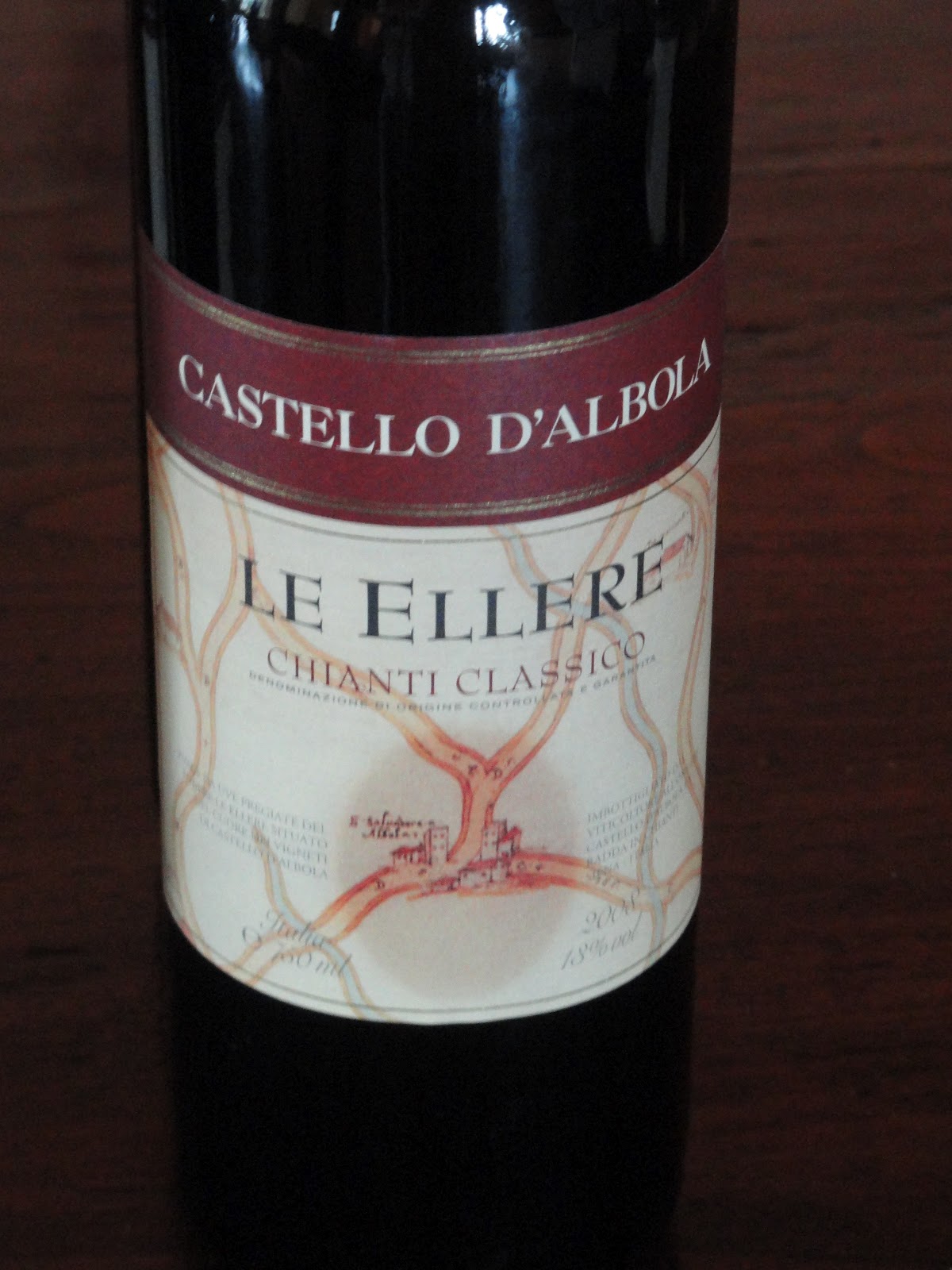
Rant: Liver, Fava Beans & Chianti

Posted on 01:00 by Unknown
"A census taker once tried to test me. I ate his liver with some fava beans and a nice Chianti."
--Dr. Hannibal Lecter in The Silence of the Lambs (movie version)

"A census taker tried to quantify me once. I ate his liver with some fava beans and a big Amarone."
--Dr. Hannibal Lecter in The Silence of the Lambs (book version)

From the original novel to the movie adaptation, Dr. Lecter's wine of choice for this "food" pairing changed from Amarone to Chianti. What was the reason for that change? It was thought that the audience would be unfamiliar with Amarone so it was decided to change it to the more recognizable Chianti. Most people now know the Chianti quote and far fewer realize the original quote concerned Amarone. Was that change really necessary?

This question touches on a much greater issue: How much must we "dumb down" wine education and references for the average consumer? Wine can be a complex subject, especially if delving into the arcana of wine production and viticultural science. Thus, some simplification is necessary because many don't care, or need to know, about all of the intricacies of the topic. But one must also be very careful of oversimplification or over-generalization, where people are giving misleading information that does not represent the actual reality. That is also applicable in far more areas than just wine.

People are drawn to simplification, though sometimes to their peril. Some consumers relish wine scores because they believe they are a simple and easy way to determine a "quality" wine. It is far simpler to rely on a score rather than read tasting notes or consult with a wine store employee about the nature of a wine. Such oversimplification though can result in unhappiness when a person finds that the high scoring wine they bought does not appeal to them.    

Vintage guides can also be overly simple. Just because a vintage is said to be poor does not mean that some excellent wine was not made that year. And the same is true that in a good vintage, there still can be poor wine. Such matters are rough guidelines, but one must understand it is far from an absolute. We must avoid simplistic statements that come across as absolutes as they can do far more harm than good. A small bit of explanatory material can work wonders, yet still maintain sufficient simplicity.

In wine writing, you must take into consideration all of these matters in order to properly address your audience. Though that also entails the task of identifying your audience. Are they sophisticated wine consumers or average wine buyers with limited knowledge? I have seen too many writers rely on absolutism, for simplicity's sake, which actually serves to mislead readers rather than educate. We can still address readers simply while also providing them some basic education. Stop "dumbing down" the subject of wine, and instead simplify while providing accurate educational material. That might take more effort on the part of the writer but the rewards are worth it.

So skip the Chianti, just because it is more well known, and instead enjoy a big Amarone with your liver and fava beans.
Read More
Posted in blogging, controversy, rant, Wine Education | No comments
Older Posts Home
Subscribe to: Posts (Atom)

Popular Posts

  • Taste Camp: The Wine Industry of Quebec (Part 1)
    Exploring emerging wine regions is always a fascinating endeavor even if their wines are not readily available outside of that region. It is...
  • Tuscan Market: One Stop Shopping & Cafe
    Many of us would love to be able to easily purchase fresh baked bread, fresh local produce, artisan cheese, meats, seafood, fresh pasta, win...
  • Rant: Beware The Self-Proclaimed Expert
    I am very tired of self-proclaimed wine experts, gurus, ninjas and whatever whose actual knowledge is lacking. This is obviously not a prob...
  • Rant: U.S. Sake vs Japan Sake--Context Is Everything
    Is sake produced in the U.S. as good as sake produced in Japan? Does the question require more specificity? Or is it even a fair question? A...
  • Rant: Where Is The Roast Chicken Love?
    1990 was a pivotal year in the battle of beef versus chicken . It was the first year that Americans ate more chicken than beef, and that has...
  • Boston Wine Expo: Pinotage Rosé to Cape Verde
    Here is a sampling of some of the other wines that I found interesting at the Boston Wine Expo , and I will be posting about even more wines...
  • Rant: Rushing To Judge A New Restaurant
    As soon as a hot, new restaurant opens, there is a rush for food bloggers and online reviewers to dine there and immediately report back. Ti...
  • International Boston Seafood Show: Fish Fun & Photos
    “ Fish is held out to be one of the greatest luxuries of the table and not only necessary, but even indispensable at all dinners where there...
  • Rant: Outraged By Sake Prices At Restaurants
    We often hear complaints about the outrageous prices  of wine sold at many restaurants. Some places charge three, four or even fives times t...
  • Rant: Post-Labor Day Wine Advice
    With today as Labor Day , it is seen by many people as a signal of the end of summer, despite the fact that the official end is not until Se...

Categories

  • 2011 (8)
  • 2012 (9)
  • 2013 (2)
  • alabama (1)
  • alaska (1)
  • alcohol (1)
  • allergy (1)
  • alsace (3)
  • Andover (3)
  • animal (1)
  • anniversary (1)
  • Argentina Wines (10)
  • Arlington (11)
  • armenia (1)
  • art (4)
  • Australia Wines (2)
  • austria wines (5)
  • author (12)
  • award (2)
  • Bacon (1)
  • Bakery (15)
  • bar (1)
  • bbq (3)
  • beauty (1)
  • Bedford (2)
  • beer (19)
  • biodynamic wine (1)
  • biography (1)
  • blogging (35)
  • Book reviews (30)
  • book store (3)
  • Boston (165)
  • bourbon (11)
  • braintree (2)
  • brazil wines (1)
  • brazilian (1)
  • breakfast (2)
  • brewery (6)
  • brighton (1)
  • Brookline (9)
  • brunch (15)
  • Burlington (3)
  • business (1)
  • butcher (4)
  • California Wines (20)
  • Cambridge (29)
  • canada (8)
  • Canada Wines (7)
  • candy (3)
  • cape cod (6)
  • cape verde wines (1)
  • casino (7)
  • caviar (1)
  • celebrity (2)
  • champagne (11)
  • Charity (33)
  • cheese (23)
  • chef (27)
  • chianti classico (10)
  • children (2)
  • Chile (2)
  • Chile Wines (2)
  • china (6)
  • chinatown (3)
  • chinese cuisine (8)
  • chocolate (1)
  • christmas (3)
  • cider (8)
  • cocktails (47)
  • colorado (2)
  • concord (10)
  • conference (9)
  • Connecticut (12)
  • consumers (2)
  • contest (8)
  • controversy (97)
  • cookbooks (5)
  • cooking (15)
  • cuba (1)
  • cyprus wines (1)
  • dance (1)
  • Danvers (2)
  • dessert wine (1)
  • desserts (21)
  • diet (2)
  • dining service (1)
  • discount (1)
  • distillery (14)
  • dlw13 (1)
  • donuts (1)
  • dorchester (16)
  • easter (6)
  • Eating Habits (2)
  • ebook (6)
  • ethics (3)
  • ethiopia (1)
  • farming (10)
  • father's day (1)
  • fiction (11)
  • finger lakes (2)
  • florida (1)
  • Food (4)
  • Food Event (8)
  • Food Market (12)
  • food news (2)
  • food processing (2)
  • food safety (4)
  • food truck (1)
  • France (3)
  • France Wines (19)
  • fruit (7)
  • Games (2)
  • gardening (1)
  • georgia wines (1)
  • gin (1)
  • glasses (1)
  • grapes (4)
  • Greece Wines (1)
  • guest post (1)
  • health (21)
  • history (34)
  • holiday (46)
  • hotel (2)
  • Hungary Wines (3)
  • hybrid (2)
  • ibss12 (14)
  • ibss13 (13)
  • Ice Cream (5)
  • ice wine (2)
  • iceland (1)
  • interview (5)
  • ipswich (4)
  • ireland (2)
  • italian cuisine (43)
  • Italy (19)
  • Italy Wines (38)
  • jamaica plain (1)
  • japanese (70)
  • kentucky (12)
  • korea (1)
  • law (13)
  • legend (9)
  • lincoln (6)
  • liqueur (1)
  • local wine (2)
  • los angeles (1)
  • louisiana (2)
  • louisville (7)
  • lynnfield (1)
  • madeira (1)
  • magazine (16)
  • Maine (2)
  • Malbec (1)
  • Malden (1)
  • mallorca (1)
  • mardi gras (2)
  • Massachusetts (4)
  • Massachusetts Wines (6)
  • mead (5)
  • meat (23)
  • Medford (6)
  • melrose (3)
  • mexican cuisine (16)
  • mexico wine (3)
  • mezcal (1)
  • milk (2)
  • milton (1)
  • mississippi (1)
  • montreal (2)
  • mothers day (1)
  • music (4)
  • natick (1)
  • needham (3)
  • new england (2)
  • New Hampshire (17)
  • new year's eve (10)
  • New York (3)
  • New York City (3)
  • New York wines (1)
  • New Zealand Wines (1)
  • newburyport (1)
  • newport (1)
  • news (1)
  • newspaper (7)
  • newton (9)
  • North Andover (16)
  • north end (12)
  • nova scotia (5)
  • Oregon (2)
  • Oregon Wines (6)
  • organic food (1)
  • organic wine (2)
  • paso robles (3)
  • peruvian cuisine (1)
  • phillipines (2)
  • pinotage (2)
  • pisco (1)
  • Pizza (2)
  • pork (3)
  • port (13)
  • portland (1)
  • portsmouth (6)
  • Portugal (6)
  • Portugal Wines (19)
  • poultry (1)
  • providence (1)
  • provincetown (5)
  • quebec (5)
  • rant (97)
  • Reading (1)
  • Recipe (11)
  • Restaurant (198)
  • restaurant going (8)
  • restaurant reviews (65)
  • Rhode island (4)
  • rose (7)
  • rum (11)
  • Sake (61)
  • Sake Reviews (15)
  • salem (2)
  • salmon (4)
  • sandwich (5)
  • science (10)
  • scotland (4)
  • seafood (72)
  • Seattle (1)
  • sherry (10)
  • shochu (1)
  • shopping (3)
  • social media (1)
  • soda (2)
  • Somerville (13)
  • South Africa Wines (7)
  • spain (8)
  • Spain Wines (18)
  • sparkling wines (6)
  • spirits (42)
  • sports (4)
  • st. patrick's day (4)
  • steakhouse (12)
  • sudbury (1)
  • sushi (5)
  • sustainability (61)
  • sweden (1)
  • tastecamp (5)
  • tea (6)
  • television (4)
  • tequila (2)
  • texas (1)
  • thai (2)
  • thanksgiving (9)
  • theater (2)
  • top ten (14)
  • toronto (1)
  • travel (8)
  • twitter (1)
  • united states (1)
  • Uruguay Wines (1)
  • valentine's day (5)
  • vegetables (3)
  • vermont (4)
  • virginia (1)
  • virginia wines (1)
  • vodka (8)
  • Wakefield (1)
  • walpole (2)
  • watertown (1)
  • wayland (1)
  • wbc (3)
  • west concord (1)
  • westwood (1)
  • whiskey (19)
  • Winchester (14)
  • Wine (3)
  • Wine Education (19)
  • wine event (14)
  • wine importers (1)
  • wine marketing (11)
  • Wine news (3)
  • wine pairings (15)
  • wine personality (1)
  • Wine Prices (5)
  • Wine Reviews (68)
  • wine sales (13)
  • Wine Stores (23)
  • Wine tasting (11)
  • wine writing (1)
  • winemaker (4)
  • winemaking (6)
  • wineries (5)
  • winery (21)
  • Woburn (3)
  • women (3)

Blog Archive

  • ▼  2013 (171)
    • ▼  September (5)
      • Why Are You Fat?
      • Thursday Sips & Nibbles
      • Heirloom Flavor: From a Dragon's Tongue to a Nebra...
      • Papa's Pilar Rum: What Would Hemingway Do?
      • Rant: Post-Labor Day Wine Advice
    • ►  August (19)
    • ►  July (18)
    • ►  June (19)
    • ►  May (19)
    • ►  April (20)
    • ►  March (32)
    • ►  February (20)
    • ►  January (19)
  • ►  2012 (283)
    • ►  December (21)
    • ►  November (23)
    • ►  October (30)
    • ►  September (17)
    • ►  August (26)
    • ►  July (23)
    • ►  June (19)
    • ►  May (21)
    • ►  April (20)
    • ►  March (34)
    • ►  February (26)
    • ►  January (23)
  • ►  2011 (46)
    • ►  December (27)
    • ►  November (19)
Powered by Blogger.

About Me

Unknown
View my complete profile