ShrimpTempura

  • Subscribe to our RSS feed.
  • Twitter
  • StumbleUpon
  • Reddit
  • Facebook
  • Digg
Showing posts with label wine sales. Show all posts

Monday, 2 September 2013

Rant: Post-Labor Day Wine Advice

Posted on 00:00 by Unknown
With today as Labor Day, it is seen by many people as a signal of the end of summer, despite the fact that the official end is not until September 22. Labor Day also presages changes in the wine world, beyond the fact it is harvest season, and consumers need to pay attention. There are opportunities now that they should take advantage of, to learn more about wine, to experience different wines, and to enjoy plenty of delicious wines.

First, far too many wine stores stop stocking Rosé wines after Labor Day, though the situation improves each year. All those delicious pink wines you have been savoring all summer? Well, there is absolutely no reason you should stop drinking them just because fall is coming. Rosé should be enjoyed year-round, especially as it is excellent with food. More and more wine lovers are coming to this realization, which will spur wine stores to carry more Rosé all the time. We need to get over the misconception that certain wines should only be enjoyed seasonally. All wines are appropriate year-round, and so I hope you keep drinking Rosé through autumn, winter and spring.   

Second, after Labor Day, wine stores will begin stocking up on new wines as their busiest season is about to begin. This will also mean that many of those wine stores will start holding large wine tasting events, where you may be able to taste many different wines, sometimes as many as 100 wines. Most of these events will be free, providing you a perfect opportunity to experience many wines which you may not have tasted before. The best way to learn about wine is to taste it so you should attend these events to expand your horizons, to delve into a wealth of diversity.

You might be tempted at these events to taste only those wines which you already know and love, or which are similar to those wines. However, don't do that! Instead, experiment and take chances, tasting new wines of which you might never have heard about  Expand your palate and broaden your horizons by tasting lots of different wines, especially considering that these tastings are free and you thus have nothing to lose. You might find a new favorite wine, or even several new favorites.

At these events, with so many wines, you will want to remember those wines which you most enjoyed. Take notes of those wines so you can recall them later, so you can find them again. If you don't want to take notes, use your cell phone to take a photo of the wine label. You can then take that picture to a wine store and they can see if they carry that wine. With a tasting of 25 or 50 wines, it can be difficult to remember your favorites merely by memory. Memorializing your favorites in notes or a picture will be very helpful when you seek your new favorite weeks later.

Third, with all of the holidays coming up, you might be hosting parties for your family and friends. You might then need a selection of wine for these celebrations. Price is usually a significant factor in your decision as to which wines to purchase. Remember that many wine stores provide a discount, commonly 10%-20%, if you purchase a case of wine, and sometimes a discount for as little as six wines. Instead of buying just the cheapest wine at a shop, ask the staff at that store for their recommendations for the best value wines. They might be able to suggest wines you might not have considered, wines which offer excellent value as well as taste. For example, Portuguese wines can offer great value, especially for wines under $10, but many consumers don't realize that fact.

What post-Labor Day wine advice do you have for consumers?
Read More
Posted in controversy, rant, rose, wine sales, Wine tasting | No comments

Monday, 29 July 2013

Rant: Brand Loyalty & Wine Geeks

Posted on 00:00 by Unknown
"...hard-core wine buffs...have no product loyalty. They like to sample a different wine every day, so they don’t support brands very well even when they love them."
--Postmodern Winemaking: Rethinking the Modern Science of an Ancient Craft by Clark Smith

How much brand loyalty do you possess? How many bottles of the same wines do you buy every year? If you truly love a wine, do you buy multiple cases of it every year? Or, despite your love for specific wines, do you generally spend most of your time and money exploring new and different wines? Are wine bloggers less brand loyal because of their desire and efforts to review numerous wines each year?

One of the most fascinating wine books I have read recently is Postmodern Winemaking by Clark Smith, a controversial figure in the wine industry because of his involvement in technological methods of wine making. Some see his efforts as over manipulation of wine, a charge he vehemently denies. The book itself does not shy from controversy, yet it raises many intriguing issues and should cause any reader to think about some of their closely held beliefs. At times, the book gets technical, and could confuse a non-winemaker, though Clark has tried to make it as easy to understand as possible. There is plenty in the book which any reader though will be able to comprehend and I highly recommend this book to all wine lovers.

But back to Clark's quote at the top of this post. Each year, we all drink and buy a limited amount of wine. We are constrained by our finances, by time, by our capabilities to drink. As I ponder my own annual wine consumption, I would have to agree with Clark that my own brand loyalty, in regards to repeat purchases and drinking, is low. I am definitely a wine explorer, always seeking out something new and different to try. If I go to a restaurant, I am more likely to try something new than I am to drink an old favorite. At a wine store, I more often buy something new rather than pick up the same old wines. And I don't think I am unique in this regard, especially among other wine bloggers.

However, despite my lack of repeated purchases of the same wine, I possess brand loyalty in another regard, in my promotion and advocacy of those wines, whether it be on my blog, in print media or by word of mouth. If I love a wine, I might not purchase it on a regular basis, but I will rave about that wine to others, encouraging them to try the wine. And those written recommendations on my blog remain available to everyone all the time. People regularly ask me for wine recommendations, and I will tell them about the wine I love, spreading brand loyalty.

To me, Clark's words have some relevance, but they do not address the complete situation. Even hardcore wine lovers who do not have blogs will spread their love for wines through word of mouth. Wine bloggers and writers have an additional forum to spread their brand loyalty. Though they might not purchase a specific wine often on their own, their advocacy is likely to lead to far more sales from others who take their recommendations.

Are you brand loyal or not?
Read More
Posted in blogging, controversy, rant, wine marketing, wine sales | No comments

Friday, 28 June 2013

Vacationing In Provincetown: Dining & Drinking (Part 3)

Posted on 00:00 by Unknown
Before going to Provincetown, I was immensely curious about its culinary scene, whether it would be a mass of tourist traps or instead whether it might offer some intriguing finds. The restaurant world in Provincetown is relatively small, with about 30+ seated restaurants and a number of more fast food/counter spots. You will find plenty of seafood and American fare, however you will also find diverse cuisine such as Thai, Japanese, Mexican, French and more. Forget McDonald's and Taco Bell, as you won't find any of those restaurant chains in Provincetown. In fact, the only chain that you will find is Ben & Jerry's Ice Cream, and that really isn't a typical chain anyways.

Overall, I enjoyed plenty of delicious food in Provincetown, at high end restaurants as well as small cafes. Many of these places would be welcome additions to the culinary scene of Boston. Besides the food, I was pleasantly surprised by the wine lists, which were far more diverse and interesting than I expected. In fact, they were more diverse and interesting than some Boston restaurants I have visited. Wine prices were also generally lower than what you find in Boston. Though I only scratched the surface of the culinary world in Provincetown, I was impressed by what I found and want to explore it more, maybe at the Food & Wine Festival in October.


On our first day, we began with a cocktail reception at the Harbor Lounge, located on Commercial Street and facing the ocean. A small lounge, I still was pleased at the diversity of wines available by the glass. They have a full bar and I chose to drink a Dark n' Stormy, with Goslings Black Seal Rum. We received a large platter of cheeses, meats, dips, crackers, grapes and more. Fresh, high quality and tasty, this was a pleasant way to start off our evening. With a great view, this is a nice spot to stop by for a cocktail or glass of wine.

Our first dinner was at The Mews Restaurant & Cafe, which is co-owned by Ron Robin, who we met during dinner. Known as Rockin' Ron, he also works as a radio personality on Dunes 102.3 FM. The original location of the restaurant, in 1964, was discovered to have once been a stable, and the old English word for stable is "mews," hence the restaurant's name. In 1993, the restaurant was moved to its current location.

The upstairs area is for the bar and cafe, while the downstairs is the main dining area, though the downstairs is really at street level and you have a great view of the beach. All of the art and stained glass windows in the restaurant were created by local artists. Local carpenters also designed the tables and benches. The dining room has a cool and casual vibe, a homey place which will appeal to couples, families and groups.

The wine list is interesting, though I was especially impressed with their vodka list, which contains over 260 selections from all over the world. Who would have thought you would find such a vodka selection in Provincetown? I enjoyed a couple of vodkas, including a Chopin Rye and Belvedere Rye, which I had never tasted before. I could come here dozens of times, just to taste through the intriguing vodka list.

Executive Chef Laurence DeFreitas has worked for The Mews for 24 years and Ron mentioned that the chef seeks to create "flavorful food," and not "vanilla" cuisine. Despite his lengthy position at the restaurant, Chef DeFreitas is not dwelling in the past and his menu remains fresh and interesting, often relying on fresh and local ingredients. A number of the dishes have an Asian flair to them. The menu is divided into Starters ($10-$16), Salads ($9-$14) and Mains ($22-$35). Begin with a Starter like a Wild Boar Naan Pizza or a Tuna Sushi Tempura and move onto a Main like Mongolian Style Grilled Lamb Chops or Pork Vindaloo.

Some fresh bread to start the meal.

I began my meal with the Lobster Dumplings in a Miso Broth ($13), three plump dumplings in steamed shumai wrappers. Each dumpling was filled with fresh lobster meat, ginger, scallions, and oyster & sherry sauces. The dumplings skins were just firm enough and the interior had plenty of sweet and flavorful lobster, enhanced by the umami of the savory miso broth. An excellent starter.

A Special that evening was a Venison Carpaccio dish, topped by thin sliced cheese. Though I didn't taste it, it looked fantastic and the person who ordered it enjoyed it very much.

I continued with The Wedge ($10) a salad of baby romaine, topped by cracked black pepper & Parmesan vinaigrette strewn with pancetta crumbles. Fresh romaine with lots of salty pancetta and a very pleasant vinaigrette. Simple but tasty.

For my entree, I selected the Shaking Beef ($31), a Vietnamese inspired dish with chunks of beef tenderloin, wok sautéed with scallions and red onions over watercress with a lime black pepper dipping sauce. Very tender beef, with a compelling sauce and a minor bit of heat. There was plenty of tenderloin and I definitely would recommend this dish. Everyone was very happy with their own dishes too. The Mews was a winner!

For lunch the next day, we stopped at the Patio American Grill & Cocktail Bar, which is also located on Commercial Street. It serves plenty of seafood dishes, New England cuisine, and sandwiches. It serves breakfast, lunch and dinner as well as a wide range of cocktails and wines. I enjoyed a glass of Albrecht Cremant d'Alsace Brut Rose with my lunch.

We sat on the outside patio, allowing us to people watch everyone walking down Commercial Street. It was a fine, sunny day so this was a great spot for a leisurely lunch.


We started off our lunch with The Monument ($88), a large seafood sampler, which can easily feed four people, and includes 12 oysters, 6 littleneck clams, 6 jumbo shrimp, snow crab claws, shrimp ceviche and a whole chilled lobster. I gorged myself on this very fresh seafood, including the huge, plump shrimp and sweet lobster. The ceviche was also quite tasty, with nice citrus and spice notes. If you want a piece of New England, the seafood in this dish will give it to you.

After that, I tried the Corn Chowder ($8.95) with lobster, tarragon and chili oil. This seemed to me to be more like a bisque than a chowder as the corn was essentially liquified. However, it tasted good, with a strong corn flavor complemented by sweet lobster and the hints of heat from the chili oil. For my main dish, I went with another New England dish, the Fried Ipswich Clams with fries. Plump clams, with a clean, crunchy coating certainly hit the spot.

I wasn't going to have dessert, but they brought us a couple dishes anyways, including a Strawberry Shortcake ($8.95). This was a superb dish, with fresh whipped cream, sweet berries and a soft, fresh cake. I probably could have devoured this entire dish by myself.

After a whale watch, we made a brief sojourn to The Purple Feather Cafe & Treatery, where you can find lunch, gelato, desserts, chocolate and more. It is owned and operated by Peter and Ann Okun, year round residents, and Ann has about 25 years of chocolate making experience. The Purple Feather has gone beyond just chocolate, selling a wide range of enticing sweets.


There are lots of intriguing chocolate concoctions, like the tasty Sweet & Salty Coconut Pretzel, a crispy pretzel dipped in caramel and chocolate, and then covered in toasted coconut. I thought the components were well balanced, especially as I am a fan of the combo of sweet and salty. The Chocolate Bacon contains thick sliced bacon covered in dark chocolate, providing more of that delicious sweet/salty combo.

They also have an assortment of Gelato and Sorbetto, which you can have in a bowl or cone, in a shake/smoothie, or between two cookies of your choice.

That evening, after a tour of the dunes, we went down to one of the beaches for a traditional New England Clambake. It was a beautiful evening, though a bit chilly for some, though we had a fire set into the sand. The clambake was catered by Ptown Parties, and they did an excellent job in arranging the event, as well as providing plenty of delicious food. For example, they had blankets for everyone, in fact two per person, so that you had one blanket to lay down atop the sand and another to wrap around yourself if you were chilly.

We began with bowls of Clam Chowder, and frankly it was one of the best chowders I have had in quite a while. It was the right consistency (not too thick or thin, just creamy enough), full of flavor, and contained plenty of tender clams. I enjoyed it so much that I had multiple bowls. Next up were Littleneck Clams, sauteed with onions and linguica, in a wine broth. Again, this was another delicious dish, the linguica adding a nice element to the clams, and I once again had multiple portions of these clams. Sitting on the sand beside a fire, with the ocean a short distance away, and eating these clams was just such a New England thing.

The main dish was Steamed Lobster, though they were accompanied by jerk chicken, roasted potatoes, grilled veggies, and jalapeno corn bread. A smorgasbord of culinary tastes. I am generally not a fan of eating a whole lobster at a restaurant cause it can be very messy, and water can squirt out when you try to crack open the lobster, and sometimes it shoots where you don't want it to go. But in the fire-lit darkness, such problems become much less visible, and you can dig into the shells of your crustacean. With the briny smell of the ocean as a background, the sweet lobster meat tasted even sweeter.

The cost of such a clambake is roughly $62.50 per person, with an added cost for the staff, dependent on the number of people at the clambake. There are plenty of extras you can order as well. In addition, they have a more budget option, for only $47.50 per person. For this type of event, and the quality of the food, I think the prices are reasonable. We had plenty of delicious food, and the setting and experience are quite memorable. If you want a true New England experience, then you have to have a beach side clambake.

We even had two coyotes stop nearby us on the beach, wanting to join our clambake, but they simply watched us from afar.

The next morning, I was on my own for breakfast, and after receiving a couple recommendations, I chose to eat at Cafe Heaven, which turned out to be an excellent choice. It is a small, casual spot, with windows looking out on Commercial Street. Their breakfast menu has plenty of the usual offerings, with some of their own more unique items, from homemade English muffins to linguica. Everything is reasonably priced too.

On the walls, you will find a number of breakfast and lunch specials. I tried the linguica, a large piece of a slightly spicy and flavorful Portuguese sausage. The homemade English muffins were also very good, with plenty of nooks and crannies for butter, and the consistency of the bread was just right. They are larger than the typical English muffins you buy at the grocery store.

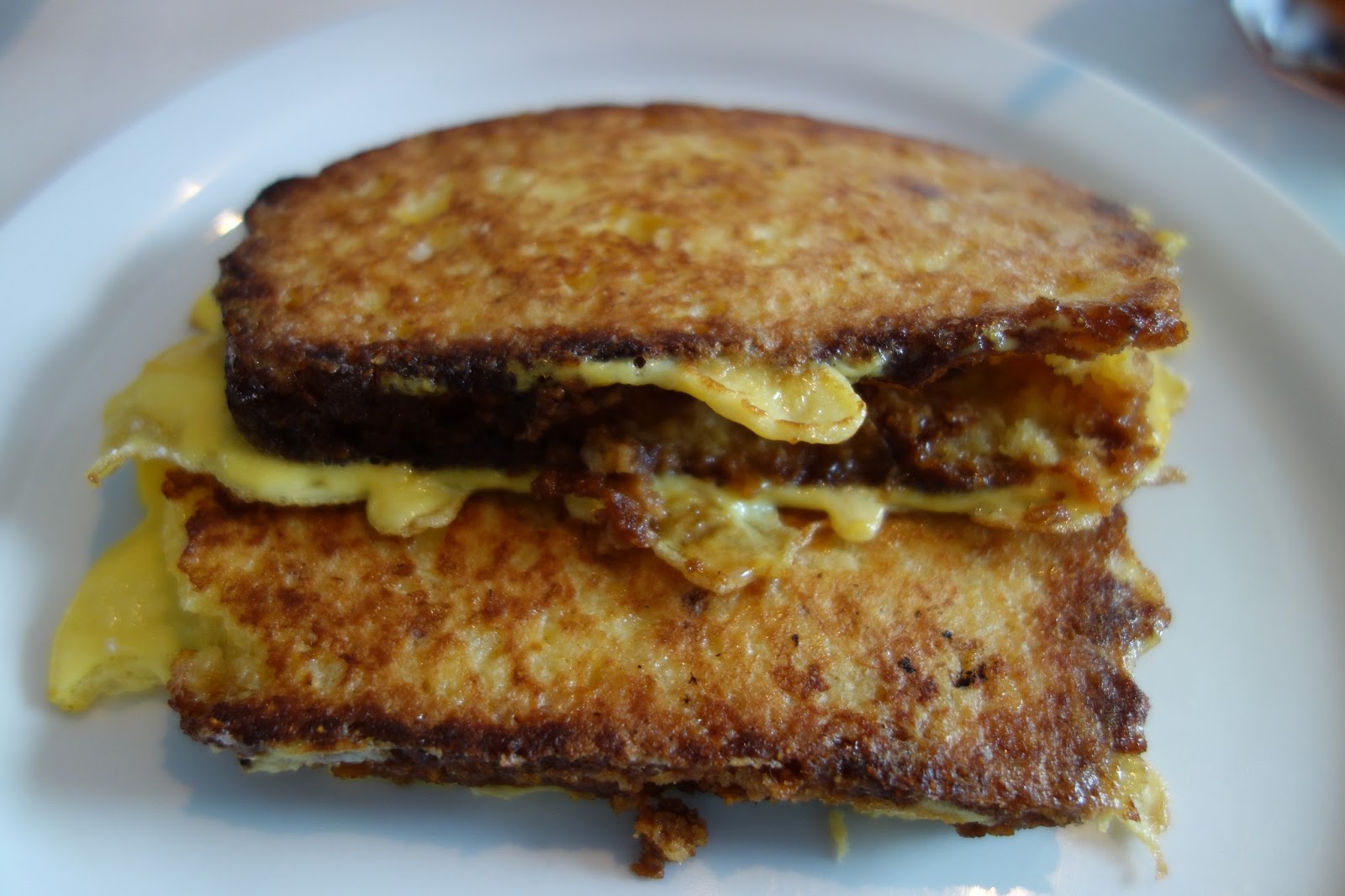
For my main dish, I went with one of the specials, Corn Bread French Toast. It sounded so enticing, and I had never seen any other restaurant make this dish, so I had to try it, hoping for the best. Well, it was superb! The corn bread was thinly sliced, moist and with a delicious, sweet corn flavor. This would have been delicious corn bread on its own. Adding the eggy batter to its grilled goodness, enhanced and elevated this dish and I was extremely happy that I had ordered it. It had no faults and I would love to see other restaurants trying this as well.

The recommendations for Cafe Heaven were spot on, and I add my own hearty recommendation for this restaurant.

For lunch, we dined at a small casual spot, Lucky Dog Ptown, which primarily sells gourmet hot dogs and lobster rolls. They sell ten different hot dogs, the the hot dogs are made from their own special recipe. You can get your dog ($4.95-$10.95) topped with items like chili, mac n' cheese, slaw, bacon, baked beans and more. There are six different lobster rolls ($15.95-$19.95), made with simple mayo or butter, or topped by items like bacon or mac n' cheese. You'll also find a few other sandwiches, from pulled pork to sausage, as well as sides, such as baked beans, potato salad and chili.

I went with the Bacon & Blue Dog ($7.95), with smoked bacon & blue cheese and wasn't disappointed. The meaty dog went well with the crunchy, smoky bacon pieces and the tang of the blue cheese well accented the meats. You really need a fork to eat these dogs as they are so full of toppings that it is too difficult to just pick up and eat. Everyone else also enjoyed their dogs or lobster rolls and I would return here in a heart beat. A simple menu, they invest their passion in the items they create and it comes out in a well-made and delicious product. Highly recommended.

I thought these plastic utensil dispensers were so cool! Rather than have a cup filled with plastic utensils, where everyone can be touching them, these dispensers help keep the utensils more sanitary. You just dispense the utensils that you need, and never touch any others. Would love to see these used in many more restaurants.

On my own, I also stopped at the Provincetown Portuguese Bakery, which not only is a bakery but also serves breakfast and lunch. With Tibor Bago as the main chef, the bakery sells a variety of appealing Portuguese pastries, breads and more, and they all look enticing. I had to order the Malassada, a type of Portuguese donut which resembles fried dough, and it was well worth it, especially if they are still warm. It is far better than a carnival fried dough, being lightly sweet with a great, flaky pastry. This is a must stop if you visit Provincetown!

If you are a food and drink lover, then you should consider Provincetown as a culinary destination. From a killer Portuguese bakery to a voluminous vodka list, from a hearty tower of fresh seafood to a a unique French toast, you will find plenty to appeal to your palate.

Mews Restaurant & Cafe on Urbanspoon
Patio American Grill & Cocktail Bar on Urbanspoon
Purple Feather on Urbanspoon
Cafe Heaven on Urbanspoon
Provincetown Portuguese Bakery on Urbanspoon
Read More
Posted in Bakery, cape cod, Portugal, provincetown, Restaurant, restaurant reviews, travel, vodka, wine sales | No comments

Monday, 13 May 2013

Rant: If You Truly Loved Your Mom, Would You Buy Her White Zin?

Posted on 00:30 by Unknown
Yesterday was Mother's Day, a time to honor our mothers, to show the love we possess for them. I love my mother, and she is worthy of much honor for her love, devotion, and sacrifice in raising me. However, she will say that she doesn't need any specific day to be honored, that she feels my love every day. Many mothers probably feel that very same way about their children, yet we children still enjoy celebrating this holiday.

I actually worked at the Beacon Hill Wine & Gourmet store on Mother's Day and it was fairly busy with people buying wine for their mothers. I sold more White Zinfandel today than any other day I can ever recall. One of the customers seemed almost guilty buying it, telling me that it was for his mother. That made me ponder the matter, raising a question in my mind.

If you truly love your mother, would you really buy her an inexpensive wine like a White Zinfandel?  

Some might think the answer is easy, that their mother deserves much better than White Zinfandel. Some might think she deserves a high-end Cabernet Sauvignon, a fine Bordeaux or a vintage Port. In some respects, they are correct. Your mom is certainly worthy of a pricey, high end wine. My own mom is certainly worthy of any wine I know. However, that doesn't mean you should buy your mother such a wine.

In fact, sometimes a White Zinfandel is the best wine you can buy for your mom.

For Mother's Day, I believe that you should give your mother the things she loves. No matter what they might be. I don't believe it is the day to test your mom, to give her mother something she might or might not enjoy. You want the day to be as perfect as possible for your mother, so you should cater to her desires. If she loves White Zinfandel, then the best wine you can give her for Mother's Day is White Zinfandel. You shouldn't feel guilty or cheap. You shouldn't feel like a bad child.

Even if you are a wine lover, conversant with wines from all over the world, having tasted wines made from hundreds of different grapes, don't shy away from buying White Zinfandel if that is what your mother loves. Maybe your mom has never had a Provence Rose or a Gruner Veltliner, and might enjoy them if she did. Then again, maybe she won't. Don't try to change your mother's palate on Mother's Day. Give her what you know she already loves, even if it is White Zinfandel.

Yes, Love for your mother can be expressed through White Zinfandel.  
Read More
Posted in controversy, rant, wine sales, Wine tasting | No comments

Tuesday, 16 April 2013

Shipping Wine To Massachusetts: A Critique Of Andelman's Plan

Posted on 00:00 by Unknown
Like many wine lovers in Massachusetts, I would like the ability to receive shipments of wine directly from out of state wineries. There are plenty of wineries which do not sell their wines in Massachusetts but which I would like to be able to purchase. However, I still cannot do so because the legislature can't seem to get their act together and pass a constitutional law which would allow it.

In 2006, a law was passed that barred many such shipments into Massachusetts but it was later ruled unconstitutional, a decision affirmed by the U.S. 1st Circuit Court of Appeals. Since that decision on January 2010, several efforts have been instituted to create a legal framework allowing out of state winery shipments. To date, despite the passionate advocacy of groups such as Free The Grapes, all such efforts have failed but I continue to have hope that will change one day.

Currently, House Bill 294, authored by Representative Theodore Speliotis, is in the committee on Consumer Protection & Professional Licensure and it is hoped that it will receive a hearing. Dave Andelman, of The Phantom Gourmet and Restaurant & Business Alliance, seems to feel that House Bill 294 is wrong and has offered his own plan in a column, A Better Way To Buy Out Of State Wine, in the Metrowest Daily News. I believe Andelman's three-point plan is unduly burdensome, overly protective and based on inaccurate information.

Andelman first point states that out of state wineries should pay a $1000 licensing fee rather than the proposed $100. He states this fee would be comparable to New Jersey but that is incorrect. The New Jersey licensing fee actually is a spectrum, dependent on the production level of the winery, and ranges from $63-$938. So Andelman has provided inaccurate information concerning New Jersey's license fees.

Andelman also sees this fee as a potential means of revenue for the state, yet there is no rationale for why that should be the case. He offers no evidence that a $100 licensing fee would be inadequate to administer the cost of the program. A $1000 fee would be burdensome on small, boutique wineries which already have limited resources. That is the rationale behind basing licensing fees on the size of a winery, to not overburden the small producers.

In his next point, Andelman wants to restrict wineries to shipping one case per month to a household. The current bill allows each household adult to order 2 cases per month. He tries to make the current plan seem scary by alleging a household could order over a million bottles of wine. While technically it is possible, the chance is so remote as to be silly. The average person in the U.S. purchases only about 14 bottles per year. The vast majority of the more dedicated wine lovers still probably own less than 1000 bottles. So Andelman's worries are essentially baseless.

Andelman's suggestion prevents consumers from ordering multiple cases of wine from a single winery at a single time. Consumers generally do not order a case each month of a wine they desire. They usually want to buy it at a single time, to ensure they get the wine before it sells out. They might buy two to three cases of a wine, and then may not buy from that same winery for six months or more. There is no valid reason to restrict sales to a single case per month. That would be an undue burden, based on the usual purchasing practices of wine lovers.

Finally, Andelman alleges that shipped wine should have to be sent to a liquor store, to protect against underage drinking. He mentions that a 20-20 story and a North Carolina University study proved that minors could easily buy alcohol on the Internet. Yet he does not provide a link to either the story or study, or provide any of the actual facts from these two sources. How reliable is this information? Where was the study conducted? Does the study envision a similar system as proposed by House Bill 294? These allegations seem more like fear mongering.

The fact is that wine stores have had plenty of problems in selling alcohol to minors. As one example, the city of Haverhill conducted a series of stings on bars, restaurants and liquor stores and 25% of those places were caught selling to a minor. You can find plenty of other examples of liquor stores which have sold to minors. Yes, we need to ensure minors cannot purchase alcohol but Andelman's plan would not guarantee that.

Andelman's plan also includes that a consumer would have to pay a "nominal" processing fee to the liquor store. Could a liquor store refuse to accept shipments? Who would regulate the amount of the processing fee? Would liquor stores want the added paperwork of processing these shipments? We should not place this added burden on liquor stores. Andelman though seems to believe this would help liquor stores who "..may be forced to terminate employees if their sales fall much further after the increased amount of liquor licenses which have been issued, including large liquor sections at supermarkets."  How is that so?

He fails to explain how it would help liquor stores. They would receive only a "nominal" fee so that shouldn't be enough to make up for any alleged lost sales. He provides no evidence or statistics on whether local liquor stores have seen decreased sales or not. He fails to provide any evidence that out of state shipments would significantly affect small liquor stores.

Dave Andelman needs to provide far more details, evidence and support for his plan as currently it is lacking in many aspects. He has yet to offer valid arguments or a valid alternative against House Bill 294. And his initial inaccurate information about New Jersey licensing fees casts doubt on his own research and credibility.

I will continue to side with Free The Grapes in supporting House Bill 294.
Read More
Posted in controversy, law, Massachusetts, rant, wine sales | No comments

Friday, 22 March 2013

Importance Of Wine Sales By The Glass

Posted on 00:00 by Unknown
I have dined at plenty of restaurants which sell ten to twenty wines by the glass yet may have one hundred or more wines available by the bottle. Most restaurants have far more wines available by the bottle than the glass yet does that actually make sense? Would a larger selection of wines by the glass enhance a restaurant's business?

In the latest issue of Foodservice East (Wintertide 2013, p.14), there is an article discussing a recent study by Restaurant Sciences. This study, involving research of about 10 million guest checks, is supposed to be the first study of wine by the glass consumption in U.S. restaurants. One of the most interesting conclusions was that, "Last year, wine by the glass sales made up nearly 72% of all wine sales on-premise." Most people buy wine by the glass rather than by the bottle, so why do wine lists often provide so few options for wines by the glass, choosing to provide a far greater diversity in wines by the bottle?

There are some logistical reasons why restaurants often limit their wine selection by the glass. Once a bottle is opened, the restaurant needs to have a way to keep the bottle fresh until it is empty. Wine preservation systems can be expensive but can provide value to the restaurant. Wines by the glass though usually provide a nice profit to restaurants, especially when you consider that it is common to make the price of a glass equal to at least the wholesale cost of the bottle, if not more.

Even if a restaurant cannot sell an entire bottle of wine by the glass, they are likely to at least break even on the cost of the wine. As the average pour is 6.18 ounces, there will be four glasses in a bottle, meaning that if all four glasses are sold, the restaurant would receive at least four times the wholesale cost of the bottle. That is a very nice profit margin. That high markup is also why many wine writers suggest purchasing wine by the bottle rather than a glass. It doesn't seem many people are listening to that advice as so many people still buy wine by the glass.

So why aren't restaurants offering more wines by the glass if that is what sells the most?

The Restaurant Sciences study derived a number of other interesting conclusions. They broke down the market share of the top ten white and red wine types, as well as providing average pricing in 6 different types of establishments, from family dining to hotel bars. They learned that price matters much less than the type of varietal or blend. The best values at most restaurants appear to be Pinot Grigio and Zinfandel.

The top ten whites include: Chardonnay 44.5%, Pinot Grigio 24.8%, Sauvignon Blanc 13.6%, Riesling 7.7%, Pinot Gris 2.3%, White Blends 1.3%, Gewurtztraminer 0.6%, Chenin Blanc 0.3%, and All Other Whites 4.9%. The top ten reds include: Cabernet Sauvignon 29.4%, Merlot 18.1%, Pinot Noir 15.8%, Zinfandel 10.9%, Malbec 9.2%, Red Blends 7.4%, Shiraz 3.2%, Sangiovese 2.3%, and All Other Reds 3.7%.

Chardonnay is clearly the most popular wine by the glass, and just four white grapes constitute over 90% of the total number of whites. Seems other white grapes need a greater promotion to acquire a larger market share. For red wines, five grapes dominate over 83% of the total, showing that patrons enjoy a bit more diversity in their reds. Yet even other red grapes could use more promotion as well. Most people seem to go with safe and common choices, rather than seek to expand their horizons.

I am certainly not the norm as I usually tend to order a bottle of wine (or more than one). If I purchase a glass of wine, I usually go for something more unique or exotic. I seek something different rather than the same old wines, like a grape I have never tasted before, or a wine from a lesser known region.

When you dine out, do you order wine by the bottle or glass? If you order wine by the glass, what type of wines do you usually order?
Read More
Posted in Restaurant, restaurant going, wine sales | No comments

Tuesday, 12 February 2013

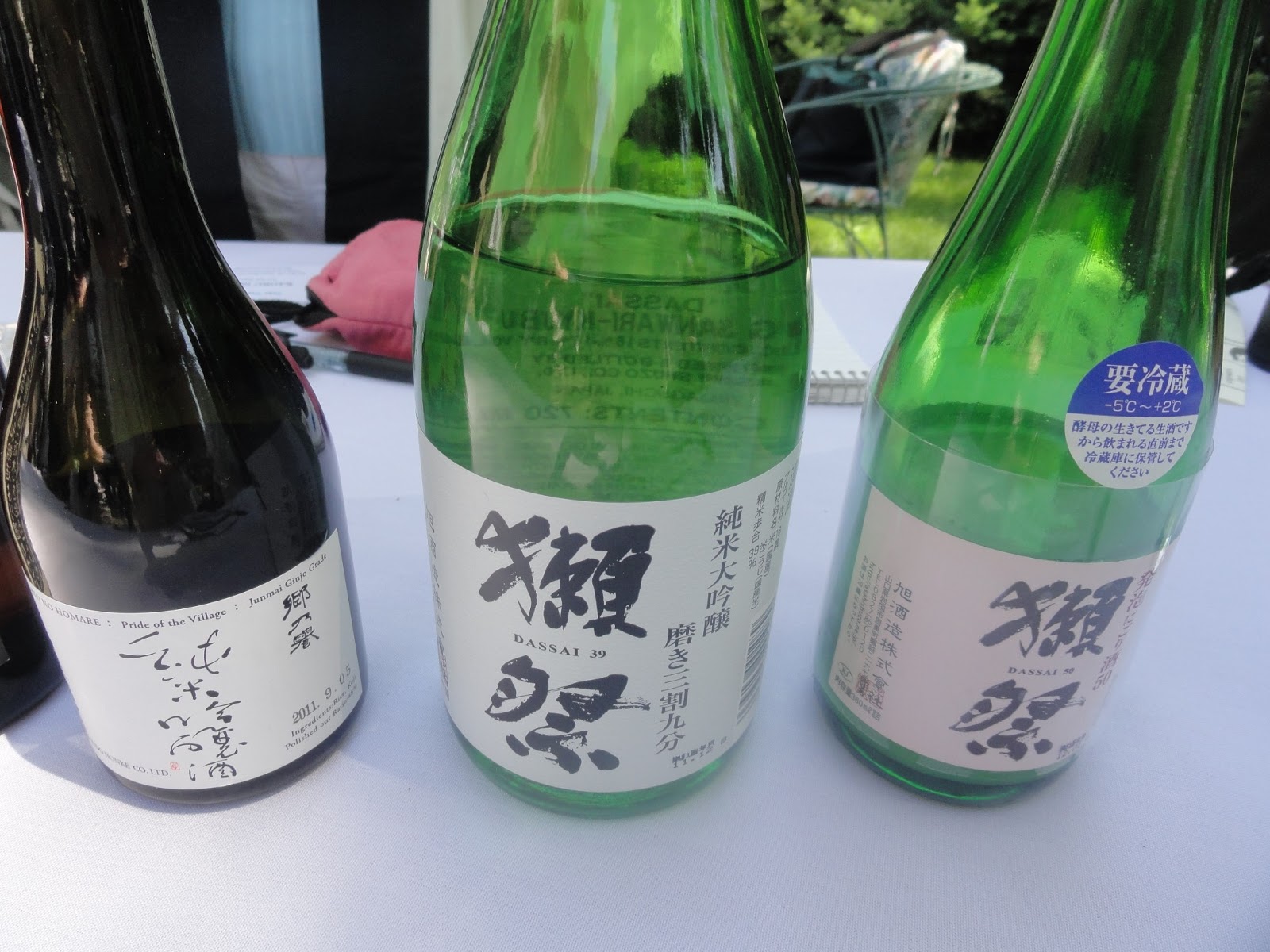
Sake Statistics: Ups & Downs

Posted on 00:00 by Unknown
"Facts are stubborn, but statistics are more pliable."
--Mark Twain

We all know that statistics may not be reliable and can be twisted and slanted to fit one's point of view. However, they can sometimes be useful for some general observations, especially if the discussion includes numerous facts. I want to present some Sake statistics, to give my readers some general indicators on matters such as the number of Sake breweries, rates of consumption, exports figures, and more. Just understand that some of these figures are tentative and different sources may have different figures. Overall, I believe recent statistics indicate a potentially hopeful future for Sake.

Sake Breweries:
It may surprise you that during the early part of the 19th century, there were over 30,000 Sake breweries in Japan. In comparison, that is greater than the current number of wineries in France, though France is almost twice the size of Japan. However, as the century passed, the number of Sake breweries began to drastically decrease so that by 1923, there were only about 10,000 breweries left. That significant reduction did not slow and by the 1960s, the number of breweries had dropped to around 4000.

Unfortunately, this pattern has continued and several years ago the Sake industry was declared to be a fukyo gyoshu, a depressed industry. As of March 2012, there are approximately 1272 Sake breweries remaining, a decrease of about 30 from 2011. In comparison, California has about 3500 wineries. The number of Sake breweries is now less than 5% of what existed during the early 19th century. There are Sake breweries in all 47 prefectures of Japan, though it is only recently that Kagoshima Prefecture started producing Sake.

Around 310 of the existing breweries, a mild increase since the prior year, produce only tokutei meishō-shu, basically premium Sake. That is a good sign, indicating a slight increase in those breweries that produce only higher quality Sake. As a hopeful and inspiring aside, though a number of breweries in the Tohoku region sustained damage, some seriously, from the earthquake and tsunami of March 2011, none of them closed. It is unknown how much longer this constant decrease in breweries will continue however we can hope that it stops or slows significantly.

Sake Production:
With the decrease in the number of Sake breweries, it is logical that there would be a decrease in Sake production as well. And that has been true until 2011. Prior to 2011, there usually were decreases each year except for the occasional aberration. For example, in 2004, about 524 Million liters were produced and then in 2005, that decreased down to 499M liters. There was an increase in 2006 to 513M liters but 2007 saw another reduction, down to 505M liters. By 2010, annual Sake production was reduced to about 440M liters though 2011 saw a rough 1% increase. Based on incomplete data from 2012, it appears there might continue to be another slight increase. That is hopeful but the increases are so minor that it is far from definitive.

Sake Consumption in Japan:
Accompanying the decrease in production and number of breweries, there has been a continued drop in Sake consumption during at least the last twenty years or so. Since 1989, Sake consumption has decreased by more than half. A portion of the decreased Sake consumption is due to a general decrease in Japanese consumption of all alcohol, also referred to as alcohol-banare. During the last ten years, total alcohol consumption has dropped by about 10%. Though Sake consumption has continued to decrease during the last couple years, the decrease seems less than other alcoholic beverages so it actually is doing better than those other alcohols. Sake currently accounts for about 7% of all alcoholic beverages consumed in Japan.

Part of the reason for the decrease in consumption is that the younger generation often views Sake as an old person's drink. It is not seen as hip or cool. They much prefer beer and whiskey though some Sake breweries have tried to start marketing to these younger people, to put a more hip spin on their products. It remains to be seen how well that marketing will work.

Sake Exports:
Japanese exports of Sake are one of the few areas where constant growth has been seen. Unfortunately, exports only constitute about 2% of production so its significance to the bottom line in Japan is low. However, it seems to possess much potential for growth and could play a far greater role in the future. Due to the growing popularity overseas, Japan might want to devote more efforts to exports.

Back in 1989, the value of imported Sake into the U.S. was only about $6 Million and by 2000, the value had grown to $10.4M. Since then, except for a brief hiccup in 2009, there has been constant growth so that the value of imported Sake in 2011 was approximately $41.7M, a quadruple increase in ten years. That was a record year for imports to the U.S. In fact, 2010 and 2011 were both record years for total Japanese exports of Sake, topping out at about 14M liters. Partial numbers for 2012 seem to indicate this growth will continue.

The U.S. is the primary importer of Japanese Sake, accounting for about 25% of exports, with South Korea in second place and Taiwan in third place. Back in 2007, Taiwan occupied second place and Korea was not even in the top four. However, there was a sudden Sake boom in Korea in 2008 and it has continued since then. I am very pleased that Sake consumption in the U.S. continues to grow, as well as even reach record levels. However, more growth in U.S. Sake consumption is desirable and we need to do all we can to promote it.

The Future:
There are some hopeful signs in these statistics but no guarantees. The best figures, and greatest increases, seem to be exports and Japan should explore raising the percentage of Sake they export, to reach new markets and help their bottom line. That is not going to be easy and companies that assist breweries in export might also do very well. Breweries have to continue marketing Sake within Japan, trying to reach the younger generations so that new generations of consumers will embrace Sake. I will do my part to help promote Sake in the U.S. but many more people are needed to contribute to this effort as well.
Read More
Posted in japanese, Sake, wine sales | No comments

Monday, 5 November 2012

Rant: Wine Prices Matter Plenty

Posted on 00:00 by Unknown
Forget the type of grape or blend. Forget the name of the wine region. Forget the pretty labels. Probably the most important factor in buying wine is price. It may seem obvious yet it often is unsaid or ignored and is worthy of more prominence.

This past weekend, I hung out with my friend Adam of Wine-Zag, and the issue of wine prices arose on two different occasions. The first time was more indirectly, at a poker game where we drank four different wines, including the 2009 Damien Lorieux Tuffeaux Bourgueil. This was a superb wine and what made it even more compelling was that it only costs $15 per bottle! Such a great value wine in that $10-$15 sweet spot.

It is these types of wines, inexpensive but that over deliver, which really excite wine lovers. It is easy to find and enjoy high-end wines, but there is a special thrill in finding those special, low priced wines that present a great value. Very few people can afford to buy expensive wines all the time. If you drink wine regularly, maybe 4-7 times a week, you have to stock up on inexpensive wines, especially those $15 and under. Very good wines can be found at this price point and I recently gave people advice on buying wines under $10. Everyone wants to know about these types of wines.

We have certain expectations for a wine dependent on its price point. For example, what we expect from a $10 wine is different than what we expect from a $25 wine. In essence, we expect that a more expensive wine should be higher quality than a cheaper wine. It is seen as a generalization and we understand there are exceptions at all price points. When we talk about "value" wines, we generally mean that a wine exceeds our expectations at its price point, that its quality reflects what you would expect for a more expensive wine. A $10 wine might taste like what we expect from a $20 wine. It is those type of value wines which are great discoveries.

The second time the issue of wine prices arose was more directly, while Adam and I were walking toward Pizzeria Posto to have cocktails. Adam asked me about the questions I ask customers at the wine store when I help them select wines. I mentioned that inquiring about a customer's price point is a standard and vital question. To most customers, price point is usually the most important aspect of their purchasing decision.

Adam mentioned that wine writer Eric Asimov, in a recent article on sommeliers, also spoke of the important of price. Eric wrote that wine prices are "...the single most important point in narrowing down a wine selection,.." at a restaurant. Though his article dealt with restaurants, it seems reasonable that Eric would expand that importance to consumers at wine stores as well. It is good to see the issue of price getting such prominence in a major newspaper wine column.

I have found that many consumers are open to trying different wines, whether it be from an unfamiliar region or made from less common grapes. Though they might prefer a Pinot Noir or Cabernet Sauvignon, they can be persuaded sometimes to try something like a Portuguese red blend or a Spanish Mencia. But, if they mention a price point, they usually are locked into that decision. The price point is extremely important to them, far more than the type or region of the wine. They want value for their money and get excited when you recommend an especially good value wine.

Wine writers would do well to pen articles about great value wines, those under $15, as such would potentially interest the greatest audience, from people new to wine as well as long time wine lovers. For example, each year I write a compilation post, my Top Ten Wines Under $15, collecting reviews of my favorite inexpensive, values wines of the past year. It remains a very popular post because price matters to people.

What value wine, under $15, has captivated your attention recently?
Read More
Posted in controversy, rant, Restaurant, wine sales, Wine Stores | No comments

Monday, 30 July 2012

Rant: The Solution To Ignorance

Posted on 01:00 by Unknown
Why do some consumers rely on the pronouncements of the Seafood Watch to determine which fish is sustainable? Why do some people rely on wine scores to determine which wines to purchase? Why do some consumers seek out certified organic products? The answer to all three questions is often the same, information asymmetry.

First, let us travel back into the past, a little over 40 years ago. In 1970, George Akerlof, an American economist, published an article, The Market for Lemons: Quality Uncertainty and the Market Mechanism, in the Quarterly Journal of Economics. For this article, Akerlof would win the 2001 Nobel Prize in Economics. In brief, the article discussed the problems that result in markets due to information asymmetry. Though he concentrated his article on used car buying, the principles are applicable in many different fields, from wine buying to seafood purchasing.

Information asymmetry essentially refers to transactions where one party, usually the seller, possesses more significant information about the product than the potential buyer. This leads to an imbalance of power which can cause numerous problems in the market. For example, if a buyer wants sustainable seafood, the seller generally knows much more about the source of the fish than the buyer. The seller could potentially lie to the buyer and the buyer might be unable to easily ascertain the truth. That places the buyer at the mercy of the seller. When a person enters a wine store, and is confronted with hundreds of wines, how does he know which wines will be good? Can he rely upon the word of a wine store employee as to which wines he should buy? Maybe, maybe not.

One potential solution to the problem of information asymmetry is the use of certifications, warranties, guarantees, etc. Essentially, some third party, ostensibly impartial, helps balance out the inequalities in the knowledge level of the products. That third party does the necessary research that the consumer would be hard pressed to do on their own. This can prevent the consumer from being ripped off by the seller because the buyer will now possess better information to make a properly informed decision. It levels the playing field, and creates greater confidence in consumers.

The average person gets overwhelmed at a wine store, not sure what to buy. So, he may rely on a wine score from a critic to help make his decision. To that buyer, a high wine score, from a critic he trusts, is a certification of the quality of that wine. The consumer who relies on the review of a wine blogger is doing the same thing. Now, that same consumer could ask the staff of the wine store for a recommendation, but they also realize there is a potential conflict there. The store is in the business of selling wine, and could try to pawn off a poor selling, low quality wine on an unsuspecting consumer.

In fairness, there is the potential of conflict for wine critics too, though it is often less obvious, and thus overlooked by the average consumer. With wine store staff, the consumer must first develop a level of trust, so that they are comfortable with their recommendations and do not worry about any conflict of interest. But that takes time, though ultimately could be more fulfilling and attentive to the desires of the consumer.

Seafood sustainability is a complex issue and consumers often get overwhelmed with information, often conflicting. They cannot do all of the necessary research on their own, so they must rely on third parties to help them cut through all of the research, as well as help them determine which seafood purveyors they can trust. So, organizations like the Seafood Watch try to make it much easier for consumers in this regard. They provide consumers easy guides, like their wallet guides, to help when trying to purchase sustainable fish.

Again though, sometimes consumers develop a certain level of trust with a purveyor, such as a chef, and are willing to accept their recommendations rather than follow the third party certifications. Locally, I have seen several chefs serving seafood that might be considered an Avoid on the Seafood Watch, yet that seafood may very well be sustainable. The Seafood Watch list is far from perfect, and they do acknowledge some of the shortcomings. But you must learn to trust those chefs, to ensure they are doing the right thing.

Those of us who review food and drink help our readers deal with the problems of information asymmetry. We provide them an impartial (hopefully) review which will allow them to make better informed choices as a consumer. But, consumers must learn to trust our opinions, and if we fail to earn that trust, then we have failed as reviewers. Restaurants, wine stores, and other similar establishments need to realize the issue of information asymmetry, and that to combat it, they need to build trust up with their customers. Trust is the key to battling ignorance.
Read More
Posted in blogging, controversy, rant, seafood, wine sales | No comments

Monday, 23 July 2012

Rant: Cheap Restaurant Wine?

Posted on 01:00 by Unknown
Buying wine at most restaurants can be expensive, and you might pay as much as three or four times the retail price. As those restaurants are not even paying retail, then the actual markup is even higher. Though there are many rationales to try to explain the huge markup, it is clear not all restaurants find this to be a necessity. There are restaurants that maintain far more reasonably priced lists, and those restaurants should be commended for their efforts in this regard. It is those restaurants which wine lovers should support and patronize. Our support helps keep those restaurants in business, and allows them to continue to offer reasonable prices on their wines.

It is interesting though that many people seem to complain far more about high food prices than wine prices. They might bitch about paying $40 for a steak, yet pay $100 for a bottle of wine without a quibble, despite the fact that same wine could be bought at a wine shop for $30. For some restaurants, the higher food prices enable them to keep their wines at a more reasonable level. Other restaurants keep their food costs low by increasing the prices of their wines, yet you will probably pay more for your entire dinner if the wine prices, rather than the food, is high.

Troquet is one of those restaurants where people sometimes complain about the prices of their food. Their appetizers roughly average about $18 and entrees about $38 so it is not an inexpensive place. But their prices are also lower than a number of other high end restaurants and their wine prices are often very reasonable. So when you add in wine into your dinner cost, you will probably end up paying less at Troquet than you will at many other comparable places. Plus, you can't forget that the quality of the food is very good, which also makes such prices more palatable.

Another compelling aspect of Troquet is their annual Wine Cellar Clear Out Sale. Each night during the summer, they offer a fair-sized collection of vintage wines at killer prices. Many of these older wines would cost a small fortune at other restaurants. Many people also rarely get the opportunity to taste such older wines. It is a grand opportunity for wine lovers and it is the type of event which warrants support of the restaurant.  

Last week, I had a superb dinner at Troquet with four good friends and wine lovers, including Adam, Marco, Dale and David. We took advantage of their clear out sale, drinking some excellent older wines. For example, we purchased the 1970 Croft Port for $50. According to Wine Searcher, the retail price roughly ranges from $100-$150, so most other restaurants would probably charge at least $200, and maybe up to $300 or more. Thus Troquet offered a huge bargain on this wine. We also enjoyed a 1966 Chateau Lynch-Bages for $75, when its retail price roughly ranges from $200-$300, and restaurants would usually charge at least $400 for it. So we scored another great deal, and those are only two examples of the wines we drank. (Correction: My friends informed me the Lynch-Bages was only $50, an even greater value.)

Their Wine Cellar Clear Out will continue through August so you really should check it out. We need to support those restaurants which offer reasonable priced wines. Too many restaurants charge far too much for their wine and there seems little incentive for them to change. We need to show them that there is another way, that those huge markups are not necessary for a successful business. If other restaurants can succeed with reasonable wine prices, then they should be able to do so too. If customers keep paying outrageous prices, then the cycle will never stop.

Break the cycle, get restaurants to stop charging outrageous markups on wine.
Read More
Posted in controversy, rant, Restaurant, Wine Prices, wine sales | No comments

Friday, 20 April 2012

What Does A Perfect Wine Taste Like?

Posted on 06:25 by Unknown
Does the perfect wine exist or is that merely an unreachable ideal? If someone declares a wine is perfect, is that a subjective or objective determination? Should people be able to agree on what constitutes a perfect wine? Intriguing questions and I even explored this issue previously in a short story, The Perfect Wine.

Under the 100 point system, wines are ranked from 50-100, and one would assume that a score of 100, the utmost top number, reflects a perfect wine. Interestingly, the major wine print media does not provide any specific definition of what constitutes a 100 point wine. The Wine Spectator lumps together 95-100 points as "Classic: a great wine." Robert Parker of The Wine Advocate lumps together 96-100 points as "An extraordinary wine of profound and complex character displaying all the attributes expected of a classic wine of its variety. Wines of this caliber are worth a special effort to find, purchase, and consume."

So what is a 100 point wine? In a prior interview, Robert Parker offered some explanation for what he feels constitutes such a wine. "I’ve always tried to explain it saying that, you know, I’m a very passionate person and an emotional person. I really think probably the only difference between a 96-, 97-, 98-, 99-, and 100-point wine is really the emotion of the moment." So it seems largely a matter of context, that different people under different circumstances may rate a wine differently, even disagreeing upon whether a wine deserves a perfect 100 or not.

Wines that receive 100 points are relatively rare and usually expensive. Many wine lovers have probably never tasted, much less owned, such a wine. I am also sure a number of wine lovers don't care but I won't deny that I find the idea intellectually intriguing, to get an insight into what some consider a perfect wine. I recently had the chance to indulge my curiosity as several years ago I acquired a wine rated 100 by Robert Parker, though I was unaware of that fact at the time.  

Back in September 2008, I made a visit to the Lower Falls Wine Co., one of my favorite wine shops, and found that they carried some 2005 Sine Qua Non, a rare cult wine from California. At that time, I had also received several email newsletters from other local wine stores selling Sine Qua Non, and most of the prices ranged from $300-$350 per bottle. Yet Lower Falls was selling them for only $150 per bottle, a significant bargain over all of the other stores. Rather than inflate their prices due to the reputation of the wine, they chose to make it much more affordable and that gains my respect.

I had never tasted those wines before, but had read about them, seen the praise bestowed upon them by numerous people in the wine industry. If nothing else, buying those wines could be a good investment, especially at the Lower Falls price. Fortunately, I had some extra cash at the time so I bought four bottles, two Syrah and two Grenache, and placed them into my Vinotemp for storage.

Sine Qua Non, located in Ventura County in the Central Coast AVA, was founded in 1994 by Manfred and Elaine Krankl. They quickly built up a reputation for producing excellent Rhône style blends and their annual production is very small, around 3500 cases. Most of their grapes come from Santa Barbara County and each of their wines is unique, and never the same year to year. Manfred is an artisan wine maker, hand crafting intriguing products.

Later, I did some research on the wines I purchased and found that the 2005 Sine Qua Non "Atlantis Fe 203-1a,b,c" Syrah had received a score of 100 points from Robert Parker. He stated: "The perfect 2005 Syrah Atlantis Fe 203-1a,b,c is a blend of 93% Syrah, 5% Grenache, and 2% Viognier, with 25% whole clusters...An extraordinarily flowery nose interwoven with scents of blueberries, blackberries, incense, and graphite soars from the glass. Although not the biggest or most concentrated Syrah Krankl has made, it is one of the most nuanced, elegant, and complex. It remains full-bodied, but builds incrementally on the palate, and comes across as elegant and delicate, especially when compared to many California Syrahs. Nevertheless, the intensity is mind-boggling, and the finish lasts for nearly a minute. Drink this amazing effort over the next 10-15+ years."

What did other major wine critics think of this wine? In comparison,Wine Spectator awarded this wine only 92 points while Stephen Tanzer gave it 94-95 points, both which are significantly different than Parker's 100 points. I guess perfection in wine is very subjective. Wine Spectator didn't even score this wine in their top category. So the big question remained, how would I feel about the wine?

The four wines remained in my Vinotemp for several years, and its value increased to as much as $500-$600, roughly three to four times what I paid for it. Not a bad return on my investment in less than four years. I did contemplate selling a bottle or two over the years but never actually went through with it. Ultimately, the value of wine for me is in the drinking, in sharing special bottles with special people. Sometimes, rather than waiting for a special occasion, such as a birthday, anniversary or other celebration, you have to create your own moment and make it special by opening such wine.

Recently, I decided to take the plunge and open a bottle of the 100 point Atlantis, to see how it measured up and whether I would consider it a perfect wine or not. There was no specific occasion to celebrate, simply the fact that I was dining out with some very good friends who appreciated fine wine, including Adam of Wine Zag and Andrew. Thus, it felt right to open such a bottle, to experience it with others who would savor the chance to taste such a wine.

I thought the wine might be big and powerful, a muscular beast that might throttle my palate yet still impress with its balance and complexity. That did not end up being the case. Instead, I encountered a silk-clad temptress, whose seductive wiles entranced me while her lush lips crushed against mine, inciting my own passions. Memories of that kiss lingered long and I craved for her touch once again. She was an elegant woman yet with the concentrated power and grace of a black panther. I wanted to explore all of her depths, to lose myself within her soft, smooth arms.

Perfect? I don't know and I don't care. All I do know is that I found it to be an amazing wine which appealed immensely to my wine preferences. In the moment, there was nothing else I wanted from the wine, and those memories will linger long in my mind. It was an experience, more than just a taste of wine. It was not the time, place and context to engage in an overly intellectual analysis of this wine. That might have ruined the overall experience. Sometimes you simply must savor and enjoy a wine.

The others with me all greatly enjoyed the wine too. It is an impressive Syrah and I am extremely glad that I bought it. And even happier that I still have one more bottle in my cellar.

Now I have to consider when to open that bottle.  

Have you tasted a 100 point wine? If so, what were your thoughts?
Read More
Posted in California Wines, magazine, wine marketing, Wine Reviews, wine sales | No comments

Monday, 9 April 2012

Rant: Give Me The Lesser Vintages

Posted on 01:00 by Unknown
"Great vintages are all well and good, but harsh vintages are wines too."
--The Drops of God, vol.3

Wine regions loudly proclaim their best vintages, and in recent years, you probably have heard much acclaim for a number of different vintages. Some go so far as using extreme superlatives, such as "one of the best vintages of the century." The wine media helps to spread the word about these "great" vintages, recommending that consumers purchase wines from these vintages. You can get very jaded with all the hyperbole.

Based on this hype, wine consumers may seek out the best vintages at wine stores and restaurants, often ignoring wines which come from "lesser" vintages. You can find plenty of vintage charts, telling you which are the "best" and "worst" vintages, with the implication that you should only select the best. But I think too many people, to their detriment, are ignoring the so-called "lesser" vintages.

In my prior review of The Drops of God, vol.3, I mentioned that the topic of vintages played a significant role in the plot. In essence, the book recommended lesser vintages, even indicating that they might possess an advantage over great vintages. "The chosen few grapes that survive such harsh years have a vitality hidden deep within that the grapes of great vintages lack." Do you believe that to be true? I think there is truth within that quote, that a grape that can persevere and thrive during a harsh vintage is deserving of great respect. During a great vintage, the grapes have it easy, and don't have to work as hard to become what they need to be. I think the struggle though can lead to a greater character within the grape.

It is certainly much easier to make great wine with great grapes, so that even a less skilled wine maker can produce excellent wine in a great vintage. The true challenge of the skill of a wine maker though is during the lesser vintages. That is where experience and skill matters the most, where a master vintner must confront greater obstacles in his path to creating an excellent wine. How does he overcome the adversity? A lesser wine maker may not possess the experience to handle the difficulties of a tough vintage. So the true test of a wine maker is not the great vintages, but what he does during the lesser ones.

A wine does not have to be perfect to be compelling, interesting or desirable. "A mediocre vintage can still be augmented by an 'individuality' unique to humans and produce a wine that may be imperfect but charming, like people themselves." In a lesser vintage, a wine maker may produce less wine, but what is produced has the potential to be extremely interesting and delicious. It may also have the advantage of being much less expensive than a wine from a "great" vintage. In comparing the value of wines from different quality vintages, you may find that the lesser quality vintage provides a far better value.

My point is that lesser vintages should not be dismissed out of hand. They can offer much to a wine lover, especially if the wine maker is highly skilled and experienced.

Do you tend to neglect lesser vintages? Do you feel only great vintages make worthy wines? Or do you revel in finding excellent wines from lesser vintages?
Read More
Posted in controversy, rant, wine marketing, wine sales | No comments

Monday, 27 February 2012

Rant: Blame The Wine Distributors

Posted on 01:00 by Unknown
It is a subtle means of mind control, and the blame must go to certain wine distributor representatives.

Some recent wine tastings, run by wine distributor representatives, have brought this issue once again before my eyes. These were small tastings, with only about 3-6 wines, that were held in local wine stores. For consumers, these are great opportunities to taste and learn about wine, to get a better idea of their own palate. I always recommend that consumers taste all of the wines available, as you never know which wines you might find appealing. Expand your palate and take a chance on something different.

When a consumer buys a wine without tasting it first, they must rely on other factors to determine whether they might enjoy the wine or not. They might take the advice of a wine store employee, or like what they see on a shelf talker. They might be relying on the recommendations of friends, or have seen a review of the wine elsewhere.  Whether or not you agree with it, some people also rely on wine scores in helping to make their decision.

But, if you get to taste the wine first, then wine scores should be irrelevant to your decision. It shouldn't matter how many points Robert Parker might have awarded a wine. All that is important is what you think about the wine, whether you enjoy the taste or not. It all revolves around your own palate, your own preferences. The unknown has been removed from the equation so you don't need many of the other factors to help you decide on selecting a wine.

So why do many wine distributor representatives presiding at a tasting feel the need to tell people the scores of the wines they are pouring? It should be irrelevant to the customers' decision to purchase the wines, as the key should be what they think about the taste. Instead, information on scores may be seen more as a form of mind manipulation, and may also cause to intimidate customers. All directed to the goal of selling more wine rather than the promotion of a wine drinking community. That is wrong.

For example, a customer might be told by a wine distributor representative of a wine's high score before he actually tastes the wine. That can manipulate a customer's perception of a wine, making him think that he should like the wine because it received a high score. The customer's personal taste becomes less important than the palate of a professional wine critic. If the person actually dislikes the wine, then he might feel bad about it, intimidated that he actually does not "get wine" because his experience is so different from the wine professionals who scored the wine highly. We should not be intimidating consumers, but rather instead should be making wine more friendly.

So, though the goal of the wine distributors is to sell more wine, their promotion of wine scores might actually cause the opposite reaction. Maybe they sell a few more wines at that tasting, but they might also be turning away future purchases from those consumers they have intimidated. If those same consumers learn to trust their own palates, without concern for wine scores, they are more likely to buy more wine in the future. They will feel more confident in their abilities, and more likely to experiment and expand their palates. But if they feel inadequate because their tastes do not conform to the scores the wine distributor representative stated, then they are less likely to expand their buying.

Wine distributors, if you hold a tasting, then don't discuss wine scores. Let the consumers taste the wines, and rely on their own palate and preferences. Stop manipulating them, making wine more intimidating.
Read More
Posted in controversy, rant, wine marketing, wine sales, Wine Stores, Wine tasting | No comments
Older Posts Home
Subscribe to: Posts (Atom)

Popular Posts

  • Tuscan Market: One Stop Shopping & Cafe
    Many of us would love to be able to easily purchase fresh baked bread, fresh local produce, artisan cheese, meats, seafood, fresh pasta, win...
  • Rant: Rushing To Judge A New Restaurant
    As soon as a hot, new restaurant opens, there is a rush for food bloggers and online reviewers to dine there and immediately report back. Ti...
  • Rant: Outraged By Sake Prices At Restaurants
    We often hear complaints about the outrageous prices  of wine sold at many restaurants. Some places charge three, four or even fives times t...
  • Rant: Where Is The Roast Chicken Love?
    1990 was a pivotal year in the battle of beef versus chicken . It was the first year that Americans ate more chicken than beef, and that has...
  • Rant: Post-Labor Day Wine Advice
    With today as Labor Day , it is seen by many people as a signal of the end of summer, despite the fact that the official end is not until Se...
  • Rant: Beware The Self-Proclaimed Expert
    I am very tired of self-proclaimed wine experts, gurus, ninjas and whatever whose actual knowledge is lacking. This is obviously not a prob...
  • Heirloom Flavor: From a Dragon's Tongue to a Nebraska Wedding
    " Fresh ingredients--especially heirlooms--packed with flavors are the hallmark of great cuisine ." ( Howard, p.7 ) The quality of...
  • Rant: Wine Blog Awards, Sexism & More Questions
    Last week's Rant created a stir of discussion, in the comments, on Twitter, Facebook and in emails. I questioned the reason why so few ...
  • Taste Camp: The Wine Industry of Quebec (Part 1)
    Exploring emerging wine regions is always a fascinating endeavor even if their wines are not readily available outside of that region. It is...
  • Thursday Sips & Nibbles
    I am back again with a new edition of Thursday Sips & Nibbles, my regular column where I briefly highlight some interesting wine and foo...

Categories

  • 2011 (8)
  • 2012 (9)
  • 2013 (2)
  • alabama (1)
  • alaska (1)
  • alcohol (1)
  • allergy (1)
  • alsace (3)
  • Andover (3)
  • animal (1)
  • anniversary (1)
  • Argentina Wines (10)
  • Arlington (11)
  • armenia (1)
  • art (4)
  • Australia Wines (2)
  • austria wines (5)
  • author (12)
  • award (2)
  • Bacon (1)
  • Bakery (15)
  • bar (1)
  • bbq (3)
  • beauty (1)
  • Bedford (2)
  • beer (19)
  • biodynamic wine (1)
  • biography (1)
  • blogging (35)
  • Book reviews (30)
  • book store (3)
  • Boston (165)
  • bourbon (11)
  • braintree (2)
  • brazil wines (1)
  • brazilian (1)
  • breakfast (2)
  • brewery (6)
  • brighton (1)
  • Brookline (9)
  • brunch (15)
  • Burlington (3)
  • business (1)
  • butcher (4)
  • California Wines (20)
  • Cambridge (29)
  • canada (8)
  • Canada Wines (7)
  • candy (3)
  • cape cod (6)
  • cape verde wines (1)
  • casino (7)
  • caviar (1)
  • celebrity (2)
  • champagne (11)
  • Charity (33)
  • cheese (23)
  • chef (27)
  • chianti classico (10)
  • children (2)
  • Chile (2)
  • Chile Wines (2)
  • china (6)
  • chinatown (3)
  • chinese cuisine (8)
  • chocolate (1)
  • christmas (3)
  • cider (8)
  • cocktails (47)
  • colorado (2)
  • concord (10)
  • conference (9)
  • Connecticut (12)
  • consumers (2)
  • contest (8)
  • controversy (97)
  • cookbooks (5)
  • cooking (15)
  • cuba (1)
  • cyprus wines (1)
  • dance (1)
  • Danvers (2)
  • dessert wine (1)
  • desserts (21)
  • diet (2)
  • dining service (1)
  • discount (1)
  • distillery (14)
  • dlw13 (1)
  • donuts (1)
  • dorchester (16)
  • easter (6)
  • Eating Habits (2)
  • ebook (6)
  • ethics (3)
  • ethiopia (1)
  • farming (10)
  • father's day (1)
  • fiction (11)
  • finger lakes (2)
  • florida (1)
  • Food (4)
  • Food Event (8)
  • Food Market (12)
  • food news (2)
  • food processing (2)
  • food safety (4)
  • food truck (1)
  • France (3)
  • France Wines (19)
  • fruit (7)
  • Games (2)
  • gardening (1)
  • georgia wines (1)
  • gin (1)
  • glasses (1)
  • grapes (4)
  • Greece Wines (1)
  • guest post (1)
  • health (21)
  • history (34)
  • holiday (46)
  • hotel (2)
  • Hungary Wines (3)
  • hybrid (2)
  • ibss12 (14)
  • ibss13 (13)
  • Ice Cream (5)
  • ice wine (2)
  • iceland (1)
  • interview (5)
  • ipswich (4)
  • ireland (2)
  • italian cuisine (43)
  • Italy (19)
  • Italy Wines (38)
  • jamaica plain (1)
  • japanese (70)
  • kentucky (12)
  • korea (1)
  • law (13)
  • legend (9)
  • lincoln (6)
  • liqueur (1)
  • local wine (2)
  • los angeles (1)
  • louisiana (2)
  • louisville (7)
  • lynnfield (1)
  • madeira (1)
  • magazine (16)
  • Maine (2)
  • Malbec (1)
  • Malden (1)
  • mallorca (1)
  • mardi gras (2)
  • Massachusetts (4)
  • Massachusetts Wines (6)
  • mead (5)
  • meat (23)
  • Medford (6)
  • melrose (3)
  • mexican cuisine (16)
  • mexico wine (3)
  • mezcal (1)
  • milk (2)
  • milton (1)
  • mississippi (1)
  • montreal (2)
  • mothers day (1)
  • music (4)
  • natick (1)
  • needham (3)
  • new england (2)
  • New Hampshire (17)
  • new year's eve (10)
  • New York (3)
  • New York City (3)
  • New York wines (1)
  • New Zealand Wines (1)
  • newburyport (1)
  • newport (1)
  • news (1)
  • newspaper (7)
  • newton (9)
  • North Andover (16)
  • north end (12)
  • nova scotia (5)
  • Oregon (2)
  • Oregon Wines (6)
  • organic food (1)
  • organic wine (2)
  • paso robles (3)
  • peruvian cuisine (1)
  • phillipines (2)
  • pinotage (2)
  • pisco (1)
  • Pizza (2)
  • pork (3)
  • port (13)
  • portland (1)
  • portsmouth (6)
  • Portugal (6)
  • Portugal Wines (19)
  • poultry (1)
  • providence (1)
  • provincetown (5)
  • quebec (5)
  • rant (97)
  • Reading (1)
  • Recipe (11)
  • Restaurant (198)
  • restaurant going (8)
  • restaurant reviews (65)
  • Rhode island (4)
  • rose (7)
  • rum (11)
  • Sake (61)
  • Sake Reviews (15)
  • salem (2)
  • salmon (4)
  • sandwich (5)
  • science (10)
  • scotland (4)
  • seafood (72)
  • Seattle (1)
  • sherry (10)
  • shochu (1)
  • shopping (3)
  • social media (1)
  • soda (2)
  • Somerville (13)
  • South Africa Wines (7)
  • spain (8)
  • Spain Wines (18)
  • sparkling wines (6)
  • spirits (42)
  • sports (4)
  • st. patrick's day (4)
  • steakhouse (12)
  • sudbury (1)
  • sushi (5)
  • sustainability (61)
  • sweden (1)
  • tastecamp (5)
  • tea (6)
  • television (4)
  • tequila (2)
  • texas (1)
  • thai (2)
  • thanksgiving (9)
  • theater (2)
  • top ten (14)
  • toronto (1)
  • travel (8)
  • twitter (1)
  • united states (1)
  • Uruguay Wines (1)
  • valentine's day (5)
  • vegetables (3)
  • vermont (4)
  • virginia (1)
  • virginia wines (1)
  • vodka (8)
  • Wakefield (1)
  • walpole (2)
  • watertown (1)
  • wayland (1)
  • wbc (3)
  • west concord (1)
  • westwood (1)
  • whiskey (19)
  • Winchester (14)
  • Wine (3)
  • Wine Education (19)
  • wine event (14)
  • wine importers (1)
  • wine marketing (11)
  • Wine news (3)
  • wine pairings (15)
  • wine personality (1)
  • Wine Prices (5)
  • Wine Reviews (68)
  • wine sales (13)
  • Wine Stores (23)
  • Wine tasting (11)
  • wine writing (1)
  • winemaker (4)
  • winemaking (6)
  • wineries (5)
  • winery (21)
  • Woburn (3)
  • women (3)

Blog Archive

  • ▼  2013 (171)
    • ▼  September (5)
      • Why Are You Fat?
      • Thursday Sips & Nibbles
      • Heirloom Flavor: From a Dragon's Tongue to a Nebra...
      • Papa's Pilar Rum: What Would Hemingway Do?
      • Rant: Post-Labor Day Wine Advice
    • ►  August (19)
    • ►  July (18)
    • ►  June (19)
    • ►  May (19)
    • ►  April (20)
    • ►  March (32)
    • ►  February (20)
    • ►  January (19)
  • ►  2012 (283)
    • ►  December (21)
    • ►  November (23)
    • ►  October (30)
    • ►  September (17)
    • ►  August (26)
    • ►  July (23)
    • ►  June (19)
    • ►  May (21)
    • ►  April (20)
    • ►  March (34)
    • ►  February (26)
    • ►  January (23)
  • ►  2011 (46)
    • ►  December (27)
    • ►  November (19)
Powered by Blogger.

About Me

Unknown
View my complete profile