ShrimpTempura

  • Subscribe to our RSS feed.
  • Twitter
  • StumbleUpon
  • Reddit
  • Facebook
  • Digg

Monday, 18 June 2012

Rant: Handling a Food Catastrophe

Posted on 01:00 by Unknown
“The truly dedicated chef or the true lover of food is a person who has learned to go beyond mere catastrophe and to salvage at least one golden moment from every meal.”
--Jean Anthelme Brillat-Savarin


While perusing a book on culinary disasters, the catastrophes that have plagued numerous chefs, I was struck by this quote. Over the years, I have experienced a number of "bad" meals, and have written about some of them. Others are merely unpleasant memories. Yet in retrospect, there have been very few, if any, which were total disasters. There is usually something of value that can be garnered from such bad meals, and that lessens the negative impact of the experience.

In addition, such matters can be valuable learning experiences, an understanding of how not to do certain things, such as why certain food combinations don't work or how not to prepare a specific food. As a writer, I can discuss such matters, sharing what I have learned, hoping that others will learn from those mistakes. The feedback I provide can be invaluable to some, and might even correct certain problems. It also offers a forum for others to explain their rationale behind such matters, possible offering something that I have missed.

Chefs who handle catastrophes have the opportunity to rise above that adversity, to show their resilience, versatility and ingenuity. It tests their ability to adapt, to think on their feet. A negative situation can be transformed into a positive, though it might not always be easy to do so. It is easy to be a chef when everything works out well, but how one handles problems that arise separates the average cooks from the inspired. I want to dine at a restaurant where the chef is fully capable of handling whatever problems arise in his kitchen.

This is applicable as well to restaurants, wine stores, wineries, and other establishments which receive a negative review. How do they handle such matters? What if the review is largely positive but has some negative criticisms? Some react angrily to negative reviews, lashing out at the reviewer, though that often ends up being a very improper response and causing more problems than it resolves. Some advise to ignore all negative reviews, though that can also be improper, a failure to address legitimate concerns.

The nature of the review will help determine the proper response. Some negative reviews are merely the irrational rants of cranks, best ignored, while others may raise valid issues which an establishment probably should address. Addressing such issues can lead to more respect and potentially resolve any negative problems.

It is easy to wallow in negativity and far more of an effort to salvage something worthy. That applies not only to the realm of food, but to life in general. We need to cherish every bit of excellence in the world rather than dwelling on all that fails to meet our expectations. We should see negative matters as hurdles to overcome, opportunities to excel.

Have you been confronted with a negative food experience but somehow found a silver lining?
Read More
Posted in chef, controversy, Eating Habits, Food, rant, restaurant going | No comments

Friday, 15 June 2012

The Science of Sake & Food Pairings

Posted on 00:00 by Unknown
“Umami is the flavor god before which we sake types bow down and worship.”
 --Philip Harper, the first non-Japanese toji, (Sake Master Brewer)

Many people still consider Sake as something to pair only with sushi, tempura and other Japanese cuisine. Few non-Japanese restaurants carry Sake, which further perpetuates the mistaken belief that Sake is only for Japanese food. In actuality, Sake makes a fine accompaniment to many different cuisines and sometimes is even a better pairing than wine. You can enjoy Sake with dishes such as mushroom risotto, pork tenderloin, roast chicken, barbecued ribs or even pizza.

It is important to understand that Sake does not possess a single flavor profile but rather has an incredibly diverse range, from sweet to dry, fruity to floral, bold to elegant, earthy to herbal, and much more. There are many different types of Sake, such as Junmai, Nigori, Koshu, Honjozo, Ginjo and more. Sake has at least as much complexity as wine, and more in some respects, possessing twice as many aromatic esters as wine. That means Sake has the potential for twice as many aromas than wine, and aroma plays a significant role in flavor.

With all the different flavor profiles and types of Sake, there really is a Sake that is appropriate for nearly any type of food. The Japanese have an apt saying, Nihonshu wa ryori wo erabanai, which basically translates as "Sake does not get into fights with food." It is an indication that they feel Sake pairs well with many different foods, and generally won't overpower anything or be overpowered by some dish.

There are some standard foods that are considered a traditional pairing for sake and they are collectively referred to as sakana. This usually includes edamame, raw fish, grilled meats, dried squid, tofu and vegetables (often pickled). But Sake is not restricted to these traditional items and it is time people started realizing the potential.

When it comes to wine and food pairing, there are really no set rules. But, even though there are no absolute rules, there are scientific and logical reasons why some wines and foods pair better together than others. Elements like acidity, tannins and aromatic compounds all play a significant role in food pairing. The same is applicable to Sake, and you can basically pair it as you would pair wine with food. You can compare or contrast the elements of the Sake to the food, just as you would with wine.

Junmai Sake, which often has a rich, heavy body, is sometimes considered the “red wine” of Sake and thus can pair with stronger flavors including beef, fried foods and rich sauces. Ginjo and Daiginjo Sakes are often lighter and more subtle, comparable to many quality white wines. They should be paired with lighter, milder foods, such as seafood and chicken. As Sake acidity varies, you should pair higher acidic Sake with oilier foods while lower acidic Sake pairs better with rich or salty foods.

Like Riesling, Sake can range from sweet to bone-dry, and a sweet Sake can pair very well with spicy dishes, such as Thai or Indian curry. A fine Burgundy may have an earthy or mushroom component, and the Kimoto or Yamahai Sakes can have a similar profile, so they will pair well with foods appropriate for such wines. Try an earthy Kimoto with duck or lamb. Rather than pair Champagne with caviar, you could try a Sparkling Sake instead. Note that most sparkling Sake tends to be on the sweeter side, though there are dry varieties as well. For a dessert pairing, try a sweet Nigori, a cloudy Sake, or even a rich Koshu, an aged Sake.

Beyond this simple advice, a little science lesson will help you make better pairings, an examination of some of the special components of Sake, namely amino acids. Amino acids, at their simplest, are the basic building blocks of proteins and each amino acid has its own specific function. These amino acids play a significant role in the utility and versatility of Sake.

There are twenty different amino acids in Sake, a greater variety than found in any other alcohol. As an example, Sake contains seven times more amino acids than red wine. During fermentation, more than half the protein in the rice gets broken down and converted into nitrogen compounds, nearly half which are amino acids. The protein in rice is generally located in the outer layers, which often get polished away, at least in part. That means that a higher quality Sake, like a Daiginjo, with a higher rice polishing rate, will have less protein available for conversion and subsequently a lower level of amino acids.

A lengthier fermentation process also tends to produce more amino acids. As Sake is generally fermented longer than that of most wines, it also tends to produce more amino acids. In addition, the more traditional brewing processes, Kimoto and Yamahai, which can take twice as long to ferment, generally have the most amino acids of any Sake.

The degree of amino acids in a Sake is known as the amino sando, and you may even see that number listed on a Sake label or in the sales materials. Amino sando levels tend to average between about 0.7 and 1.5. Each specific style of Sake has an average amino acid level, though obviously there will be variation. For example, Futsu-shu, Ginjo and Honjozo have an average level of 1.3 while a Junmai has a 1.5.

In general, higher levels indicate a more full-bodied, rounder, and richer tasting Sake. Thus, you are more likely to have a higher level with a Junmai. Lower levels indicate a lighter, cleaner, and more mellow Sake so the more elegant Sakes like Ginjo and Daiginjo will have lower levels. But there is much more to amino acids than these basics.

Five kinds of amino acids are considered to most affect taste: alanine, arginine, aspartic acid, glutamic acid and succinic acid. Alanine is said to produce sweetness, while arginine produces bitterness and aspartic acid can produce acidity and astringency. Glutamic acid and succinic acid may be the most important components though because of their role in creating the taste of umami.

You probably already know the four basic tastes, including salt, sweet, bitter, and sour, but there is a fifth as well. Umami, this fifth taste, is often described as “savoriness” or “meatiness” though it is probably best understood through tasting foods rich in umami, such as soy sauce, ripe tomatoes, parmesan cheese, scallops, and mushrooms.

In 1908, Professor Kikunae Ikeda, a Japanese chemist, discovered that glutamic acid gave kombu seaweed a very distinctive taste, which he labeled umami. Kombu may possess more umami than any other food. Later scientists would identify two other sources of umami, inosinate and guanylate, two nucleotides. Inosinate is found mostly in meat and fish while guanylate is most often found in mushrooms. Currently, at least 39 substances, including succinic acid, have been discovered to contribute to the taste of umami.

It still took time for umami to gain credibility as it was not until 1985 that umami was officially accepted by the scientific community as the fifth taste. In 2000 and 2002, a couple scientific studies then determined that humans possess taste buds specially dedicated to glumatic acid, to the taste of umami.

Please also note that glutamic acid is an amino acid while glutamate is a compound largely composed of glutamic. You are probably most familiar with the glutamate known as MSG, monosodium glutamate, which is a salt used to enhance flavor. Sake does not contain monosodium glutamate.

Our first exposure to the taste of umami is actually before we are even born as amniotic fluid in the womb possesses glutamic acid, about 2.2mg/100ml. After we are born and if we are breast fed, then our exposure to umami continues, and to a greater degree as breast milk is much higher in glumatic acid, about 18.7 mg/100ml.

Umami does more than just make food taste better. It can also serve to suppress our appetite, causing us to eat fewer calories by convincing our stomach that it has had enough protein. In addition, because it tends to round out and deepen flavors, then it can also deter us from adding extra salt and fat to our foods.

For a long time, food and wine pairing advice ignored the involvement of umami. But recently, that has begun to change and Tim Hanni, a Master of Wine, has been leading a crusade to correct that omission. In fact, the Wine & Spirits Education Trust has recently revised their primary textbook to include a discussion of umami, wine and food pairings. Though wine possesses some glutamic acid, it contains much less than Sake.

On average, Sake contains 100-250 mg/l of glumatic acid while wine contains only 10-90 mg/l and beer even less, only 10-15 mg/l. Generally, older, earthier wines tend to possess more glutamic acid. Sherry, Port, and Madeira tend to possess some of highest levels of glutamic acid of any types of wine. But, if considering umami in your food pairing recommendations, maybe you should consider Sake instead because of its greater amount of glutamic acid..

Now, as Sake possesses a high level of glumatic acid, it possesses plenty of umami taste. So what is the impact of that umami in regards to food pairings? First, you can pair glutamic rich Sake with other glumatic rich foods, which is similar to what is sometimes done in Italian cuisine. Ripe tomatoes, used in red sauce, are rich in glutamic acid, 246 mg/100g, while Parmigiano Reggiano cheese, grated atop red sauce, contains a whopping 1680 mg/100g. That is considered an excellent pairing so why not consider adding some Sake to that equation?

Second, there is also a synergistic effect with umami, which means that when you combine foods with different sources of umami, the overall taste is intensified. So, when considering foods to pair with umami-rich Sakes, which are high in glutamic acid, then you can seek out foods with high levels of inosinate or guanylate to create that intensification effect.

Tuna, chicken and pork have relatively high amounts of inosinate (respectively 286 mg/100g, 283 mg/100g, and 260 mg/100g) though shrimp and beef have a fair amount as well (respectively 92 mg/100g and 90 mg/100g). So an umami-rich Sake would enhance the savory taste of these foods, from barbecued chicken to a filet mignon.

Mushrooms are the key possessors of guanylate, though some types have much more than others. For example, Shiitake mushrooms have a high amount of guanylate, 150 mg/100g. Thus, something like a mushroom risotto would pair very well with Sake. It is also interesting to note that truffles are one of the few foods containing all three sources of umami in a significant amount. Talk about an umami explosion!

Cheese often is rich in umami and pairs well with different Sakes. Pairing cheese with wine can sometimes be a challenge as cheese can be high in fat, salty and possess strong flavors. With red wine, the saltiness can sometimes cause issues because of the tannins. The strong flavors can also sometimes overpower wine. Sake though has no issues with saltiness, as it does not possess tannins, and can stand up to those strong flavors, even blue cheese. Sake’s ability to stand up to strong flavors also makes it an excellent pairing for bitter vegetables, like asparagus, thought to be a difficult food to pair with wine. Just think how Sake is able to cope with strong wasabi flavors in sushi.

Besides glumatic acid, other amino acids in Sake provide additional benefits. They help to neutralize fishy flavors in seafood, something wine generally cannot do. Thus, Sake may be a better pairing with seafood than wine, especially any seafood that might tend to possess a more fishy flavor, like uni. In addition, some red wines contain minute amounts of iron that cause seafood to leave a fishy taste in your mouth. That does not happen with Sake.

So expand your horizons and experiment with Sake with food pairings. Try some Italian, barbecue, burgers, pizza, Spanish tapas, or seafood with a delicious Sake. Enhance the umami of your dish, and revel in the savoriness that envelops your mouth. And if you find you love a certain Sake pairing, please come back and share your discovery with me.

What are some of your favorite, non-traditional food pairings with Sake?
Read More
Posted in japanese, Sake, science, wine pairings | No comments

Thursday, 14 June 2012

Thursday Sips & Nibbles

Posted on 01:00 by Unknown
I am back again with a new edition of Thursday Sips & Nibbles, my regular column where I briefly highlight some interesting wine and food items that I have encountered recently. **********************************************************

1)  What is the difference between Taoism, Buddhism and Confucianism and how can it be applied to your everyday life? You can learn all you ever wanted to know about these mysterious, or not so mysterious, concepts, ideas and practices at the final seminar of China Blossom’s “Reality Check: China Style!” lecture series sponsored by the Asian Boston Media Group.

The series concludes on Thursday, June 28, from 6:30pm-7:30pm, with The Boston Buddha, Andy Kelly. Kelly will engage guests in a 101 comparison of modern Chinese religious beliefs and then lead attendees in a thought provoking discourse on how to be more mindful in daily life. Andy Kelley founded The Boston Buddha to teach individuals to be more productive in their careers and happier in their lives by incorporating meditation into their busy schedules. Kelly graduated from the Mindfulness-Based Stress Reduction Program (MBSR) at the Center for Mindfulness at UMass Medical School and is a certified instructor of Primordial Sound Meditation for The Chopra Center.

Choose from any of the authentic Asian dishes on China Blossom’s menu and enjoy a free lecture from one of New England’s masters of meditation. Get informed while you eat and learn about the truth behind modern Buddhist practices. Reservations are necessary as lectures are held in private dining room. Please call 978-682-2242 to make your reservation.

2)  Fleming’s Prime Steakhouse & Wine Bar is introducing a new Bar la Carte Menu. Served exclusively in the bar, the menu offers Fleming’s guests six all-new dishes available any time, any evening. These are more substantial than appetizers or the typical “bar bites” found at many restaurants.

Russell Skall, Fleming’s Executive Chef, says. “This isn’t what you usually think of as bar food, instead these are distinctive dishes with a great mix of bold flavors and textures, served in generous portions meant for sharing. Even in the bar, we want to offer our guests a memorable dining experience.”

Each dish had to pair well with both wine as well as a variety of cocktails and beer, and be easily sharable. After a full year of testing and tasting six new items were selected. The new Bar la Carte menu includes: Salt and Pepper Shrimp ($15) served with crispy fried green beans, thin slices of lemon, and a caper-mustard dipping sauce; Prime Steakhouse Meatballs ($9) in a spicy peppercorn sauce with shitake mushrooms; Fleming’s Original Prime Rib Melt ($16) is slow roasted prime rib stacked on a toasted parmesan baguette with Swiss cheese, sautéed mushrooms, whole-grain mustard, horseradish slaw, and au jus for dipping; Filet Mignon Flatbread ($12) is topped with Danish Blue and Monterey jack cheeses, and red onion confit; Cedar-Roasted Mushroom & Artichoke Flatbread ($11) has Monterey jack cheese, roasted Christopher Ranch garlic, and roasted red peppers; and Fleming’s Housemade Burrata ($12) is served with charred cherry tomatoes, fresh wild arugula, and toasted garlic crostinis. One additional offering, the Prime Burger ($14; $6 before 7pm) is borrowed from Fleming’s celebrated “5 for $6 ‘til 7” menu. It is served with Wisconsin cheddar cheese, peppered bacon and Fleming’s signature onion rings.

3)  On Sunday, July 15, at 6pm, Chef Paul Turano of Tryst Restaurant in Arlington is collaborating with New England’s very own Root Beer company, Tower Root Beer, for the second annual Root Beer Dinner, celebrating the return of Tower’s 97-year-old classic soda recipe after a 30-year hiatus.

Founded in Somerville in 1914, Tower Root Beer evolved from a tonic company into a specialized Root Beer company. During the Prohibition of the 1920’s when Root Beer became the substitute for beer that was no longer available, their pharmacist- perfected recipe contributed to Tower’s early success and allowed them to withstand the stock market crash of 1929, even when the bank that held their working capital could not.

Spanning New England, Tower Root Beer grew into a well-known business before an unsuccessful merger and competition from the two major soda conglomerates forced them off the market. For the past 30 years, Tower’s recipe has sat under lock and key, before a third generation of the family decided to reestablish the family business after finding their grandfather's handwritten recipe.

Finally back, Tryst Restaurant is celebrating the return of the timeless drink with a classic, three course, $28 prix fixe dinner ($40 with optional cocktail pairings) by Chef Paul Turano featuring Root Beer inspired dishes and innovative cocktails inspired by the sweet treat, like the Tower of Manhattan, sassafras infused Bourbon with a Root Beer reduction and orange bitters, the Dark and Cloudy, featuring Goslings Black Seal Ginger Beer and Root Beer, or the Spiked Float, a mix of Tuaca and vanilla vodka added to the beloved Root Beer Float recipe. Reservations are required and can be made by calling Tryst at 781-7641-2227.
Read More
Posted in Andover, Boston, chinese cuisine, Restaurant, steakhouse | No comments

Tuesday, 12 June 2012

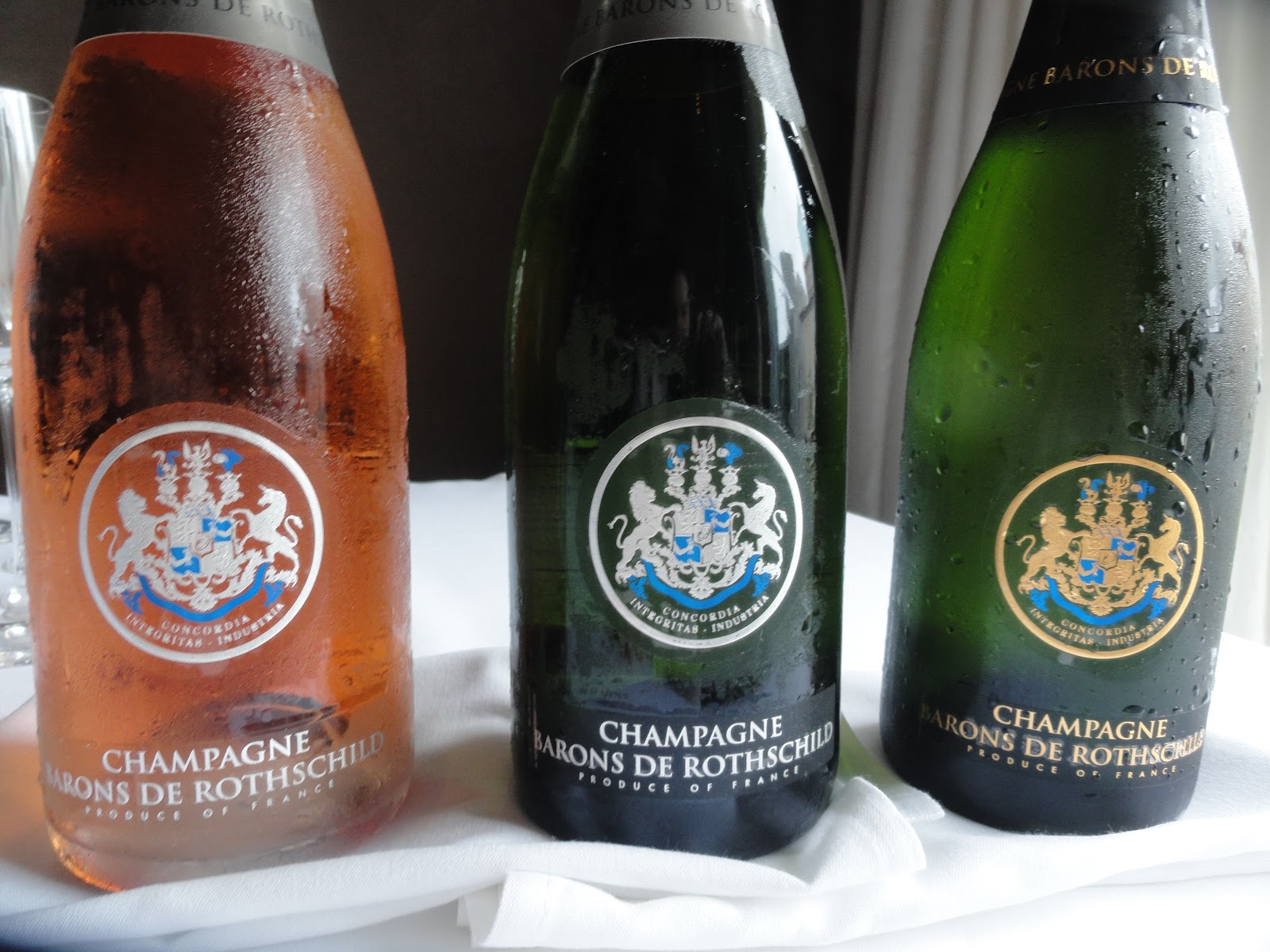
Barons de Rothschild Champagnes: A "Drops of God" Rave

Posted on 01:00 by Unknown
"Champagne is something to enjoy."
--Philippe Sereys de Rothschild, Chairman of Champagne Barons de Rothschild.

There is more evidence of the significant impact on wine sales from The Drops of God, a Japanese manga (comic) about wine. I have written several prior posts about this compelling manga, which has a weekly readership in Japan of approximately 500,000! It is currently being translated into English, with three volumes already out, and a new volume is due out later this month. When the manga mentions a wine, it often leads to increased sales, sometimes quite significantly. That is exactly what happened to a new Champagne I recently got to taste.

On Monday, I attended a media luncheon at L'Espalier, hosted by Pasternak Wine Imports, which showcased the new Champagnes from Champagne Barons de Rothschild. This was the first time these wines were being officially tasted in Boston. They have previously been available, on a very limited basis, in New York City and Los Angeles, but are now poised to hit many of the major U.S. markets. In Boston, they are being distributed by Classic Wines Imports and representatives of some local wine stores and restaurants also attended the lunch.

Philippe Sereys de Rothschild, the Chairman of Champagne Barons de Rothschild, presided over the lunch, talking about their new project, discussing the Champagnes and answering questions. Philippe has roots in the Boston area, having graduated from Harvard Business School in 1991. His last visit to Boston was back in 2001, and now he has returned to showcase his family's latest wine project. Philippe was very personable and unassuming, as well as very open about their endeavor.

The Rothschild family has long been involved in numerous wine projects around the world, including their namesake Bordeaux. Yet until recently, they had not produced a Champagne and the family thought it was time to do so. Thus, the three branches of their family, including Baron Eric de Rothschild (Château Lafite Rothschild), Baroness Philippine de Rothschild (Château Mouton Rothschild) and Baron Benjamin de Rothschild (Château Clarke), united behind a single project instead of working on separate ones.

Creating a Champagne was not an easy task, and Philippe stated it was a  "Balance of what they know and don't know." They certainly understood how to produce wine, from viticulture to viniculture, but they knew little about producing Champagne. Thus, there was a learning curve, and they also needed to hire experienced and knowledgeable individuals to assist them with the processes, such as the art of blending Champagne.

One of their important first steps was to try to locate an adequate supply of quality grapes, especially Chardonnay, which is what they wanted for the primary base of their Champagnes. Eventually, they discovered what they sought in the Côtes des Blanc region, in the southern section of Champagne. Many of their grapes come from Grand Crus in this region, and they had no difficulty in obtaining suppliers. In fact, some suppliers now seek them out. They eventually would like to purchase their own vineyards, but they need to find a sufficiently large vineyard, at least 10-15 acres. They have found some very small plots, but they don't want a collection of tiny plots scattered about.

Their next important step was to find a Champagne producer and their search ended with the Caves de Vertus. They needed an experienced Champagne maker and found what they desired there. They now possess eight years of supply, and are in it for the long term. With their long history of involvement in the wine industry, they feel that time is on their side. Their goal is to produce the best quality Champagne they can, and are willing to take the necessary time to do so. They have plenty of future plans to expand their portfolio, such as maybe to include vintage Champagnes or a tête de cuvée.

Getting everyone in the Rothschild family to agree on all of the elements of this endeavor was not always easy, the typical problems any family would have in such a massive project. There was a lengthy discussion over what to call their Champagne. They knew that most of the major producers put their own names on the labels so they eventually decided to do the same. That was not a simple decision though as they realized the import of placing their name on the label, that the Champagne had to reflect their reputation and be a high quality product.

As part of this, they have chosen to serve their champagne at all of their formal events and functions, worldwide, to stand behind their product. They would not be good role models if they chose to drink other Champagnes rather than their own. Baroness Philippine designed the bottle and label, and there was actually lots of debate over the size of the logo, whether it was too small or too big.

Their portfolio now includes a Brut, Blanc de Blancs and Rosé. These Champagnes share some similarities, such as all being Chardonnay dominant, even the Rosé. The blends include about 40% of reserve wine and have a low dosage, about 6-8 grams of sugar. Philippe stated they would probably never create a "no dosage" Champagne as he feels it needs at least a little bit of sugar to be palatable. Their Champagnes also are aged for about 6-9 months after disgorgement and their alcohol content is around 12%.


They first began selling their Champagnes in 2009, selecting Japan as their initial market. This was more a matter of convenience and expediency as all three branches of the family had connections in Japan. That proved a fortunate and successful endeavor, and their Brut was featured in The Drops of God manga. Philippe learned of this when he received an order for an additional 12,000 cases of Champagne, and was told that the reason for the great demand was the mention in the manga. That is especially significant considering the high price of these Champagnes, from $100-$125. Who would have thought that a comic book could be so influential in selling wine?

After Japan, the Rothschilds began selling their Champagne in Switzerland and Belgium, both which proved very good markets. They are continuing to expand their distribution, though still being select, and sell about 250,000 bottles annually. They are now trying to expand into the U.S., and Boston was Philippe's first stop in his tour of the U.S. At our lunch, he presented his three Champagnes, each paired with a different course of food.

Our first dish was Georges Bank scallops with fava bean-ham ragout and Ben's wild mushrooms. The scallops were tender and nicely seared and went very well with the Brut ($100). The Brut is a blend of about 60% Chardonnay, mostly Grand Crus from Côtes des Blancs, and 40% Pinot Noir with a tiny addition of Pinot Meunier. With a pleasant aroma of green apple and pear, the Brut was crisp, dry and elegant. It had an appealing and prominent taste of apple, with subtle toasty elements, and plenty of tiny bubbles. No "frog eyes" here. Philippe stated the Brut would go very well with lobster and cheese. I would certainly agree it would be excellent with seafood, chicken or other light dishes.

The second course was a Hay-braised spring rabbit shoulder with sunchoke puree and ASF spring onions. I am a huge fan of rabbit and this was moist, tender and delicious. It too made a nice pairing with the Blanc de Blancs ($125). This wine is made from 100% Chardonnay from the Côtes des Blancs crus of Avize, Cramant, Mesnil-sur-Oger, Oger and Vertus. Like the Brut, it was crisp, dry and elegant with a lengthy finish. It also had green apple notes, as well as hints of citrus, floral notes and some minerality. Another good choice for seafood, chicken or light dishes.

Our last course was a slice of Brillat-Savarin, a triple cream cow's milk cheese, that was creamy and delectable. This was paired with the Rosé ($125), a blend of over 85% Chardonnay, from Côtes des Blancs crus, and 15% Pinot Noir, from Montagne de Reims. The blend includes 5-6% which is vinified as a red wine. This was a superb Rosé Champagne with a compelling aroma, subtle red fruit and citrus notes. On the palate, it was crisp, dry and elegant with flavors of red fruits, especially strawberry, and a little orange peel. Complex, a lengthy finish and an excellent balance. I would love to drink this on a warm, summer's day and I think it is very food friendly as well. I wish I had another glass right now.

The Champagnes of Barons de Rothschild do justice to the reputation of this esteemed family. They are quality Champagnes, which can stand head and shoulders next to comparable Champagnes from any of the major Houses. My favorite was their Rosé, which is especially unique due to the large amount of Chardonnay in the blend. Yes, it needs to be acknowledged that these Champagnes are expensive, more for when you want to splurge for some special occasion. But they are priced commensurately with quality Champagnes from other major Houses.

I wish I had a glass of the Rosé right now.
Read More
Posted in Boston, champagne, France Wines, Restaurant, restaurant reviews, sparkling wines, Wine Reviews | No comments

Monday, 11 June 2012

Rant: Are Women's Palates Different?

Posted on 01:00 by Unknown
Does gender factor into which type of alcohol you prefer? Do women tend to prefer sweeter alcohols?

There are over 350 different flavored vodkas on the market, including flavors like smoked salmon, whipped cream and bubble gum. Though some people will cringe at the more extreme flavors, there is also a growing segment of consumers, often female, who want such creations, especially the sweeter varieties. Other flavored spirits are starting to follow vodka's lead, with a goal of reaching more women. Whiskey is one such category.

In the first quarter of 2012, the fastest-growing spirit category, having risen nearly 155%, is flavored whiskey. The primary targeted market for these flavored whiskies is women. Though recipes for flavored whiskey has actually been around for hundreds of years, it is only recently that it has had any significant impact. Launched in June 2009, one of the first modern flavored whiskys was Jim Beam's Red Stag, a bourbon infused with black cherry. It did very well from the start, selling 85,000 cases its first year. In 2011, it saw a growth over 2010 of about 58%, selling 300,000 cases. Its amazing growth helped to spur on other whiskey makers to produce their own flavored whiskey.

Last year, Jack Daniel's launched its Tennessee Honey and it sold 320,000 cases, a staggering amount for its initial year on the market. Wild Turkey American Honey has seen a growth of 28%, selling 230,000 cases last year. Other companies with flavored whiskies have also seen significant growth this past year. Of the various flavored whiskys, honey has been the most popular flavor, followed by cherry in second place.

In general, women constitute only about 20-30% of whiskey consumers, but that percentage seems to at least double for most of the flavored whiskey brands. So why do women seem to prefer the flavored, and sweet tasting, whiskys over the regular styles of whiskey? It is merely because whiskey has traditionally been seen as a manly beverage? Or do women, in general, have a different palate from men, one which prefers sweeter tastes? Do women prefer sweeter alcohols in all respects, including wine, beer, and other spirits?

From my time working in a wine store, it tends to be the women who seek out sweeter wines. When I visit bars and lounges, it tends to be the women who seek out sweeter cocktails and drinks. There are certainly exceptions and I know some of them, women who enjoy regular bourbon, scotch and other spirits, who prefer to avoid the sweeter variations. But they seem to be the exceptions, not the norm. So I discern a gender difference in alcohol preferences, but I am still curious as to the reason?

Is it biological or cultural? I tend to believe it may be cultural but don't have much evidence to support that theory as of yet. Ladies, care to weigh in on why you prefer sweeter alcohols? Or why you don't prefer them?  
Read More
Posted in cocktails, controversy, rant, spirits, wine marketing, women | No comments

Friday, 8 June 2012

Jefferson's Bourbon: The Art of Blending

Posted on 01:00 by Unknown
After visiting two bourbon distilleries, I met with the founder of another bourbon company, but one which does not distill any of its own bourbon. Instead, they engage in the art of blending, producing intriguing small batch bourbons.

While having lunch at Proof on Main with my good friend Fred Minnick, we were joined by Trey Zoeller, the founder of Jefferson's Bourbon, and his father, Chet Zoeller, the author of Bourbon in Kentucky: A History Of Distilleries in Kentucky. It was an informal meeting but the subject of bourbon dominated our discussion. Both Trey and Chet were very personable, and it was a very pleasant and informative lunch. I still though would have liked to spend even more time with them, discussing bourbon and their company.

Trey's family roots in alcohol production extend back at least eight generations, to his great, great, etc. grandmother, Martha McLain, who was a moonshiner. Unfortunately for her, she ran afoul of the law. Around 1799, Martha was arrested for selling liquor without a proper license, which she was doing only to support her six children.

(Trey on the left, Fred Minnick in the middle, and Chet on the right)

Trey began blending bourbon back in 1997 and launched his own line in April 1998. He purchases all of his bourbon from other distilleries, often small unique lots which larger distilleries don't find profitable enough to disseminate. He generally blends about 3-4 different bourbon recipes, from 8-12 barrels, to create the three different Jefferson's Bourbons. These are all small batch bourbons, and the blending is truly an art, trying to create an interesting and complex product that all possesses excellent taste. Trey feels this is a "different style" of bourbon which may not be for everyone, but one which makes him proud.

Obtaining sufficient supply is always a challenge, especially as he seeks out quality. And one of their biggest challenges is competing with the larger bourbon producers, though Trey is very happy that their company has been growing by about 30% each year. They produce about 25,000 six-bottle cases annually. Their bourbon originally caught on with local bartenders, and they spread the word to others about it. Currently, Jefferson's Bourbon sells well in the Boston area so my local readers should be able to find it at the better liquor stores.

I was fascinated by Trey's tale of an experiment they recently conducted in ocean-aged bourbon! Trey celebrated his 40th birthday on a friend's ship in Costa Rica. The friend also has a small dishing boat and Trey got the idea to store five barrels of bourbon on his friend's boat while it traveled the sea. The barrels were strapped to the boat and spent 3.5 years at sea, baking in the heat as well as moving around frequently. Allegedly, the ship lost two barrels when their steel bands popped, though there is always the possibility that the men aboard the boat decided to taste test the bourbon themselves.

When Trey examined the bourbon, it found that it had caramelized and had an extremely dark color, looking almost black in a photo. Trey stated that it had a briny taste and was very complex for its age. He is planning to release some of it commercially so it will be quite intriguing to get a chance to taste the final product. Based on this experiment, Trey is next going to transport some bourbon barrels down the Ohio River, as old distilleries once did.

When you look at a bottle of Jefferson's Bourbon, what do you see? Look just at the bottle, its shape and form, not the liquid inside. Does it appear familiar? Trey's intent was to create a bottle that would resemble a  perfume bottle so that it would appeal to women! A very interesting marketing device.

Jefferson's Bourbon has three main products: Jefferson's, Jefferson's Reserve and Jefferson's Presidential Select. All three are probably best when drank neat or on the rocks, though of course you could use them in a cocktail if you so desired. They also produce a Straight Rye Whiskey which works very well in cocktails.

I greatly enjoyed the Jefferson’s Reserve, which I found to be smooth, elegant, subtle, and complex with a compelling melange of flavors. Each sip will bring to mind a new flavor, from caramel to honey, from butterscotch to figs, and much more. This is definitely a bourbon to savor on its own, rather than lose any of its complexity in a cocktail. Trey has created a superb bourbon which you need to seek out.

It was a pleasure to chat with Trey and Chet, and I wish them much luck with Jefferson's Bourbon. They are blending an exciting product, worthy of your attention, and I look forward to what they will develop in the future.
Read More
Posted in bourbon, cocktails, distillery, kentucky, louisville, spirits, whiskey | No comments

Thursday, 7 June 2012

Thursday Sips & Nibbles

Posted on 01:00 by Unknown
I am back again with a new edition of Thursday Sips & Nibbles, my regular column where I briefly highlight some interesting wine and food items that I have encountered recently. **********************************************************
1)  This Father’s Day, honor Dad with a special steak dinner at Asana at the Mandarin Oriental. Created with steak-loving fathers in mind, their culinary team has designed a Father’s Day Tomahawk Challenge menu featuring a juicy 30 ounce Tomahawk Steak. "Named for the heavy foot-long bone protruding from the meat, the wagyu Tomahawk Steak is extraordinarily rich in flavor." This offer includes an accompanying sauce and a choice of two side dishes.

This Tomahawk Challenge is only available on Sunday, June 17. The cost is $60 per person. For reservations, please call (617) 535-8800.

2)  Join the Beacon Hill Hotel & Bistro on Thursday, June 14, at 7pm, for a one-of-a-kind dinner inspired by local author Christine Chitnis and her new book, Markets of New England, which offers a unique look into the artisan farmers markets of New England, along with the delicious food, unique crafts and interesting purveyors that fill them with local flavor.

Executive Chef Josh Lewin will be serving a five-course dinner with each course inspired by one of the markets Chitnis describes in her book. For $75 (not including tax & gratuity), guests will enjoy the special five-course dinner, a signed copy of Chitnis' book, and the opportunity to meet the author herself. A writer, photographer, and environmental educator, Markets of New England has received glowing reviews from The New York Times, NPR and The Library Journal, among others. Reservations are recommended by calling 617-723-7575.

MENU 

Copley Farmer's Market, Boston (pg 119) 
Heirloom Tomato, Black Pepper, Burrata, Herb Vinaigrette
Newton (pg 121)
Dayboat Scallop Ceviche Three Oranges, Sorrel, Fresh Chilis, Day Lilly
Orleans, Cape Cod (pg 125)
Sweet Corn Pudding Farm Fresh Egg, Cured Tamworth Pork Loin, Marjoram
Sustainable Nantucket's Farmer's Market (pg 129)
Herb Poached Oyster Mushroom Braised Concord Rabbit, Petite Potato
West Tisbury, Martha's Vineyard (pg 127) 
Goatherd's Panna Cotta Fresh Berries, Anise Hyssop Ice Cream

3)  Six of Boston’s esteemed chefs recently came together to talk – not about food – but about breast cancer in Massachusetts. Each chef created a 30 second video, where they answered the question, “What Does Komen MA Mean to Me?”

Chefs Joanne Chang of Flour and Meyers + Chang; Jose Duarte of Taranta; Richard Garcia of 606 Congress; Nicole Coady of Finale; Brian Reyelt of Citizen Public House; and Benjamin Lacy of Tastings Wine Bar & Bistro all shared their accounts on what the Massachusetts Affiliate of Susan G. Komen for the Cure® (Komen MA) means to them. All videos are currently live on Komen MA’s YouTube page. These same chefs showed their support for Komen MA last month by participating in the non-profit’s 4th annual “Chefs for the Cure” culinary tasting event.

Komen MA launched this viral campaign in an effort to hear from friends, community leaders and everyday supporters across the Commonwealth what the non-profit means to them on a personal level. The goal of the campaign is to engage the community and learn how Massachusetts residents are benefiting from Komen MA’s grantee disbursements and local efforts.

Komen MA’s mission is local: 75% of all funds raised stay right in the state to help fund educational, screening and treatment programs, offer grant money to community-based organizations and to help better the lives of those facing breast cancer locally. The remaining 25% goes to national research.

Komen MA is now asking others the same question, and encourages anyone with a story, passion, hope or vision for a world without breast cancer to submit their own video. Videos can be emailed to info@komenmass.org and will be shared via Komen MA’s YouTube, Facebook and Twitter pages.

4)  June marks the first month of A Tavola’s new A Taste of Italy monthly offerings – three-course, educational menus from featured regions of Italy which Chef Vittorio Ettore has personally lived or visited and has drawn inspiration from. The regions will progress with the season, focusing on coastal regions in the summer and moving inland through the fall and winter months. Each menu will be optionally paired with that region’s wine, and Chef will be there to explain the cuisine and techniques.

The June menu is inspired by the cuisine of Sicily. Influenced by Spanish, Greek, and Arab cuisines, Sicilian food is known for its use of citrus, seafood, and Middle Eastern spices such as saffron. This month’s Sicilian-inspired menu includes:

Pasta con le Sarde
Fresh Bucatini, Sardines, Pine Nuts, Raisins, Saffron & Fennel
2010 Arancio, Chardonnay
Wild Striped Bass con Cipolle in Agrodolce 
Sweet & Sour Onions with Marsala Wine, White Balsamic Vinegar, Fresh Mint, Grape Tomatoes & Lemon
2009 Donnafugata, ‘Sedara,’ Nero d’Avola
Baba
Rum-Soaked Sweet Bread with Pistachio Gelato
2009 Donnafugata, ‘Ben Rye,’ Passito di Pantelleria

This menu will be available June 6-23, Tuesday through Saturday, 5p.m.-10p.m.
The cost for this three-course menu is $45 per person; $65 with wine pairings.
For Reservations, please call A Tavola at 781-729-1040

The future A Taste of Italy offerings will include: Liguria in July, Sardinia in August, Tuscany in September, Marche in October, Piedmont in November, and Friuli in December. I am a big fan of A Tavola and highly recommend you check out this new dinner series.

5)  Ducali Pizzeria & Bar is launching brunch service just in time for the match of the Union of European Football Associations (UEFA) Euro Cup 2012: Spain (La Furia Roja) vs. Italy (Gli Azzurri), who happen to be the last two World Cup champions. During Calcio Brunch, Calcio being the Italian word for soccer, Ducali will play live European soccer games on all three of its flat screen televisions. There is now a place for Bostonians to cheer on their favorite soccer teams while indulging in a hearty brunch. Just in time for the Azzurri's match, Ducali will become the first restaurant in Boston to serve Birra Del Borgo Re Ale on tap. Birra Del Borgo, a central Italian brewery, is a leader in the growing Italian craft beer movement.

Menu entrees will range from $7-$12, and include:
Breakfast pizzas: 
- Pizza Ducale: Pizza with potato, pancetta, mozzarella & egg
· Pizza Verde: Pizza with spinach, cherry tomatoes, mushroom, mozzarella & egg
· Pizza Abbruzzese: Pizza with sausage, onion, mozzarella & egg
Eggs and more: 
· Frittata Tricolore: Cheese, basil & tomato frittata served with country toast & Italian style potatoes
· Pizzelle: Waffles topped with Mascarpone, honey & strawberries
· Americano: Two fried eggs, Italian sausage, country toast & Italian style potatoes
 · Pane Dolce: Baked French Toast topped with Nutella, served with fresh fruit

Brunch beverages range in price from $3 to $7 and will include: Mimosa, Bellini, Negroni, Bloody Mary, Espresso, Cappuccino, Affogato, Campari & Orange, Americano, Orange Juice, and Chocolate Milk.

The 14th UEFA European Football Championship begins this summer as sixteen national teams compete for the championship title. Now, Boston has an official location where guests can be one of the millions of fans watching the epic competition at Ducali’s Calcio Brunch every Saturday and Sunday during the tournament.

When: “Kickoff” Sunday, June 10, from 11 a.m. until 3 p.m. Brunch will take place after June 10: Every Saturday and Sunday, from 11 a.m. until 3 p.m.

6)  Mexican food erupts with spicy flavors, so why not pair it with a cocktail also bursting with bold taste? On Wednesday, June 13, Chef Erwin Ramos of Olé Restaurant Group will be joined by a tequila expert from Tanteo Tequila at Zócalo Cocina Mexicana in Boston, for a 3-course Tanteo-Infused Tequila Dinner.

The night will begin at 6:30pm with a tequila tasting followed by 3 courses of authentic Mexican cuisine, each paired with a unique tequila. Tanteo infuses its tequila with the bold and bright flavors used in traditional Mexican cooking. Far from ordinary, these fusions of tequila and jalapeño, cocoa and tropical fruit will turn up the heat and pair perfectly with Chef Ramo’s culinary creations.

The cost is $40 per person. Reservations are necessary and can be made by calling (617) 456-7849.

7)  To kick-off the first weekend of summer, Legal Sea Foods in Charles Square will host an outdoor “Crawfish Boil: Louisiana Style” at the Terrace Bar. Chef Layne Coppell, born and raised in Louisiana, will host this craw-fest by dishing out the ultimate Cajun special prepared and price for two people. The “Two if By Sea” limited time menu feature packs together two pounds of boiled crawfish, new potatoes, sweet corn and andouille sausage. There is an option to wash down this perfectly messy affair with two Louisiana-bred Abita Amber beers.

The “Two if By Sea” menu feature is available from June 21–June 24, from 3pm–11pm at the Terrace Bar. In case of rain, the menu feature will be available indoors.

Cost: $28.95 for two people (includes the “Two if By Sea” menu feature and two Abita Amber beers) $17.95 for two people (includes the “Two if By Sea” menu feature)
Read More
Posted in author, Boston, brunch, Charity, chef, father's day, holiday, italian cuisine, Italy Wines, meat, mexican cuisine, Restaurant, sports, Winchester | No comments
Newer Posts Older Posts Home
Subscribe to: Posts (Atom)

Popular Posts

  • Taste Camp: The Wine Industry of Quebec (Part 1)
    Exploring emerging wine regions is always a fascinating endeavor even if their wines are not readily available outside of that region. It is...
  • Tuscan Market: One Stop Shopping & Cafe
    Many of us would love to be able to easily purchase fresh baked bread, fresh local produce, artisan cheese, meats, seafood, fresh pasta, win...
  • Rant: Beware The Self-Proclaimed Expert
    I am very tired of self-proclaimed wine experts, gurus, ninjas and whatever whose actual knowledge is lacking. This is obviously not a prob...
  • Rant: U.S. Sake vs Japan Sake--Context Is Everything
    Is sake produced in the U.S. as good as sake produced in Japan? Does the question require more specificity? Or is it even a fair question? A...
  • Rant: Where Is The Roast Chicken Love?
    1990 was a pivotal year in the battle of beef versus chicken . It was the first year that Americans ate more chicken than beef, and that has...
  • Boston Wine Expo: Pinotage Rosé to Cape Verde
    Here is a sampling of some of the other wines that I found interesting at the Boston Wine Expo , and I will be posting about even more wines...
  • Rant: Rushing To Judge A New Restaurant
    As soon as a hot, new restaurant opens, there is a rush for food bloggers and online reviewers to dine there and immediately report back. Ti...
  • International Boston Seafood Show: Fish Fun & Photos
    “ Fish is held out to be one of the greatest luxuries of the table and not only necessary, but even indispensable at all dinners where there...
  • Rant: Outraged By Sake Prices At Restaurants
    We often hear complaints about the outrageous prices  of wine sold at many restaurants. Some places charge three, four or even fives times t...
  • Rant: Post-Labor Day Wine Advice
    With today as Labor Day , it is seen by many people as a signal of the end of summer, despite the fact that the official end is not until Se...

Categories

  • 2011 (8)
  • 2012 (9)
  • 2013 (2)
  • alabama (1)
  • alaska (1)
  • alcohol (1)
  • allergy (1)
  • alsace (3)
  • Andover (3)
  • animal (1)
  • anniversary (1)
  • Argentina Wines (10)
  • Arlington (11)
  • armenia (1)
  • art (4)
  • Australia Wines (2)
  • austria wines (5)
  • author (12)
  • award (2)
  • Bacon (1)
  • Bakery (15)
  • bar (1)
  • bbq (3)
  • beauty (1)
  • Bedford (2)
  • beer (19)
  • biodynamic wine (1)
  • biography (1)
  • blogging (35)
  • Book reviews (30)
  • book store (3)
  • Boston (165)
  • bourbon (11)
  • braintree (2)
  • brazil wines (1)
  • brazilian (1)
  • breakfast (2)
  • brewery (6)
  • brighton (1)
  • Brookline (9)
  • brunch (15)
  • Burlington (3)
  • business (1)
  • butcher (4)
  • California Wines (20)
  • Cambridge (29)
  • canada (8)
  • Canada Wines (7)
  • candy (3)
  • cape cod (6)
  • cape verde wines (1)
  • casino (7)
  • caviar (1)
  • celebrity (2)
  • champagne (11)
  • Charity (33)
  • cheese (23)
  • chef (27)
  • chianti classico (10)
  • children (2)
  • Chile (2)
  • Chile Wines (2)
  • china (6)
  • chinatown (3)
  • chinese cuisine (8)
  • chocolate (1)
  • christmas (3)
  • cider (8)
  • cocktails (47)
  • colorado (2)
  • concord (10)
  • conference (9)
  • Connecticut (12)
  • consumers (2)
  • contest (8)
  • controversy (97)
  • cookbooks (5)
  • cooking (15)
  • cuba (1)
  • cyprus wines (1)
  • dance (1)
  • Danvers (2)
  • dessert wine (1)
  • desserts (21)
  • diet (2)
  • dining service (1)
  • discount (1)
  • distillery (14)
  • dlw13 (1)
  • donuts (1)
  • dorchester (16)
  • easter (6)
  • Eating Habits (2)
  • ebook (6)
  • ethics (3)
  • ethiopia (1)
  • farming (10)
  • father's day (1)
  • fiction (11)
  • finger lakes (2)
  • florida (1)
  • Food (4)
  • Food Event (8)
  • Food Market (12)
  • food news (2)
  • food processing (2)
  • food safety (4)
  • food truck (1)
  • France (3)
  • France Wines (19)
  • fruit (7)
  • Games (2)
  • gardening (1)
  • georgia wines (1)
  • gin (1)
  • glasses (1)
  • grapes (4)
  • Greece Wines (1)
  • guest post (1)
  • health (21)
  • history (34)
  • holiday (46)
  • hotel (2)
  • Hungary Wines (3)
  • hybrid (2)
  • ibss12 (14)
  • ibss13 (13)
  • Ice Cream (5)
  • ice wine (2)
  • iceland (1)
  • interview (5)
  • ipswich (4)
  • ireland (2)
  • italian cuisine (43)
  • Italy (19)
  • Italy Wines (38)
  • jamaica plain (1)
  • japanese (70)
  • kentucky (12)
  • korea (1)
  • law (13)
  • legend (9)
  • lincoln (6)
  • liqueur (1)
  • local wine (2)
  • los angeles (1)
  • louisiana (2)
  • louisville (7)
  • lynnfield (1)
  • madeira (1)
  • magazine (16)
  • Maine (2)
  • Malbec (1)
  • Malden (1)
  • mallorca (1)
  • mardi gras (2)
  • Massachusetts (4)
  • Massachusetts Wines (6)
  • mead (5)
  • meat (23)
  • Medford (6)
  • melrose (3)
  • mexican cuisine (16)
  • mexico wine (3)
  • mezcal (1)
  • milk (2)
  • milton (1)
  • mississippi (1)
  • montreal (2)
  • mothers day (1)
  • music (4)
  • natick (1)
  • needham (3)
  • new england (2)
  • New Hampshire (17)
  • new year's eve (10)
  • New York (3)
  • New York City (3)
  • New York wines (1)
  • New Zealand Wines (1)
  • newburyport (1)
  • newport (1)
  • news (1)
  • newspaper (7)
  • newton (9)
  • North Andover (16)
  • north end (12)
  • nova scotia (5)
  • Oregon (2)
  • Oregon Wines (6)
  • organic food (1)
  • organic wine (2)
  • paso robles (3)
  • peruvian cuisine (1)
  • phillipines (2)
  • pinotage (2)
  • pisco (1)
  • Pizza (2)
  • pork (3)
  • port (13)
  • portland (1)
  • portsmouth (6)
  • Portugal (6)
  • Portugal Wines (19)
  • poultry (1)
  • providence (1)
  • provincetown (5)
  • quebec (5)
  • rant (97)
  • Reading (1)
  • Recipe (11)
  • Restaurant (198)
  • restaurant going (8)
  • restaurant reviews (65)
  • Rhode island (4)
  • rose (7)
  • rum (11)
  • Sake (61)
  • Sake Reviews (15)
  • salem (2)
  • salmon (4)
  • sandwich (5)
  • science (10)
  • scotland (4)
  • seafood (72)
  • Seattle (1)
  • sherry (10)
  • shochu (1)
  • shopping (3)
  • social media (1)
  • soda (2)
  • Somerville (13)
  • South Africa Wines (7)
  • spain (8)
  • Spain Wines (18)
  • sparkling wines (6)
  • spirits (42)
  • sports (4)
  • st. patrick's day (4)
  • steakhouse (12)
  • sudbury (1)
  • sushi (5)
  • sustainability (61)
  • sweden (1)
  • tastecamp (5)
  • tea (6)
  • television (4)
  • tequila (2)
  • texas (1)
  • thai (2)
  • thanksgiving (9)
  • theater (2)
  • top ten (14)
  • toronto (1)
  • travel (8)
  • twitter (1)
  • united states (1)
  • Uruguay Wines (1)
  • valentine's day (5)
  • vegetables (3)
  • vermont (4)
  • virginia (1)
  • virginia wines (1)
  • vodka (8)
  • Wakefield (1)
  • walpole (2)
  • watertown (1)
  • wayland (1)
  • wbc (3)
  • west concord (1)
  • westwood (1)
  • whiskey (19)
  • Winchester (14)
  • Wine (3)
  • Wine Education (19)
  • wine event (14)
  • wine importers (1)
  • wine marketing (11)
  • Wine news (3)
  • wine pairings (15)
  • wine personality (1)
  • Wine Prices (5)
  • Wine Reviews (68)
  • wine sales (13)
  • Wine Stores (23)
  • Wine tasting (11)
  • wine writing (1)
  • winemaker (4)
  • winemaking (6)
  • wineries (5)
  • winery (21)
  • Woburn (3)
  • women (3)

Blog Archive

  • ▼  2013 (171)
    • ▼  September (5)
      • Why Are You Fat?
      • Thursday Sips & Nibbles
      • Heirloom Flavor: From a Dragon's Tongue to a Nebra...
      • Papa's Pilar Rum: What Would Hemingway Do?
      • Rant: Post-Labor Day Wine Advice
    • ►  August (19)
    • ►  July (18)
    • ►  June (19)
    • ►  May (19)
    • ►  April (20)
    • ►  March (32)
    • ►  February (20)
    • ►  January (19)
  • ►  2012 (283)
    • ►  December (21)
    • ►  November (23)
    • ►  October (30)
    • ►  September (17)
    • ►  August (26)
    • ►  July (23)
    • ►  June (19)
    • ►  May (21)
    • ►  April (20)
    • ►  March (34)
    • ►  February (26)
    • ►  January (23)
  • ►  2011 (46)
    • ►  December (27)
    • ►  November (19)
Powered by Blogger.

About Me

Unknown
View my complete profile